

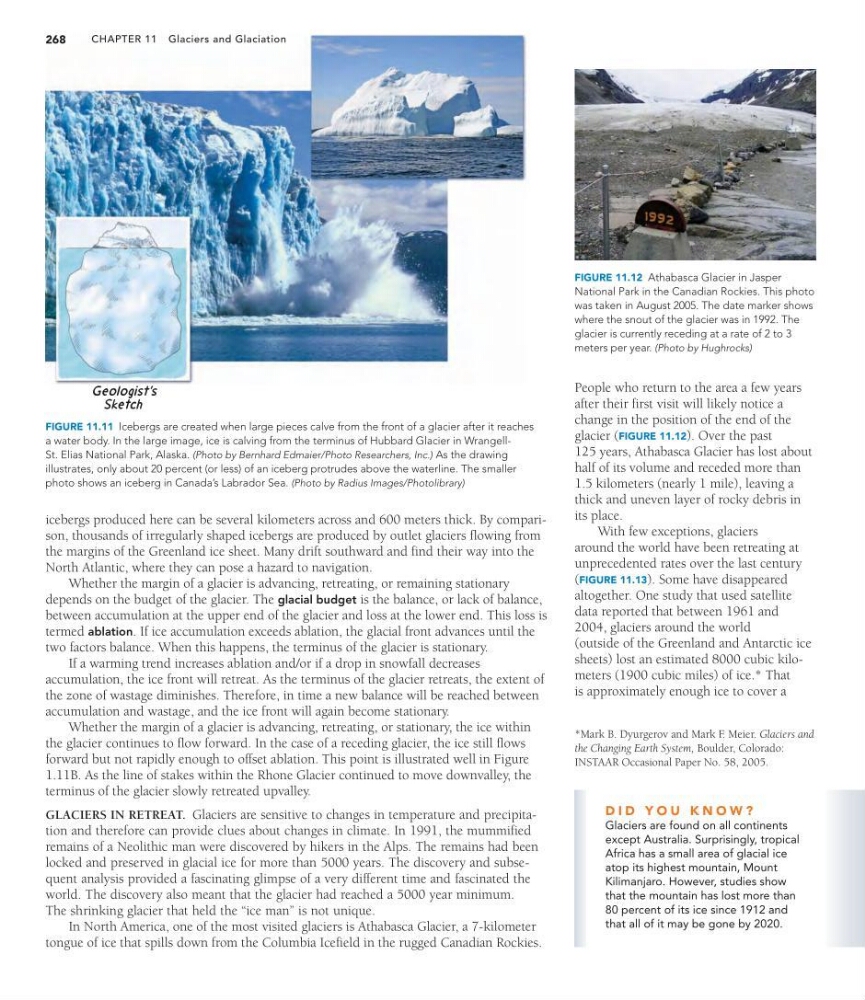
FIGURE 11.11 Icebergs are created when large pieces calve from the front of a glacier after it reaches
a water body. In the large image, ice is calving from the terminus of Hubbard Glacier in WrangellSt. Elias National Park, Alaska. (Photo by Bernhard Edmaier/Photo Researchers, Inc.) As the drawing
illustrates, only about 20 percent (or less) of an iceberg protrudes above the waterline. The smaller
photo shows an iceberg in Canada’s Labrador Sea. (Photo by Radius Images/Photolibrary)
CHAPTER 11 Glaciers and Glaciation
268
icebergs produced here can be several kilometers across and 600 meters thick. By comparison, thousands of irregularly shaped icebergs are produced by outlet glaciers flowing from
the margins of the Greenland ice sheet. Many drift southward and find their way into the
North Atlantic, where they can pose a hazard to navigation.
Whether the margin of a glacier is advancing, retreating, or remaining stationary
depends on the budget of the glacier. The glacial budget is the balance, or lack of balance,
between accumulation at the upper end of the glacier and loss at the lower end. This loss is
termed ablation. If ice accumulation exceeds ablation, the glacial front advances until the
two factors balance. When this happens, the terminus of the glacier is stationary.
If a warming trend increases ablation and/or if a drop in snowfall decreases
accumulation, the ice front will retreat. As the terminus of the glacier retreats, the extent of
the zone of wastage diminishes. Therefore, in time a new balance will be reached between
accumulation and wastage, and the ice front will again become stationary.
Whether the margin of a glacier is advancing, retreating, or stationary, the ice within
the glacier continues to flow forward. In the case of a receding glacier, the ice still flows
forward but not rapidly enough to offset ablation. This point is illustrated well in Figure
1.11B. As the line of stakes within the Rhone Glacier continued to move downvalley, the
terminus of the glacier slowly retreated upvalley.
GLACIERS IN RETREAT. Glaciers are sensitive to changes in temperature and precipitation and therefore can provide clues about changes in climate. In 1991, the mummified
remains of a Neolithic man were discovered by hikers in the Alps. The remains had been
locked and preserved in glacial ice for more than 5000 years. The discovery and subsequent analysis provided a fascinating glimpse of a very different time and fascinated the
world. The discovery also meant that the glacier had reached a 5000 year minimum.
The shrinking glacier that held the “ice man” is not unique.
In North America, one of the most visited glaciers is Athabasca Glacier, a 7-kilometer
tongue of ice that spills down from the Columbia Icefield in the rugged Canadian Rockies.
People who return to the area a few years
after their first visit will likely notice a
change in the position of the end of the
glacier (FIGURE 11.12). Over the past
125 years, Athabasca Glacier has lost about
half of its volume and receded more than
1.5 kilometers (nearly 1 mile), leaving a
thick and uneven layer of rocky debris in
its place.
With few exceptions, glaciers
around the world have been retreating at
unprecedented rates over the last century
(FIGURE 11.13). Some have disappeared
altogether. One study that used satellite
data reported that between 1961 and
2004, glaciers around the world
(outside of the Greenland and Antarctic ice
sheets) lost an estimated 8000 cubic kilometers (1900 cubic miles) of ice.* That
is approximately enough ice to cover a
*Mark B. Dyurgerov and Mark F. Meier. Glaciers and
the Changing Earth System, Boulder, Colorado:
INSTAAR Occasional Paper No. 58, 2005.
D I D Y O U K N O W ?
Glaciers are found on all continents
except Australia. Surprisingly, tropical
Africa has a small area of glacial ice
atop its highest mountain, Mount
Kilimanjaro. However, studies show
that the mountain has lost more than
80 percent of its ice since 1912 and
that all of it may be gone by 2020.
FIGURE 11.12 Athabasca Glacier in Jasper
National Park in the Canadian Rockies. This photo
was taken in August 2005. The date marker shows
where the snout of the glacier was in 1992. The
glacier is currently receding at a rate of 2 to 3
meters per year. (Photo by Hughrocks)
a water body. In the large image, ice is calving from the terminus of Hubbard Glacier in WrangellSt. Elias National Park, Alaska. (Photo by Bernhard Edmaier/Photo Researchers, Inc.) As the drawing
illustrates, only about 20 percent (or less) of an iceberg protrudes above the waterline. The smaller
photo shows an iceberg in Canada’s Labrador Sea. (Photo by Radius Images/Photolibrary)
CHAPTER 11 Glaciers and Glaciation
268
icebergs produced here can be several kilometers across and 600 meters thick. By comparison, thousands of irregularly shaped icebergs are produced by outlet glaciers flowing from
the margins of the Greenland ice sheet. Many drift southward and find their way into the
North Atlantic, where they can pose a hazard to navigation.
Whether the margin of a glacier is advancing, retreating, or remaining stationary
depends on the budget of the glacier. The glacial budget is the balance, or lack of balance,
between accumulation at the upper end of the glacier and loss at the lower end. This loss is
termed ablation. If ice accumulation exceeds ablation, the glacial front advances until the
two factors balance. When this happens, the terminus of the glacier is stationary.
If a warming trend increases ablation and/or if a drop in snowfall decreases
accumulation, the ice front will retreat. As the terminus of the glacier retreats, the extent of
the zone of wastage diminishes. Therefore, in time a new balance will be reached between
accumulation and wastage, and the ice front will again become stationary.
Whether the margin of a glacier is advancing, retreating, or stationary, the ice within
the glacier continues to flow forward. In the case of a receding glacier, the ice still flows
forward but not rapidly enough to offset ablation. This point is illustrated well in Figure
1.11B. As the line of stakes within the Rhone Glacier continued to move downvalley, the
terminus of the glacier slowly retreated upvalley.
GLACIERS IN RETREAT. Glaciers are sensitive to changes in temperature and precipitation and therefore can provide clues about changes in climate. In 1991, the mummified
remains of a Neolithic man were discovered by hikers in the Alps. The remains had been
locked and preserved in glacial ice for more than 5000 years. The discovery and subsequent analysis provided a fascinating glimpse of a very different time and fascinated the
world. The discovery also meant that the glacier had reached a 5000 year minimum.
The shrinking glacier that held the “ice man” is not unique.
In North America, one of the most visited glaciers is Athabasca Glacier, a 7-kilometer
tongue of ice that spills down from the Columbia Icefield in the rugged Canadian Rockies.
People who return to the area a few years
after their first visit will likely notice a
change in the position of the end of the
glacier (FIGURE 11.12). Over the past
125 years, Athabasca Glacier has lost about
half of its volume and receded more than
1.5 kilometers (nearly 1 mile), leaving a
thick and uneven layer of rocky debris in
its place.
With few exceptions, glaciers
around the world have been retreating at
unprecedented rates over the last century
(FIGURE 11.13). Some have disappeared
altogether. One study that used satellite
data reported that between 1961 and
2004, glaciers around the world
(outside of the Greenland and Antarctic ice
sheets) lost an estimated 8000 cubic kilometers (1900 cubic miles) of ice.* That
is approximately enough ice to cover a
*Mark B. Dyurgerov and Mark F. Meier. Glaciers and
the Changing Earth System, Boulder, Colorado:
INSTAAR Occasional Paper No. 58, 2005.
D I D Y O U K N O W ?
Glaciers are found on all continents
except Australia. Surprisingly, tropical
Africa has a small area of glacial ice
atop its highest mountain, Mount
Kilimanjaro. However, studies show
that the mountain has lost more than
80 percent of its ice since 1912 and
that all of it may be gone by 2020.
FIGURE 11.12 Athabasca Glacier in Jasper
National Park in the Canadian Rockies. This photo
was taken in August 2005. The date marker shows
where the snout of the glacier was in 1992. The
glacier is currently receding at a rate of 2 to 3
meters per year. (Photo by Hughrocks)