

CHAPTER 10 Groundwater
256
Karst Topography
Many areas of the world have landscapes
that to a large extent have been shaped by
the dissolving power of groundwater. Such
areas are said to exhibit karst topography,
named for the Krs Plateau, located along
the northeastern shore of the Adriatic Sea
in the border area between Slovenia and
Italy where such topography is strikingly
developed. In the United States, karst landscapes occur in many areas that are underlain by limestone, including portions of
Kentucky, Tennessee, Alabama, southern
Indiana, and central and northern Florida
(FIGURE 10.24). Generally, arid and semiarid
areas are too dry to develop karst topography. When solution features exist in such
regions, they are likely to be remnants of a
time when rainier conditions prevailed.
Karst areas typically have irregular terrain punctuated with many depressions,
called sinkholes or sinks (FIGURE 10.25). In
the limestone areas of Florida, Kentucky,
and southern Indiana, there are literally
tens of thousands of these depressions
varying in depth from just a meter or two
to a maximum of more than 50 meters.
Sinkholes commonly form in two ways.
Some develop gradually over many years
without any physical disturbance to the
rock. In these situations, the limestone
immediately below the soil is dissolved by
downward-seeping rainwater that is freshly
charged with carbon dioxide. With time,
the bedrock surface is lowered and the fractures into which the water seeps are
enlarged. As the fractures grow in size, soil
subsides into the widening voids, from
which it is removed by groundwater flowing in the passages below. These depressions are usually shallow and have gentle
slopes.
A.
B.
D I D Y O U K N O W ?
America’s largest bat colonies are
found in caves. For example, Braken
Cave in central Texas is the summer
home of 20 million Mexican free-tail
bats. They spend their days in total
darkness more than 3 km inside the
cave. Each night they leave the cave to
feed, consuming more than 200,000 kg
(220 tons) of insects.
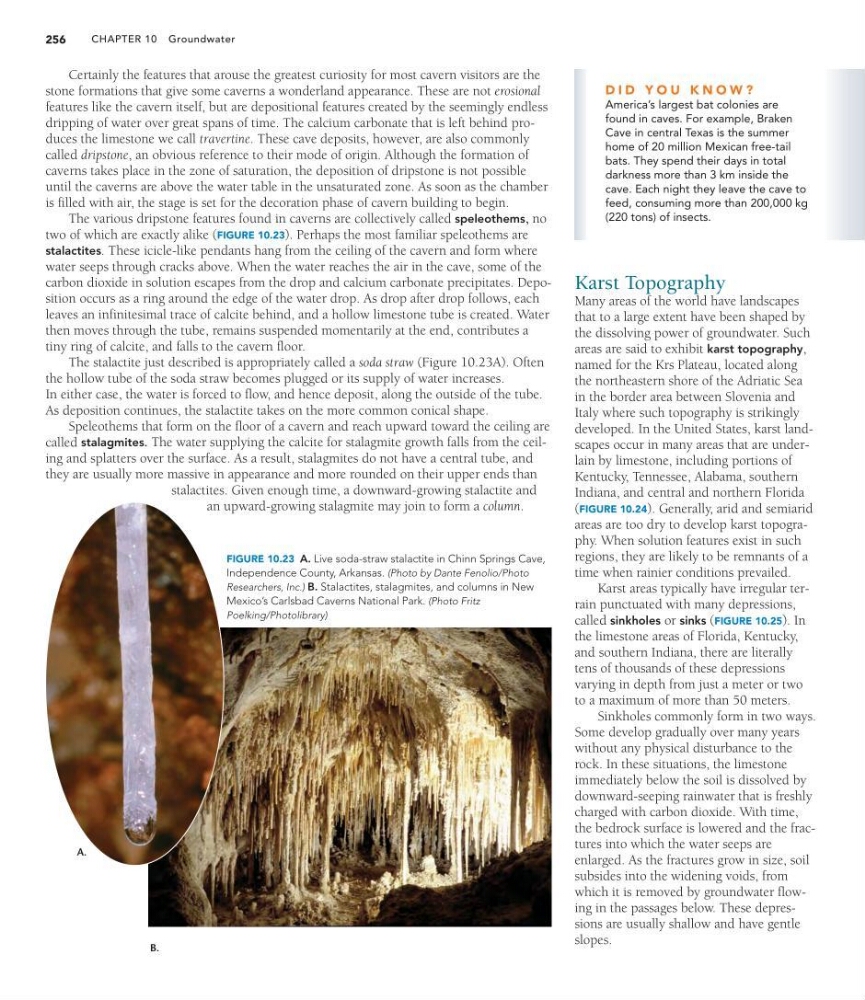
FIGURE 10.23 A. Live soda-straw stalactite in Chinn Springs Cave,
Independence County, Arkansas. (Photo by Dante Fenolio/Photo
Researchers, Inc.) B. Stalactites, stalagmites, and columns in New
Mexico’s Carlsbad Caverns National Park. (Photo Fritz
Poelking/Photolibrary)
Certainly the features that arouse the greatest curiosity for most cavern visitors are the
stone formations that give some caverns a wonderland appearance. These are not erosional
features like the cavern itself, but are depositional features created by the seemingly endless
dripping of water over great spans of time. The calcium carbonate that is left behind produces the limestone we call travertine. These cave deposits, however, are also commonly
called dripstone, an obvious reference to their mode of origin. Although the formation of
caverns takes place in the zone of saturation, the deposition of dripstone is not possible
until the caverns are above the water table in the unsaturated zone. As soon as the chamber
is filled with air, the stage is set for the decoration phase of cavern building to begin.
The various dripstone features found in caverns are collectively called speleothems, no
two of which are exactly alike (FIGURE 10.23). Perhaps the most familiar speleothems are
stalactites. These icicle-like pendants hang from the ceiling of the cavern and form where
water seeps through cracks above. When the water reaches the air in the cave, some of the
carbon dioxide in solution escapes from the drop and calcium carbonate precipitates. Deposition occurs as a ring around the edge of the water drop. As drop after drop follows, each
leaves an infinitesimal trace of calcite behind, and a hollow limestone tube is created. Water
then moves through the tube, remains suspended momentarily at the end, contributes a
tiny ring of calcite, and falls to the cavern floor.
The stalactite just described is appropriately called a soda straw (Figure 10.23A). Often
the hollow tube of the soda straw becomes plugged or its supply of water increases.
In either case, the water is forced to flow, and hence deposit, along the outside of the tube.
As deposition continues, the stalactite takes on the more common conical shape.
Speleothems that form on the floor of a cavern and reach upward toward the ceiling are
called stalagmites. The water supplying the calcite for stalagmite growth falls from the ceiling and splatters over the surface. As a result, stalagmites do not have a central tube, and
they are usually more massive in appearance and more rounded on their upper ends than
stalactites. Given enough time, a downward-growing stalactite and
an upward-growing stalagmite may join to form a column.
256
Karst Topography
Many areas of the world have landscapes
that to a large extent have been shaped by
the dissolving power of groundwater. Such
areas are said to exhibit karst topography,
named for the Krs Plateau, located along
the northeastern shore of the Adriatic Sea
in the border area between Slovenia and
Italy where such topography is strikingly
developed. In the United States, karst landscapes occur in many areas that are underlain by limestone, including portions of
Kentucky, Tennessee, Alabama, southern
Indiana, and central and northern Florida
(FIGURE 10.24). Generally, arid and semiarid
areas are too dry to develop karst topography. When solution features exist in such
regions, they are likely to be remnants of a
time when rainier conditions prevailed.
Karst areas typically have irregular terrain punctuated with many depressions,
called sinkholes or sinks (FIGURE 10.25). In
the limestone areas of Florida, Kentucky,
and southern Indiana, there are literally
tens of thousands of these depressions
varying in depth from just a meter or two
to a maximum of more than 50 meters.
Sinkholes commonly form in two ways.
Some develop gradually over many years
without any physical disturbance to the
rock. In these situations, the limestone
immediately below the soil is dissolved by
downward-seeping rainwater that is freshly
charged with carbon dioxide. With time,
the bedrock surface is lowered and the fractures into which the water seeps are
enlarged. As the fractures grow in size, soil
subsides into the widening voids, from
which it is removed by groundwater flowing in the passages below. These depressions are usually shallow and have gentle
slopes.
A.
B.
D I D Y O U K N O W ?
America’s largest bat colonies are
found in caves. For example, Braken
Cave in central Texas is the summer
home of 20 million Mexican free-tail
bats. They spend their days in total
darkness more than 3 km inside the
cave. Each night they leave the cave to
feed, consuming more than 200,000 kg
(220 tons) of insects.
FIGURE 10.23 A. Live soda-straw stalactite in Chinn Springs Cave,
Independence County, Arkansas. (Photo by Dante Fenolio/Photo
Researchers, Inc.) B. Stalactites, stalagmites, and columns in New
Mexico’s Carlsbad Caverns National Park. (Photo Fritz
Poelking/Photolibrary)
Certainly the features that arouse the greatest curiosity for most cavern visitors are the
stone formations that give some caverns a wonderland appearance. These are not erosional
features like the cavern itself, but are depositional features created by the seemingly endless
dripping of water over great spans of time. The calcium carbonate that is left behind produces the limestone we call travertine. These cave deposits, however, are also commonly
called dripstone, an obvious reference to their mode of origin. Although the formation of
caverns takes place in the zone of saturation, the deposition of dripstone is not possible
until the caverns are above the water table in the unsaturated zone. As soon as the chamber
is filled with air, the stage is set for the decoration phase of cavern building to begin.
The various dripstone features found in caverns are collectively called speleothems, no
two of which are exactly alike (FIGURE 10.23). Perhaps the most familiar speleothems are
stalactites. These icicle-like pendants hang from the ceiling of the cavern and form where
water seeps through cracks above. When the water reaches the air in the cave, some of the
carbon dioxide in solution escapes from the drop and calcium carbonate precipitates. Deposition occurs as a ring around the edge of the water drop. As drop after drop follows, each
leaves an infinitesimal trace of calcite behind, and a hollow limestone tube is created. Water
then moves through the tube, remains suspended momentarily at the end, contributes a
tiny ring of calcite, and falls to the cavern floor.
The stalactite just described is appropriately called a soda straw (Figure 10.23A). Often
the hollow tube of the soda straw becomes plugged or its supply of water increases.
In either case, the water is forced to flow, and hence deposit, along the outside of the tube.
As deposition continues, the stalactite takes on the more common conical shape.
Speleothems that form on the floor of a cavern and reach upward toward the ceiling are
called stalagmites. The water supplying the calcite for stalagmite growth falls from the ceiling and splatters over the surface. As a result, stalagmites do not have a central tube, and
they are usually more massive in appearance and more rounded on their upper ends than
stalactites. Given enough time, a downward-growing stalactite and
an upward-growing stalagmite may join to form a column.