

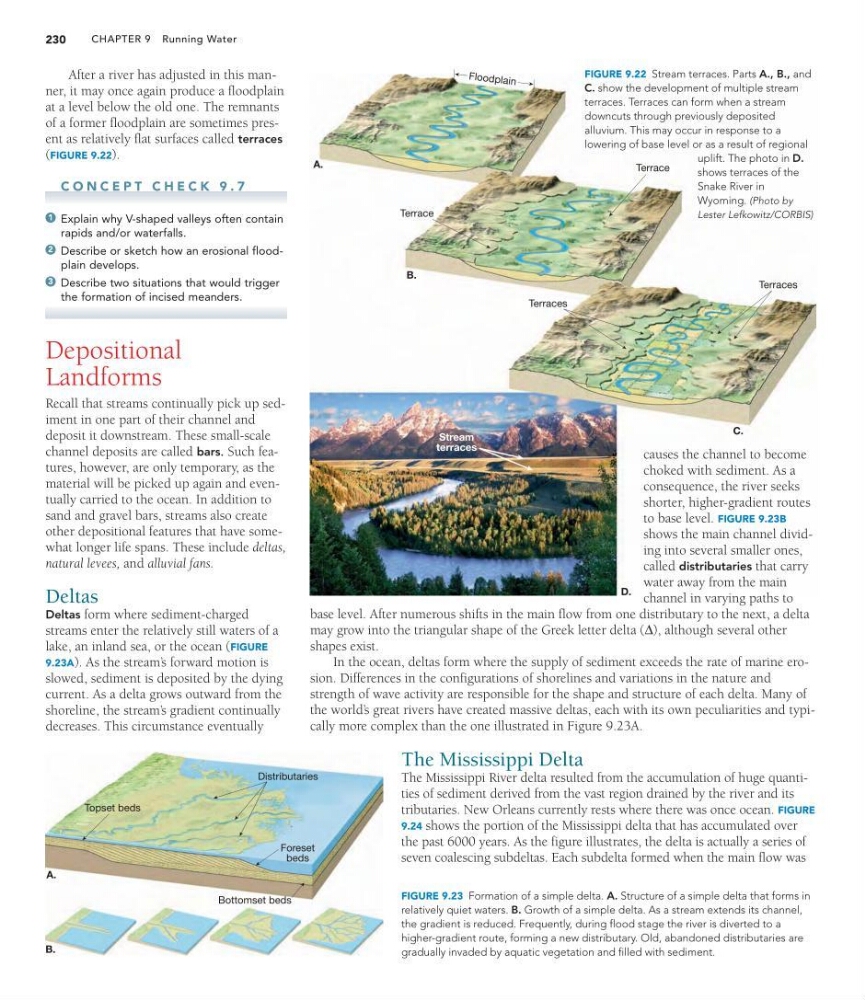
FIGURE 9.23 Formation of a simple delta. A. Structure of a simple delta that forms in
relatively quiet waters. B. Growth of a simple delta. As a stream extends its channel,
the gradient is reduced. Frequently, during flood stage the river is diverted to a
higher-gradient route, forming a new distributary. Old, abandoned distributaries are
gradually invaded by aquatic vegetation and filled with sediment.
A.
Topset beds
Distributaries
Foreset
beds
Bottomset beds
B.
After a river has adjusted in this manner, it may once again produce a floodplain
at a level below the old one. The remnants
of a former floodplain are sometimes present as relatively flat surfaces called terraces
(FIGURE 9.22).
C O N C E P T C H E C K 9 . 7
Explain why V-shaped valleys often contain
rapids and/or waterfalls.
Describe or sketch how an erosional floodplain develops.
Describe two situations that would trigger
the formation of incised meanders.
Depositional
Landforms
Recall that streams continually pick up sediment in one part of their channel and
deposit it downstream. These small-scale
channel deposits are called bars. Such features, however, are only temporary, as the
material will be picked up again and eventually carried to the ocean. In addition to
sand and gravel bars, streams also create
other depositional features that have somewhat longer life spans. These include deltas,
natural levees, and alluvial fans.
Deltas
Deltas form where sediment-charged
streams enter the relatively still waters of a
lake, an inland sea, or the ocean (FIGURE
9.23A). As the stream’ s forward motion is
slowed, sediment is deposited by the dying
current. As a delta grows outward from the
shoreline, the stream’ s gradient continually
decreases. This circumstance eventually
3
2
1
CHAPTER 9 Running Water
230
A.
B.
C.
Flo od pla in
Terrace
Terraces
Terraces
Terrace
D.
Stream
terraces
FIGURE 9.22 Stream terraces. Parts A., B., and
C. show the development of multiple stream
terraces. Terraces can form when a stream
downcuts through previously deposited
alluvium. This may occur in response to a
lowering of base level or as a result of regional
uplift. The photo in D.
shows terraces of the
Snake River in
Wyoming. (Photo by
Lester Lefkowitz/CORBIS)
causes the channel to become
choked with sediment. As a
consequence, the river seeks
shorter, higher-gradient routes
to base level. FIGURE 9.23B
shows the main channel dividing into several smaller ones,
called distributaries that carry
water away from the main
channel in varying paths to
base level. After numerous shifts in the main flow from one distributary to the next, a delta
may grow into the triangular shape of the Greek letter delta (Δ), although several other
shapes exist.
In the ocean, deltas form where the supply of sediment exceeds the rate of marine erosion. Differences in the configurations of shorelines and variations in the nature and
strength of wave activity are responsible for the shape and structure of each delta. Many of
the world’ s great rivers have created massive deltas, each with its own peculiarities and typically more complex than the one illustrated in Figure 9.23A.
The Mississippi Delta
The Mississippi River delta resulted from the accumulation of huge quantities of sediment derived from the vast region drained by the river and its
tributaries. New Orleans currently rests where there was once ocean. FIGURE
9.24 shows the portion of the Mississippi delta that has accumulated over
the past 6000 years. As the figure illustrates, the delta is actually a series of
seven coalescing subdeltas. Each subdelta formed when the main flow was
relatively quiet waters. B. Growth of a simple delta. As a stream extends its channel,
the gradient is reduced. Frequently, during flood stage the river is diverted to a
higher-gradient route, forming a new distributary. Old, abandoned distributaries are
gradually invaded by aquatic vegetation and filled with sediment.
A.
Topset beds
Distributaries
Foreset
beds
Bottomset beds
B.
After a river has adjusted in this manner, it may once again produce a floodplain
at a level below the old one. The remnants
of a former floodplain are sometimes present as relatively flat surfaces called terraces
(FIGURE 9.22).
C O N C E P T C H E C K 9 . 7
Explain why V-shaped valleys often contain
rapids and/or waterfalls.
Describe or sketch how an erosional floodplain develops.
Describe two situations that would trigger
the formation of incised meanders.
Depositional
Landforms
Recall that streams continually pick up sediment in one part of their channel and
deposit it downstream. These small-scale
channel deposits are called bars. Such features, however, are only temporary, as the
material will be picked up again and eventually carried to the ocean. In addition to
sand and gravel bars, streams also create
other depositional features that have somewhat longer life spans. These include deltas,
natural levees, and alluvial fans.
Deltas
Deltas form where sediment-charged
streams enter the relatively still waters of a
lake, an inland sea, or the ocean (FIGURE
9.23A). As the stream’ s forward motion is
slowed, sediment is deposited by the dying
current. As a delta grows outward from the
shoreline, the stream’ s gradient continually
decreases. This circumstance eventually
3
2
1
CHAPTER 9 Running Water
230
A.
B.
C.
Flo od pla in
Terrace
Terraces
Terraces
Terrace
D.
Stream
terraces
FIGURE 9.22 Stream terraces. Parts A., B., and
C. show the development of multiple stream
terraces. Terraces can form when a stream
downcuts through previously deposited
alluvium. This may occur in response to a
lowering of base level or as a result of regional
uplift. The photo in D.
shows terraces of the
Snake River in
Wyoming. (Photo by
Lester Lefkowitz/CORBIS)
causes the channel to become
choked with sediment. As a
consequence, the river seeks
shorter, higher-gradient routes
to base level. FIGURE 9.23B
shows the main channel dividing into several smaller ones,
called distributaries that carry
water away from the main
channel in varying paths to
base level. After numerous shifts in the main flow from one distributary to the next, a delta
may grow into the triangular shape of the Greek letter delta (Δ), although several other
shapes exist.
In the ocean, deltas form where the supply of sediment exceeds the rate of marine erosion. Differences in the configurations of shorelines and variations in the nature and
strength of wave activity are responsible for the shape and structure of each delta. Many of
the world’ s great rivers have created massive deltas, each with its own peculiarities and typically more complex than the one illustrated in Figure 9.23A.
The Mississippi Delta
The Mississippi River delta resulted from the accumulation of huge quantities of sediment derived from the vast region drained by the river and its
tributaries. New Orleans currently rests where there was once ocean. FIGURE
9.24 shows the portion of the Mississippi delta that has accumulated over
the past 6000 years. As the figure illustrates, the delta is actually a series of
seven coalescing subdeltas. Each subdelta formed when the main flow was