

flood stage the total quantity of material carried in suspension also increases dramatically,
verifiable by people whose homes have become sites for the deposition of this material.
For example, during its flood stage the Yellow River (Hwang Ho) of China is reported to
carry an amount of sediment equal in weight to the water that carries it. Rivers such as this
are appropriately described as “too thick to drink but too thin to cultivate.”
The type and amount of material carried in suspension are controlled by two factors: the
flow velocity and the settling velocity of each sediment grain. Settling velocity is defined as
the speed at which a particle falls through a
still fluid. The larger the particle, the more
rapidly it settles toward the stream bed. In
addition to size, the shape and specific gravity
of particles also influence settling velocity. Flat
grains sink through water more slowly
than spherical grains, and dense particles fall
toward the bottom more rapidly than less
dense particles. The slower the settling velocity and higher the flow velocity, the longer a
sediment particle will stay in suspension and the farther it will be carried downstream.
BED LOAD. Coarse material, including coarse sands, gravels, and even boulders typically
move along the bed of the channel as bed load. The particles that make up the bed load
move by rolling, sliding, and saltation. Sediment moving by saltation appears to jump or
skip along the stream bed (see Figure 9.12). This occurs as particles are propelled upward
by collisions or lifted by the current and then carried downstream a short distance until
gravity pulls them back to the bed of the stream. Particles that are too large or heavy to
move by saltation either roll or slide along the bottom, depending on their shapes.
Compared with suspended load, the movement of bed load through a stream network
tends to be less rapid and more localized. A study conducted on a glacially fed river in
Norway determined that suspended sediments took only a day to exit the drainage basin,
while the bed load required several decades to travel the same distance. Depending on the
discharge and slope of the channel, coarse gravels may only be moved during times of high
flow, while boulders move only during exceptional floods. Once set in motion, large
particles are usually carried short distances. Along some stretches of a stream, bed load
cannot be carried at all until it is broken into smaller particles.
CAPACITY AND COMPETENCE. A stream’ s ability to carry solid particles is described using
two criteria—capacity and competence. Capacity is the maximum load of solid particles a
stream can transport per unit time. The greater the discharge, the greater the stream’ s capacity
for hauling sediment. Consequently, large rivers with high flow velocities have large capacities.
Competence is a measure of a stream’ s ability to transport particles based on size rather
than quantity. Flow velocity is key—swift streams have greater competencies than slow
streams, regardless of channel size. A stream’ s competence increases proportionately to the
square of its velocity. Thus, if the velocity of a stream doubles, the impact force of the water
increases four times; if the velocity triples, the force increases nine times, and so forth.
Hence, large boulders that are often visible during low water and seem immovable can, in
fact, be transported during exceptional floods because of the stream’ s increased competence.
By now it should be clear why the greatest erosion and transportation of sediment
occur during periods of high water associated with floods. The increase in discharge results
in greater capacity; the increased velocity produces greater competency. Rising velocity
makes the water more turbulent, and larger particles are set in motion. In the course of a
few days, or perhaps a few hours, a stream at flood stage can erode and transport more
sediment than it does during several months of normal flow.
Deposition of Sediment by Streams
Deposition occurs whenever a stream slows, causing a reduction in competence. As its
velocity decreases, sediment begins to settle, largest particles first. Thus, stream transport
provides a mechanism by which solid particles of various sizes are separated. This process,
called sorting, explains why particles of similar size are deposited together.
224
D I D Y O U K N O W ?
In the United States, hydroelectric
power plants contribute about
2.4 percent of the country’s energy
needs. Most of this energy is produced
at large dams.
FIGURE 9.13 Colorado River, Grand Canyon
National Park. The muddy appearance is a result
of suspended sediment. (Photo by Michael Collier)
CHAPTER 9 Running Water
The general term for sediment deposited
by streams is alluvium. Many different depositional features are composed of alluvium.
Some occur within stream channels, some
occur on the valley floor adjacent to the
channel, and some are found at the mouth
of the stream. We will consider the nature of
these features later in the chapter.
C O N C E P T C H E C K 9 . 4
Describe two processes by which streams
cut channels in bedrock.
In what three ways does a stream transport
its load?
If you collect a jar of water from a stream,
what part of its load will settle to the bottom of the jar? What portion will remain in
the water indefinitely? What part of the
stream’s load would probably not be
present in your sample?
Explain the difference between capacity
and competency.
What is settling velocity? What factors
influence settling velocity?
Stream Channels
A basic characteristic that distinguishes
streamflow from overland flow is that it is
confined in a channel. A stream channel can
be thought of as an open conduit consisting
of the streambed and banks that act to confine flow except, of course, during floods.
Although somewhat oversimplified, we
can divide stream channels into two basic
types. Bedrock channels are those in which
the streams are actively cutting into solid
5
4
3
2
1
verifiable by people whose homes have become sites for the deposition of this material.
For example, during its flood stage the Yellow River (Hwang Ho) of China is reported to
carry an amount of sediment equal in weight to the water that carries it. Rivers such as this
are appropriately described as “too thick to drink but too thin to cultivate.”
The type and amount of material carried in suspension are controlled by two factors: the
flow velocity and the settling velocity of each sediment grain. Settling velocity is defined as
the speed at which a particle falls through a
still fluid. The larger the particle, the more
rapidly it settles toward the stream bed. In
addition to size, the shape and specific gravity
of particles also influence settling velocity. Flat
grains sink through water more slowly
than spherical grains, and dense particles fall
toward the bottom more rapidly than less
dense particles. The slower the settling velocity and higher the flow velocity, the longer a
sediment particle will stay in suspension and the farther it will be carried downstream.
BED LOAD. Coarse material, including coarse sands, gravels, and even boulders typically
move along the bed of the channel as bed load. The particles that make up the bed load
move by rolling, sliding, and saltation. Sediment moving by saltation appears to jump or
skip along the stream bed (see Figure 9.12). This occurs as particles are propelled upward
by collisions or lifted by the current and then carried downstream a short distance until
gravity pulls them back to the bed of the stream. Particles that are too large or heavy to
move by saltation either roll or slide along the bottom, depending on their shapes.
Compared with suspended load, the movement of bed load through a stream network
tends to be less rapid and more localized. A study conducted on a glacially fed river in
Norway determined that suspended sediments took only a day to exit the drainage basin,
while the bed load required several decades to travel the same distance. Depending on the
discharge and slope of the channel, coarse gravels may only be moved during times of high
flow, while boulders move only during exceptional floods. Once set in motion, large
particles are usually carried short distances. Along some stretches of a stream, bed load
cannot be carried at all until it is broken into smaller particles.
CAPACITY AND COMPETENCE. A stream’ s ability to carry solid particles is described using
two criteria—capacity and competence. Capacity is the maximum load of solid particles a
stream can transport per unit time. The greater the discharge, the greater the stream’ s capacity
for hauling sediment. Consequently, large rivers with high flow velocities have large capacities.
Competence is a measure of a stream’ s ability to transport particles based on size rather
than quantity. Flow velocity is key—swift streams have greater competencies than slow
streams, regardless of channel size. A stream’ s competence increases proportionately to the
square of its velocity. Thus, if the velocity of a stream doubles, the impact force of the water
increases four times; if the velocity triples, the force increases nine times, and so forth.
Hence, large boulders that are often visible during low water and seem immovable can, in
fact, be transported during exceptional floods because of the stream’ s increased competence.
By now it should be clear why the greatest erosion and transportation of sediment
occur during periods of high water associated with floods. The increase in discharge results
in greater capacity; the increased velocity produces greater competency. Rising velocity
makes the water more turbulent, and larger particles are set in motion. In the course of a
few days, or perhaps a few hours, a stream at flood stage can erode and transport more
sediment than it does during several months of normal flow.
Deposition of Sediment by Streams
Deposition occurs whenever a stream slows, causing a reduction in competence. As its
velocity decreases, sediment begins to settle, largest particles first. Thus, stream transport
provides a mechanism by which solid particles of various sizes are separated. This process,
called sorting, explains why particles of similar size are deposited together.
224
D I D Y O U K N O W ?
In the United States, hydroelectric
power plants contribute about
2.4 percent of the country’s energy
needs. Most of this energy is produced
at large dams.
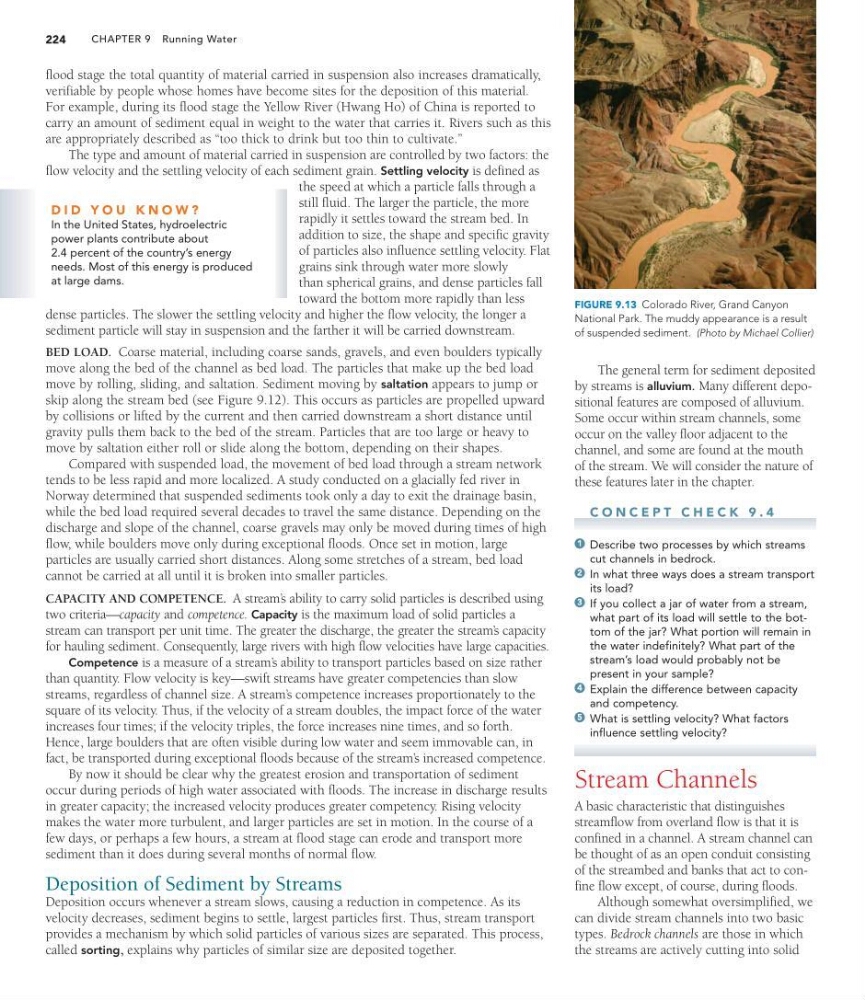
FIGURE 9.13 Colorado River, Grand Canyon
National Park. The muddy appearance is a result
of suspended sediment. (Photo by Michael Collier)
CHAPTER 9 Running Water
The general term for sediment deposited
by streams is alluvium. Many different depositional features are composed of alluvium.
Some occur within stream channels, some
occur on the valley floor adjacent to the
channel, and some are found at the mouth
of the stream. We will consider the nature of
these features later in the chapter.
C O N C E P T C H E C K 9 . 4
Describe two processes by which streams
cut channels in bedrock.
In what three ways does a stream transport
its load?
If you collect a jar of water from a stream,
what part of its load will settle to the bottom of the jar? What portion will remain in
the water indefinitely? What part of the
stream’s load would probably not be
present in your sample?
Explain the difference between capacity
and competency.
What is settling velocity? What factors
influence settling velocity?
Stream Channels
A basic characteristic that distinguishes
streamflow from overland flow is that it is
confined in a channel. A stream channel can
be thought of as an open conduit consisting
of the streambed and banks that act to confine flow except, of course, during floods.
Although somewhat oversimplified, we
can divide stream channels into two basic
types. Bedrock channels are those in which
the streams are actively cutting into solid
5
4
3
2
1