

CHAPTER 9 Running Water
216
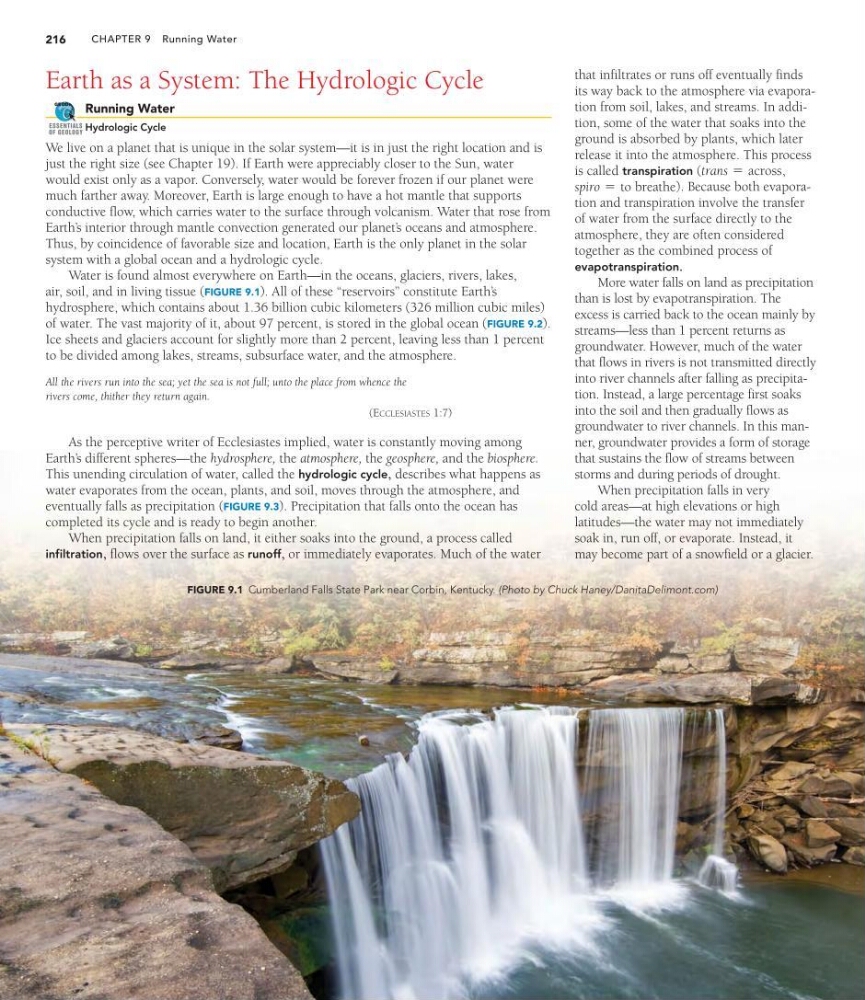
FIGURE 9.1 Cumberland Falls State Park near Corbin, Kentucky. (Photo by Chuck Haney/DanitaDelimont.com)
that infiltrates or runs off eventually finds
its way back to the atmosphere via evaporation from soil, lakes, and streams. In addition, some of the water that soaks into the
ground is absorbed by plants, which later
release it into the atmosphere. This process
is called transpiration (
,
). Because both evaporation and transpiration involve the transfer
of water from the surface directly to the
atmosphere, they are often considered
together as the combined process of
evapotranspiration.
More water falls on land as precipitation
than is lost by evapotranspiration. The
excess is carried back to the ocean mainly by
streams—less than 1 percent returns as
groundwater. However, much of the water
that flows in rivers is not transmitted directly
into river channels after falling as precipitation. Instead, a large percentage first soaks
into the soil and then gradually flows as
groundwater to river channels. In this manner, groundwater provides a form of storage
that sustains the flow of streams between
storms and during periods of drought.
When precipitation falls in very
cold areas—at high elevations or high
latitudes—the water may not immediately
soak in, run off, or evaporate. Instead, it
may become part of a snowfield or a glacier.
spiro = to breathe
trans = across
Earth as a System: The Hydrologic Cycle
Running Water
Hydrologic Cycle
We live on a planet that is unique in the solar system—it is in just the right location and is
just the right size (see Chapter 19). If Earth were appreciably closer to the Sun, water
would exist only as a vapor. Conversely, water would be forever frozen if our planet were
much farther away. Moreover, Earth is large enough to have a hot mantle that supports
conductive flow, which carries water to the surface through volcanism. Water that rose from
Earth’ s interior through mantle convection generated our planet’ s oceans and atmosphere.
Thus, by coincidence of favorable size and location, Earth is the only planet in the solar
system with a global ocean and a hydrologic cycle.
Water is found almost everywhere on Earth—in the oceans, glaciers, rivers, lakes,
air, soil, and in living tissue (FIGURE 9.1). All of these “reservoirs” constitute Earth’ s
hydrosphere, which contains about 1.36 billion cubic kilometers (326 million cubic miles)
of water. The vast majority of it, about 97 percent, is stored in the global ocean (FIGURE 9.2).
Ice sheets and glaciers account for slightly more than 2 percent, leaving less than 1 percent
to be divided among lakes, streams, subsurface water, and the atmosphere.
All the rivers run into the sea; yet the sea is not full; unto the place from whence the
rivers come, thither they return again.
(ECCLESIASTES 1:7)
As the perceptive writer of Ecclesiastes implied, water is constantly moving among
Earth’ s different spheres—the hydrosphere, the atmosphere, the geosphere, and the biosphere.
This unending circulation of water, called the hydrologic cycle, describes what happens as
water evaporates from the ocean, plants, and soil, moves through the atmosphere, and
eventually falls as precipitation (FIGURE 9.3). Precipitation that falls onto the ocean has
completed its cycle and is ready to begin another.
When precipitation falls on land, it either soaks into the ground, a process called
infiltration, flows over the surface as runoff, or immediately evaporates. Much of the water
GEODe
ESSENTIALS
OF GEOLOGY
216
FIGURE 9.1 Cumberland Falls State Park near Corbin, Kentucky. (Photo by Chuck Haney/DanitaDelimont.com)
that infiltrates or runs off eventually finds
its way back to the atmosphere via evaporation from soil, lakes, and streams. In addition, some of the water that soaks into the
ground is absorbed by plants, which later
release it into the atmosphere. This process
is called transpiration (
,
). Because both evaporation and transpiration involve the transfer
of water from the surface directly to the
atmosphere, they are often considered
together as the combined process of
evapotranspiration.
More water falls on land as precipitation
than is lost by evapotranspiration. The
excess is carried back to the ocean mainly by
streams—less than 1 percent returns as
groundwater. However, much of the water
that flows in rivers is not transmitted directly
into river channels after falling as precipitation. Instead, a large percentage first soaks
into the soil and then gradually flows as
groundwater to river channels. In this manner, groundwater provides a form of storage
that sustains the flow of streams between
storms and during periods of drought.
When precipitation falls in very
cold areas—at high elevations or high
latitudes—the water may not immediately
soak in, run off, or evaporate. Instead, it
may become part of a snowfield or a glacier.
spiro = to breathe
trans = across
Earth as a System: The Hydrologic Cycle
Running Water
Hydrologic Cycle
We live on a planet that is unique in the solar system—it is in just the right location and is
just the right size (see Chapter 19). If Earth were appreciably closer to the Sun, water
would exist only as a vapor. Conversely, water would be forever frozen if our planet were
much farther away. Moreover, Earth is large enough to have a hot mantle that supports
conductive flow, which carries water to the surface through volcanism. Water that rose from
Earth’ s interior through mantle convection generated our planet’ s oceans and atmosphere.
Thus, by coincidence of favorable size and location, Earth is the only planet in the solar
system with a global ocean and a hydrologic cycle.
Water is found almost everywhere on Earth—in the oceans, glaciers, rivers, lakes,
air, soil, and in living tissue (FIGURE 9.1). All of these “reservoirs” constitute Earth’ s
hydrosphere, which contains about 1.36 billion cubic kilometers (326 million cubic miles)
of water. The vast majority of it, about 97 percent, is stored in the global ocean (FIGURE 9.2).
Ice sheets and glaciers account for slightly more than 2 percent, leaving less than 1 percent
to be divided among lakes, streams, subsurface water, and the atmosphere.
All the rivers run into the sea; yet the sea is not full; unto the place from whence the
rivers come, thither they return again.
(ECCLESIASTES 1:7)
As the perceptive writer of Ecclesiastes implied, water is constantly moving among
Earth’ s different spheres—the hydrosphere, the atmosphere, the geosphere, and the biosphere.
This unending circulation of water, called the hydrologic cycle, describes what happens as
water evaporates from the ocean, plants, and soil, moves through the atmosphere, and
eventually falls as precipitation (FIGURE 9.3). Precipitation that falls onto the ocean has
completed its cycle and is ready to begin another.
When precipitation falls on land, it either soaks into the ground, a process called
infiltration, flows over the surface as runoff, or immediately evaporates. Much of the water
GEODe
ESSENTIALS
OF GEOLOGY