

CHAPTER 8 Mass Wasting: The Work of Gravity
208
upper layers reduces the strength of the clay
below, causing slope failure.
C O N C E P T C H E C K 8 . 5
Without looking at Figures 8.14 and 8.15,
can you sketch and label a simple crosssection (side view) of a slump?
Rockslide
Mass Wasting
Types of Mass Wasting
Rockslides occur when blocks of bedrock
break loose and slide down a slope
(FIGURE 8.16). If the material is largely
unconsolidated, the term debris slide is
used instead. Such events are among the
fastest and most destructive mass movements. Usually rockslides take place in a
geologic setting where the rock strata are
inclined or where joints and fractures exist
parallel to the slope. When such a rock unit
is undercut at the base of the slope, it loses
support and the rock eventually gives way.
Sometimes the rockslide is triggered when
rain or melting snow lubricates the underlying surface to the point that friction is no
longer sufficient to hold the rock unit in
place. As a result, rockslides tend to be
more common during the spring, when
heavy rains and melting snow are most
prevalent.
As was mentioned earlier, earthquakes
can trigger rockslides and other mass
GEODe
ESSENTIALS
OF GEOLOGY
1
Surface of
rupture
Rockslide
FIGURE 8.16 Rockslides and debris slides are
rapid movements that are classified as
translational slides in which the material moves
along a relatively flat surface with little or no
rotation or backward tilting.
Gros Ventre
landslide debris
C la y b e d
Limestone
0
0.5
1
kilometer
Lake
Scar
S a n d s to n e
Former land
surface
Rupture
surface
A.
B.
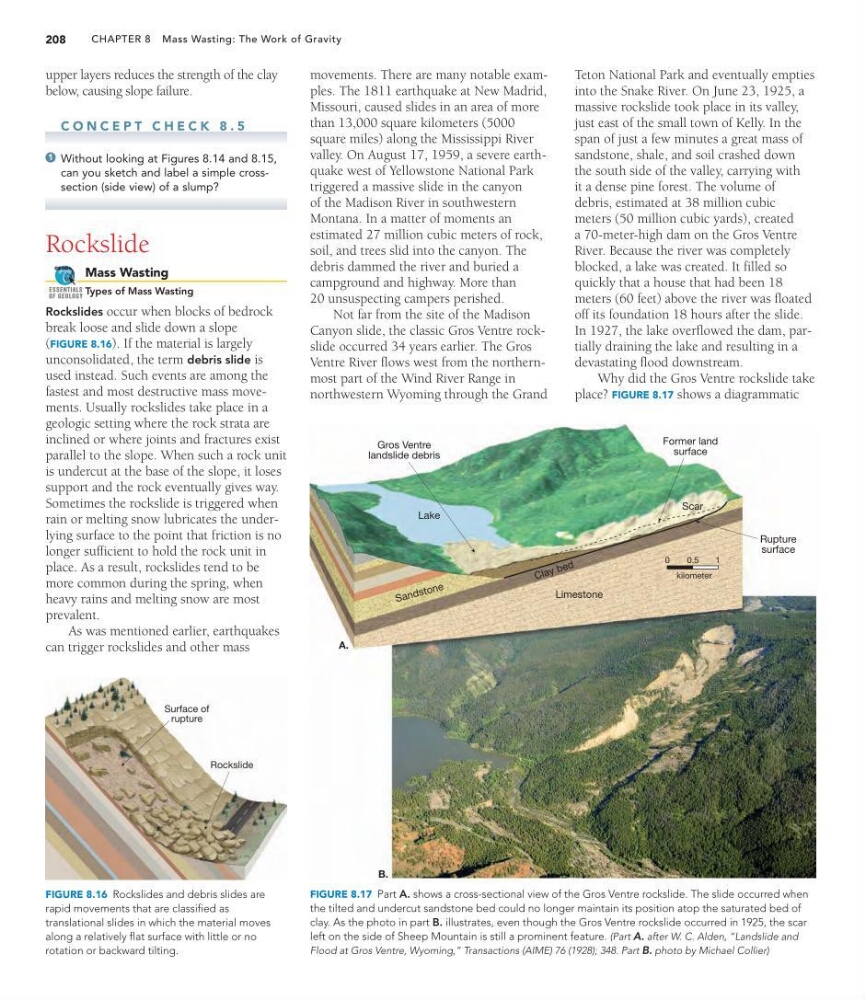
FIGURE 8.17 Part A. shows a cross-sectional view of the Gros Ventre rockslide. The slide occurred when
the tilted and undercut sandstone bed could no longer maintain its position atop the saturated bed of
clay. As the photo in part B. illustrates, even though the Gros Ventre rockslide occurred in 1925, the scar
left on the side of Sheep Mountain is still a prominent feature. (Part A. after W. C. Alden, “Landslide and
Flood at Gros Ventre, Wyoming,” Transactions (AIME) 76 (1928); 348. Part B. photo by Michael Collier)
Teton National Park and eventually empties
into the Snake River. On June 23, 1925, a
massive rockslide took place in its valley,
just east of the small town of Kelly. In the
span of just a few minutes a great mass of
sandstone, shale, and soil crashed down
the south side of the valley, carrying with
it a dense pine forest. The volume of
debris, estimated at 38 million cubic
meters (50 million cubic yards), created
a 70-meter-high dam on the Gros Ventre
River. Because the river was completely
blocked, a lake was created. It filled so
quickly that a house that had been 18
meters (60 feet) above the river was floated
off its foundation 18 hours after the slide.
In 1927, the lake overflowed the dam, partially draining the lake and resulting in a
devastating flood downstream.
Why did the Gros Ventre rockslide take
place? FIGURE 8.17 shows a diagrammatic
movements. There are many notable examples. The 1811 earthquake at New Madrid,
Missouri, caused slides in an area of more
than 13,000 square kilometers (5000
square miles) along the Mississippi River
valley. On August 17, 1959, a severe earthquake west of Yellowstone National Park
triggered a massive slide in the canyon
of the Madison River in southwestern
Montana. In a matter of moments an
estimated 27 million cubic meters of rock,
soil, and trees slid into the canyon. The
debris dammed the river and buried a
campground and highway. More than
20 unsuspecting campers perished.
Not far from the site of the Madison
Canyon slide, the classic Gros Ventre rockslide occurred 34 years earlier. The Gros
Ventre River flows west from the northernmost part of the Wind River Range in
northwestern Wyoming through the Grand
208
upper layers reduces the strength of the clay
below, causing slope failure.
C O N C E P T C H E C K 8 . 5
Without looking at Figures 8.14 and 8.15,
can you sketch and label a simple crosssection (side view) of a slump?
Rockslide
Mass Wasting
Types of Mass Wasting
Rockslides occur when blocks of bedrock
break loose and slide down a slope
(FIGURE 8.16). If the material is largely
unconsolidated, the term debris slide is
used instead. Such events are among the
fastest and most destructive mass movements. Usually rockslides take place in a
geologic setting where the rock strata are
inclined or where joints and fractures exist
parallel to the slope. When such a rock unit
is undercut at the base of the slope, it loses
support and the rock eventually gives way.
Sometimes the rockslide is triggered when
rain or melting snow lubricates the underlying surface to the point that friction is no
longer sufficient to hold the rock unit in
place. As a result, rockslides tend to be
more common during the spring, when
heavy rains and melting snow are most
prevalent.
As was mentioned earlier, earthquakes
can trigger rockslides and other mass
GEODe
ESSENTIALS
OF GEOLOGY
1
Surface of
rupture
Rockslide
FIGURE 8.16 Rockslides and debris slides are
rapid movements that are classified as
translational slides in which the material moves
along a relatively flat surface with little or no
rotation or backward tilting.
Gros Ventre
landslide debris
C la y b e d
Limestone
0
0.5
1
kilometer
Lake
Scar
S a n d s to n e
Former land
surface
Rupture
surface
A.
B.
FIGURE 8.17 Part A. shows a cross-sectional view of the Gros Ventre rockslide. The slide occurred when
the tilted and undercut sandstone bed could no longer maintain its position atop the saturated bed of
clay. As the photo in part B. illustrates, even though the Gros Ventre rockslide occurred in 1925, the scar
left on the side of Sheep Mountain is still a prominent feature. (Part A. after W. C. Alden, “Landslide and
Flood at Gros Ventre, Wyoming,” Transactions (AIME) 76 (1928); 348. Part B. photo by Michael Collier)
Teton National Park and eventually empties
into the Snake River. On June 23, 1925, a
massive rockslide took place in its valley,
just east of the small town of Kelly. In the
span of just a few minutes a great mass of
sandstone, shale, and soil crashed down
the south side of the valley, carrying with
it a dense pine forest. The volume of
debris, estimated at 38 million cubic
meters (50 million cubic yards), created
a 70-meter-high dam on the Gros Ventre
River. Because the river was completely
blocked, a lake was created. It filled so
quickly that a house that had been 18
meters (60 feet) above the river was floated
off its foundation 18 hours after the slide.
In 1927, the lake overflowed the dam, partially draining the lake and resulting in a
devastating flood downstream.
Why did the Gros Ventre rockslide take
place? FIGURE 8.17 shows a diagrammatic
movements. There are many notable examples. The 1811 earthquake at New Madrid,
Missouri, caused slides in an area of more
than 13,000 square kilometers (5000
square miles) along the Mississippi River
valley. On August 17, 1959, a severe earthquake west of Yellowstone National Park
triggered a massive slide in the canyon
of the Madison River in southwestern
Montana. In a matter of moments an
estimated 27 million cubic meters of rock,
soil, and trees slid into the canyon. The
debris dammed the river and buried a
campground and highway. More than
20 unsuspecting campers perished.
Not far from the site of the Madison
Canyon slide, the classic Gros Ventre rockslide occurred 34 years earlier. The Gros
Ventre River flows west from the northernmost part of the Wind River Range in
northwestern Wyoming through the Grand