

207
Slump
Scarp
Slump
block
Earthflow
Su rface o f r u p t
u r e
FIGURE 8.14 Slump occurs when material slips downslope en masse
along a curved surface of rupture. It is an example of a rotational
slide. Earthflows frequently form at the base of the slump.
between the base of the scarp and the top of the tilted
block. As this water percolates downward along the
surface of rupture, it may promote further instability
and additional movement.
Slump commonly occurs because a slope has been
oversteepened. The material on the upper portion of a
slope is held in place by the material at the bottom of
the slope. As this anchoring material at the base is
removed, the material above is made unstable and
reacts to the pull of gravity. One relatively common
example is a valley wall that becomes oversteepened by
a meandering river. The photo in FIGURE 8.15 provides
another example in which a coastal cliff has been
undercut by wave action at its base.
Slumping may also occur when a slope is overloaded, causing
internal stress on the material below. This type of slump often occurs
where weak, clay-rich material underlies layers of stronger, more
resistant rock such as sandstone. The seepage of water through the
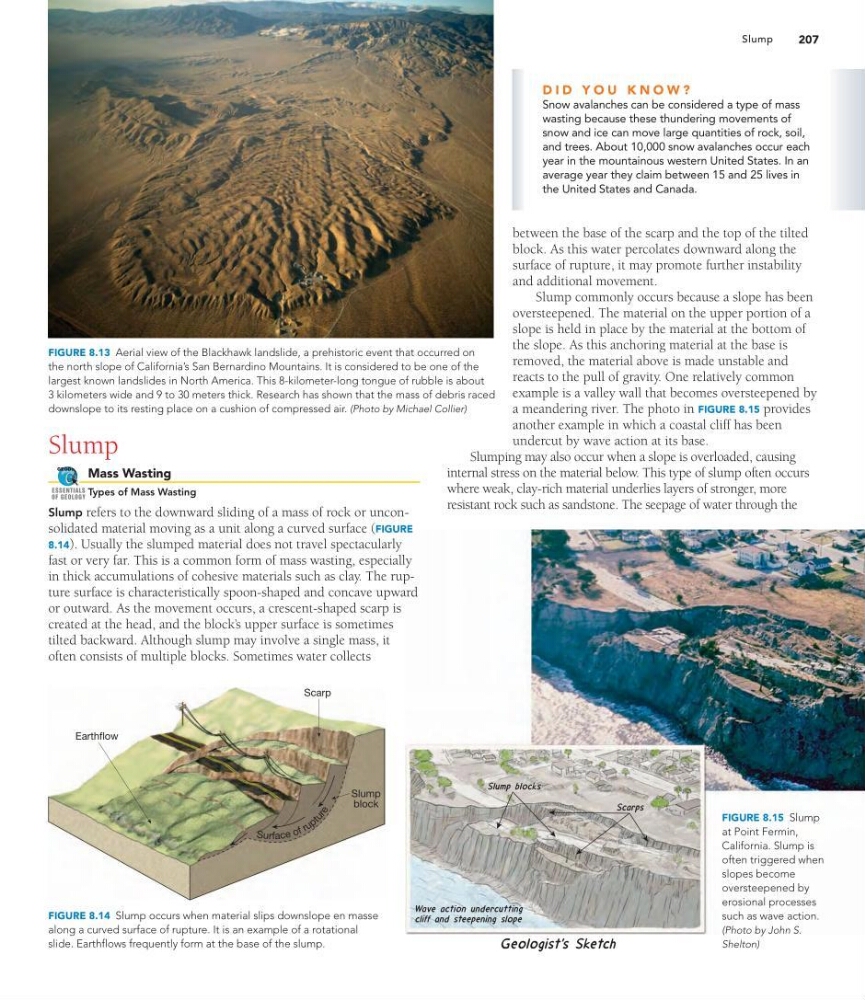
FIGURE 8.13 Aerial view of the Blackhawk landslide, a prehistoric event that occurred on
the north slope of California’s San Bernardino Mountains. It is considered to be one of the
largest known landslides in North America. This 8-kilometer-long tongue of rubble is about
3 kilometers wide and 9 to 30 meters thick. Research has shown that the mass of debris raced
downslope to its resting place on a cushion of compressed air. (Photo by Michael Collier)
FIGURE 8.15 Slump
at Point Fermin,
California. Slump is
often triggered when
slopes become
oversteepened by
erosional processes
such as wave action.
(Photo by John S.
Shelton)
Slump
Mass Wasting
Types of Mass Wasting
Slump refers to the downward sliding of a mass of rock or unconsolidated material moving as a unit along a curved surface (FIGURE
8.14). Usually the slumped material does not travel spectacularly
fast or very far. This is a common form of mass wasting, especially
in thick accumulations of cohesive materials such as clay. The rupture surface is characteristically spoon-shaped and concave upward
or outward. As the movement occurs, a crescent-shaped scarp is
created at the head, and the block’ s upper surface is sometimes
tilted backward. Although slump may involve a single mass, it
often consists of multiple blocks. Sometimes water collects
GEODe
ESSENTIALS
OF GEOLOGY
D I D Y O U K N O W ?
Snow avalanches can be considered a type of mass
wasting because these thundering movements of
snow and ice can move large quantities of rock, soil,
and trees. About 10,000 snow avalanches occur each
year in the mountainous western United States. In an
average year they claim between 15 and 25 lives in
the United States and Canada.
Slump
Scarp
Slump
block
Earthflow
Su rface o f r u p t
u r e
FIGURE 8.14 Slump occurs when material slips downslope en masse
along a curved surface of rupture. It is an example of a rotational
slide. Earthflows frequently form at the base of the slump.
between the base of the scarp and the top of the tilted
block. As this water percolates downward along the
surface of rupture, it may promote further instability
and additional movement.
Slump commonly occurs because a slope has been
oversteepened. The material on the upper portion of a
slope is held in place by the material at the bottom of
the slope. As this anchoring material at the base is
removed, the material above is made unstable and
reacts to the pull of gravity. One relatively common
example is a valley wall that becomes oversteepened by
a meandering river. The photo in FIGURE 8.15 provides
another example in which a coastal cliff has been
undercut by wave action at its base.
Slumping may also occur when a slope is overloaded, causing
internal stress on the material below. This type of slump often occurs
where weak, clay-rich material underlies layers of stronger, more
resistant rock such as sandstone. The seepage of water through the
FIGURE 8.13 Aerial view of the Blackhawk landslide, a prehistoric event that occurred on
the north slope of California’s San Bernardino Mountains. It is considered to be one of the
largest known landslides in North America. This 8-kilometer-long tongue of rubble is about
3 kilometers wide and 9 to 30 meters thick. Research has shown that the mass of debris raced
downslope to its resting place on a cushion of compressed air. (Photo by Michael Collier)
FIGURE 8.15 Slump
at Point Fermin,
California. Slump is
often triggered when
slopes become
oversteepened by
erosional processes
such as wave action.
(Photo by John S.
Shelton)
Slump
Mass Wasting
Types of Mass Wasting
Slump refers to the downward sliding of a mass of rock or unconsolidated material moving as a unit along a curved surface (FIGURE
8.14). Usually the slumped material does not travel spectacularly
fast or very far. This is a common form of mass wasting, especially
in thick accumulations of cohesive materials such as clay. The rupture surface is characteristically spoon-shaped and concave upward
or outward. As the movement occurs, a crescent-shaped scarp is
created at the head, and the block’ s upper surface is sometimes
tilted backward. Although slump may involve a single mass, it
often consists of multiple blocks. Sometimes water collects
GEODe
ESSENTIALS
OF GEOLOGY
D I D Y O U K N O W ?
Snow avalanches can be considered a type of mass
wasting because these thundering movements of
snow and ice can move large quantities of rock, soil,
and trees. About 10,000 snow avalanches occur each
year in the mountainous western United States. In an
average year they claim between 15 and 25 lives in
the United States and Canada.