

CHAPTER 7 Metamorphism and Metamorphic Rocks
190
A.
Asthenosphere
B.
Continental
crust
Partial
melting
of crust
Asthenosphere
Sediments deposited on
continental margins
Continental
crust
Ocean
basin
Sub ductin g oce an ic li t h o s p h e r e
Region of intense
metamorphism
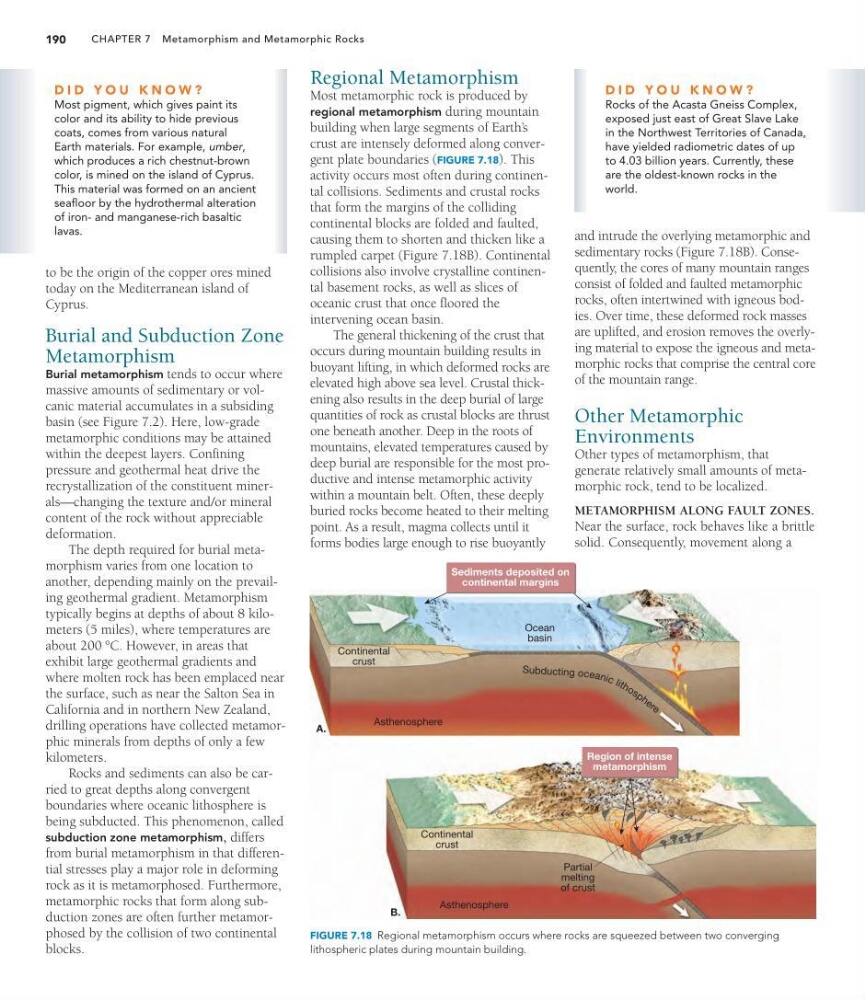
FIGURE 7.18 Regional metamorphism occurs where rocks are squeezed between two converging
lithospheric plates during mountain building.
Regional Metamorphism
Most metamorphic rock is produced by
regional metamorphism during mountain
building when large segments of Earth’ s
crust are intensely deformed along convergent plate boundaries (FIGURE 7.18). This
activity occurs most often during continental collisions. Sediments and crustal rocks
that form the margins of the colliding
continental blocks are folded and faulted,
causing them to shorten and thicken like a
rumpled carpet (Figure 7.18B). Continental
collisions also involve crystalline continental basement rocks, as well as slices of
oceanic crust that once floored the
intervening ocean basin.
The general thickening of the crust that
occurs during mountain building results in
buoyant lifting, in which deformed rocks are
elevated high above sea level. Crustal thickening also results in the deep burial of large
quantities of rock as crustal blocks are thrust
one beneath another. Deep in the roots of
mountains, elevated temperatures caused by
deep burial are responsible for the most productive and intense metamorphic activity
within a mountain belt. Often, these deeply
buried rocks become heated to their melting
point. As a result, magma collects until it
forms bodies large enough to rise buoyantly
D I D Y O U K N O W ?
Rocks of the Acasta Gneiss Complex,
exposed just east of Great Slave Lake
in the Northwest Territories of Canada,
have yielded radiometric dates of up
to 4.03 billion years. Currently, these
are the oldest-known rocks in the
world.
D I D Y O U K N O W ?
Most pigment, which gives paint its
color and its ability to hide previous
coats, comes from various natural
Earth materials. For example, umber,
which produces a rich chestnut-brown
color, is mined on the island of Cyprus.
This material was formed on an ancient
seafloor by the hydrothermal alteration
of iron- and manganese-rich basaltic
lavas.
to be the origin of the copper ores mined
today on the Mediterranean island of
Cyprus.
Burial and Subduction Zone
Metamorphism
Burial metamorphism tends to occur where
massive amounts of sedimentary or volcanic material accumulates in a subsiding
basin (see Figure 7.2). Here, low-grade
metamorphic conditions may be attained
within the deepest layers. Confining
pressure and geothermal heat drive the
recrystallization of the constituent minerals—changing the texture and/or mineral
content of the rock without appreciable
deformation.
The depth required for burial metamorphism varies from one location to
another, depending mainly on the prevailing geothermal gradient. Metamorphism
typically begins at depths of about 8 kilometers (5 miles), where temperatures are
about 200 °C. However, in areas that
exhibit large geothermal gradients and
where molten rock has been emplaced near
the surface, such as near the Salton Sea in
California and in northern New Zealand,
drilling operations have collected metamorphic minerals from depths of only a few
kilometers.
Rocks and sediments can also be carried to great depths along convergent
boundaries where oceanic lithosphere is
being subducted. This phenomenon, called
subduction zone metamorphism, differs
from burial metamorphism in that differential stresses play a major role in deforming
rock as it is metamorphosed. Furthermore,
metamorphic rocks that form along subduction zones are often further metamorphosed by the collision of two continental
blocks.
and intrude the overlying metamorphic and
sedimentary rocks (Figure 7.18B). Consequently, the cores of many mountain ranges
consist of folded and faulted metamorphic
rocks, often intertwined with igneous bodies. Over time, these deformed rock masses
are uplifted, and erosion removes the overlying material to expose the igneous and metamorphic rocks that comprise the central core
of the mountain range.
Other Metamorphic
Environments
Other types of metamorphism, that
generate relatively small amounts of metamorphic rock, tend to be localized.
METAMORPHISM ALONG FAULT ZONES.
Near the surface, rock behaves like a brittle
solid. Consequently, movement along a
190
A.
Asthenosphere
B.
Continental
crust
Partial
melting
of crust
Asthenosphere
Sediments deposited on
continental margins
Continental
crust
Ocean
basin
Sub ductin g oce an ic li t h o s p h e r e
Region of intense
metamorphism
FIGURE 7.18 Regional metamorphism occurs where rocks are squeezed between two converging
lithospheric plates during mountain building.
Regional Metamorphism
Most metamorphic rock is produced by
regional metamorphism during mountain
building when large segments of Earth’ s
crust are intensely deformed along convergent plate boundaries (FIGURE 7.18). This
activity occurs most often during continental collisions. Sediments and crustal rocks
that form the margins of the colliding
continental blocks are folded and faulted,
causing them to shorten and thicken like a
rumpled carpet (Figure 7.18B). Continental
collisions also involve crystalline continental basement rocks, as well as slices of
oceanic crust that once floored the
intervening ocean basin.
The general thickening of the crust that
occurs during mountain building results in
buoyant lifting, in which deformed rocks are
elevated high above sea level. Crustal thickening also results in the deep burial of large
quantities of rock as crustal blocks are thrust
one beneath another. Deep in the roots of
mountains, elevated temperatures caused by
deep burial are responsible for the most productive and intense metamorphic activity
within a mountain belt. Often, these deeply
buried rocks become heated to their melting
point. As a result, magma collects until it
forms bodies large enough to rise buoyantly
D I D Y O U K N O W ?
Rocks of the Acasta Gneiss Complex,
exposed just east of Great Slave Lake
in the Northwest Territories of Canada,
have yielded radiometric dates of up
to 4.03 billion years. Currently, these
are the oldest-known rocks in the
world.
D I D Y O U K N O W ?
Most pigment, which gives paint its
color and its ability to hide previous
coats, comes from various natural
Earth materials. For example, umber,
which produces a rich chestnut-brown
color, is mined on the island of Cyprus.
This material was formed on an ancient
seafloor by the hydrothermal alteration
of iron- and manganese-rich basaltic
lavas.
to be the origin of the copper ores mined
today on the Mediterranean island of
Cyprus.
Burial and Subduction Zone
Metamorphism
Burial metamorphism tends to occur where
massive amounts of sedimentary or volcanic material accumulates in a subsiding
basin (see Figure 7.2). Here, low-grade
metamorphic conditions may be attained
within the deepest layers. Confining
pressure and geothermal heat drive the
recrystallization of the constituent minerals—changing the texture and/or mineral
content of the rock without appreciable
deformation.
The depth required for burial metamorphism varies from one location to
another, depending mainly on the prevailing geothermal gradient. Metamorphism
typically begins at depths of about 8 kilometers (5 miles), where temperatures are
about 200 °C. However, in areas that
exhibit large geothermal gradients and
where molten rock has been emplaced near
the surface, such as near the Salton Sea in
California and in northern New Zealand,
drilling operations have collected metamorphic minerals from depths of only a few
kilometers.
Rocks and sediments can also be carried to great depths along convergent
boundaries where oceanic lithosphere is
being subducted. This phenomenon, called
subduction zone metamorphism, differs
from burial metamorphism in that differential stresses play a major role in deforming
rock as it is metamorphosed. Furthermore,
metamorphic rocks that form along subduction zones are often further metamorphosed by the collision of two continental
blocks.
and intrude the overlying metamorphic and
sedimentary rocks (Figure 7.18B). Consequently, the cores of many mountain ranges
consist of folded and faulted metamorphic
rocks, often intertwined with igneous bodies. Over time, these deformed rock masses
are uplifted, and erosion removes the overlying material to expose the igneous and metamorphic rocks that comprise the central core
of the mountain range.
Other Metamorphic
Environments
Other types of metamorphism, that
generate relatively small amounts of metamorphic rock, tend to be localized.
METAMORPHISM ALONG FAULT ZONES.
Near the surface, rock behaves like a brittle
solid. Consequently, movement along a