

Close up
of porphyroblast
Texture
F
o
l
i
a
t
e
d
F
o
l
i
a
t
e
d
W
e
a
k
l
y
I
n
c
r
e
a
s
i
n
g
M
e
t
a
m
o
r
p
h
i
s
m
N
o
n
f
o
l
i
a
t
e
d
Grain Size
Very fine
Fine
Medium
to
Coarse
Medium
to
Coarse
Medium
to
Coarse
Fine
Coarsegrained
Medium
to
coarse
Medium
to
coarse
Fine
Fine
Medium
to very
coarse
Original
Parent Rock
Shale,
mudstone,
or siltstone
Shale, granite,
or volcanic
rocks
Any rock type
Quartz-rich
conglomerate
Limestone,
dolostone
Quartz
sandstone
Any rock type
Bituminous
coal
Any rock type
Comments
Excellent rock cleavage,
smooth dull surfaces
Breaks along wavy
surfaces, glossy sheen
Micaceous minerals
dominate, scaly foliation
Compositional banding
due to segregation of
minerals
Banded rock with zones
of light-colored crystalline
minerals
When very fine-grained,
resembles chert, often
breaks into slabs
Stretched pebbles with
preferred orientation
Interlocking calcite
or dolomite grains
Fused quartz grains,
massive, very hard
Usually, dark massive
rock with dull luster
Shiny black rock that may
exhibit conchoidal fracture
Broken fragments in a
haphazard arrangement
Rock Name
Slate
Phyllite
Schist
Gneiss
Migmatite
Mylonite
Metaconglomerate
Marble
Quartzite
Hornfels
Anthracite
Fault breccia
Shale,
mudstone,
or siltstone
Shale,
mudstone,
or siltstone
Shale, granite,
or volcanic
rocks
FIGURE 7.11
Classification of
common metamorphic
rocks.
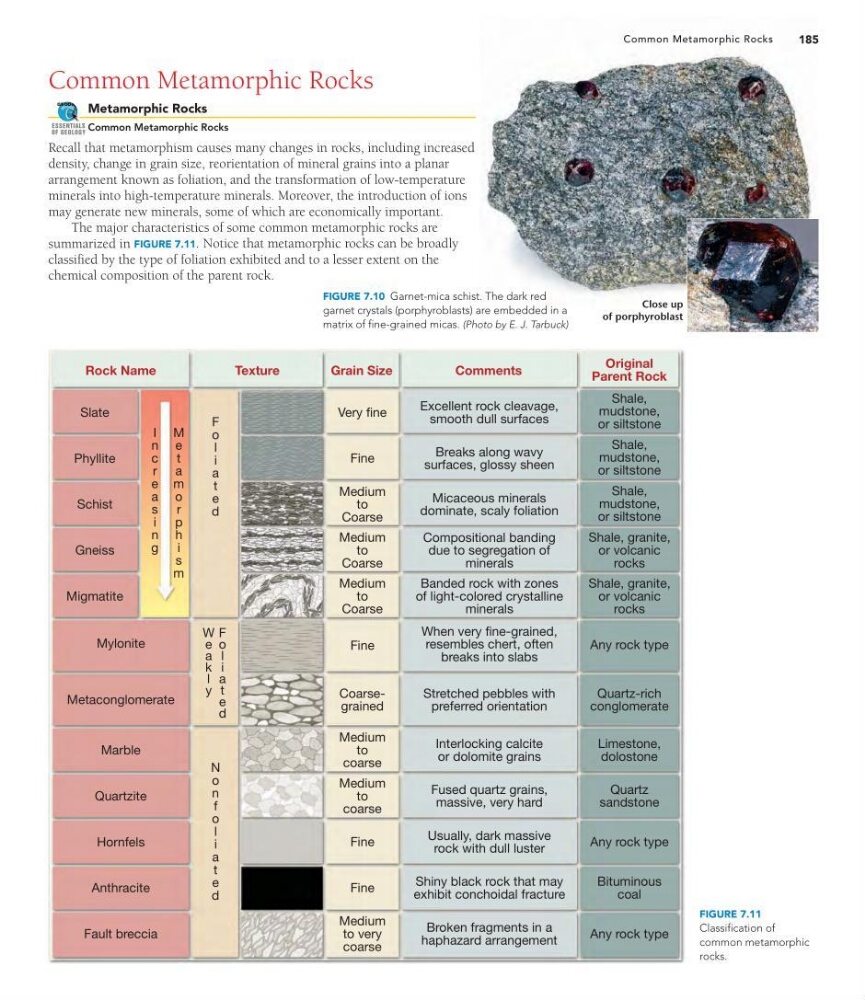
FIGURE 7.10 Garnet-mica schist. The dark red
garnet crystals (porphyroblasts) are embedded in a
matrix of fine-grained micas. (Photo by E. J. Tarbuck)
Common Metamorphic Rocks
185
Common Metamorphic Rocks
Metamorphic Rocks
Common Metamorphic Rocks
Recall that metamorphism causes many changes in rocks, including increased
density, change in grain size, reorientation of mineral grains into a planar
arrangement known as foliation, and the transformation of low-temperature
minerals into high-temperature minerals. Moreover, the introduction of ions
may generate new minerals, some of which are economically important.
The major characteristics of some common metamorphic rocks are
summarized in FIGURE 7.11. Notice that metamorphic rocks can be broadly
classified by the type of foliation exhibited and to a lesser extent on the
chemical composition of the parent rock.
GEODe
ESSENTIALS
OF GEOLOGY
of porphyroblast
Texture
F
o
l
i
a
t
e
d
F
o
l
i
a
t
e
d
W
e
a
k
l
y
I
n
c
r
e
a
s
i
n
g
M
e
t
a
m
o
r
p
h
i
s
m
N
o
n
f
o
l
i
a
t
e
d
Grain Size
Very fine
Fine
Medium
to
Coarse
Medium
to
Coarse
Medium
to
Coarse
Fine
Coarsegrained
Medium
to
coarse
Medium
to
coarse
Fine
Fine
Medium
to very
coarse
Original
Parent Rock
Shale,
mudstone,
or siltstone
Shale, granite,
or volcanic
rocks
Any rock type
Quartz-rich
conglomerate
Limestone,
dolostone
Quartz
sandstone
Any rock type
Bituminous
coal
Any rock type
Comments
Excellent rock cleavage,
smooth dull surfaces
Breaks along wavy
surfaces, glossy sheen
Micaceous minerals
dominate, scaly foliation
Compositional banding
due to segregation of
minerals
Banded rock with zones
of light-colored crystalline
minerals
When very fine-grained,
resembles chert, often
breaks into slabs
Stretched pebbles with
preferred orientation
Interlocking calcite
or dolomite grains
Fused quartz grains,
massive, very hard
Usually, dark massive
rock with dull luster
Shiny black rock that may
exhibit conchoidal fracture
Broken fragments in a
haphazard arrangement
Rock Name
Slate
Phyllite
Schist
Gneiss
Migmatite
Mylonite
Metaconglomerate
Marble
Quartzite
Hornfels
Anthracite
Fault breccia
Shale,
mudstone,
or siltstone
Shale,
mudstone,
or siltstone
Shale, granite,
or volcanic
rocks
FIGURE 7.11
Classification of
common metamorphic
rocks.
FIGURE 7.10 Garnet-mica schist. The dark red
garnet crystals (porphyroblasts) are embedded in a
matrix of fine-grained micas. (Photo by E. J. Tarbuck)
Common Metamorphic Rocks
185
Common Metamorphic Rocks
Metamorphic Rocks
Common Metamorphic Rocks
Recall that metamorphism causes many changes in rocks, including increased
density, change in grain size, reorientation of mineral grains into a planar
arrangement known as foliation, and the transformation of low-temperature
minerals into high-temperature minerals. Moreover, the introduction of ions
may generate new minerals, some of which are economically important.
The major characteristics of some common metamorphic rocks are
summarized in FIGURE 7.11. Notice that metamorphic rocks can be broadly
classified by the type of foliation exhibited and to a lesser extent on the
chemical composition of the parent rock.
GEODe
ESSENTIALS
OF GEOLOGY