

179
What Drives Metamorphism?
rocks that are composed of finegrained clay and silt sized particles.
Higher temperatures promote crystal growth in which fine particles
join together to form larger grains
with the same mineral composition.
Second, when rocks are heated,
they eventually reach a temperature
at which one or more minerals
become chemically unstable. When
this occurs, the constituent atoms
begin to arrange themselves into
crystalline structures that are more
stable in the new high-temperature
environment. These chemical reactions create new minerals with
stable configurations that have an
overall composition roughly equivalent to that of the original rock.
(In some environments ions may
actually migrate into or out of a
rock, thereby changing its overall chemical
composition.)
300°C
600°C
900°C
100
km
200
km
Igneous
intrusions
Shallow crustal rocks
are metamorphosed by
heat from rising magma
Subducting sediments
are metamorphosed due
to increase in pressure
and temperature
300°C
600°C
900°C
Deeply buried
sedimentary
strata are
metamorphosed
Subsiding
basin
Su bd u c t i n g o c e a n i c l i t h o s p h e r e
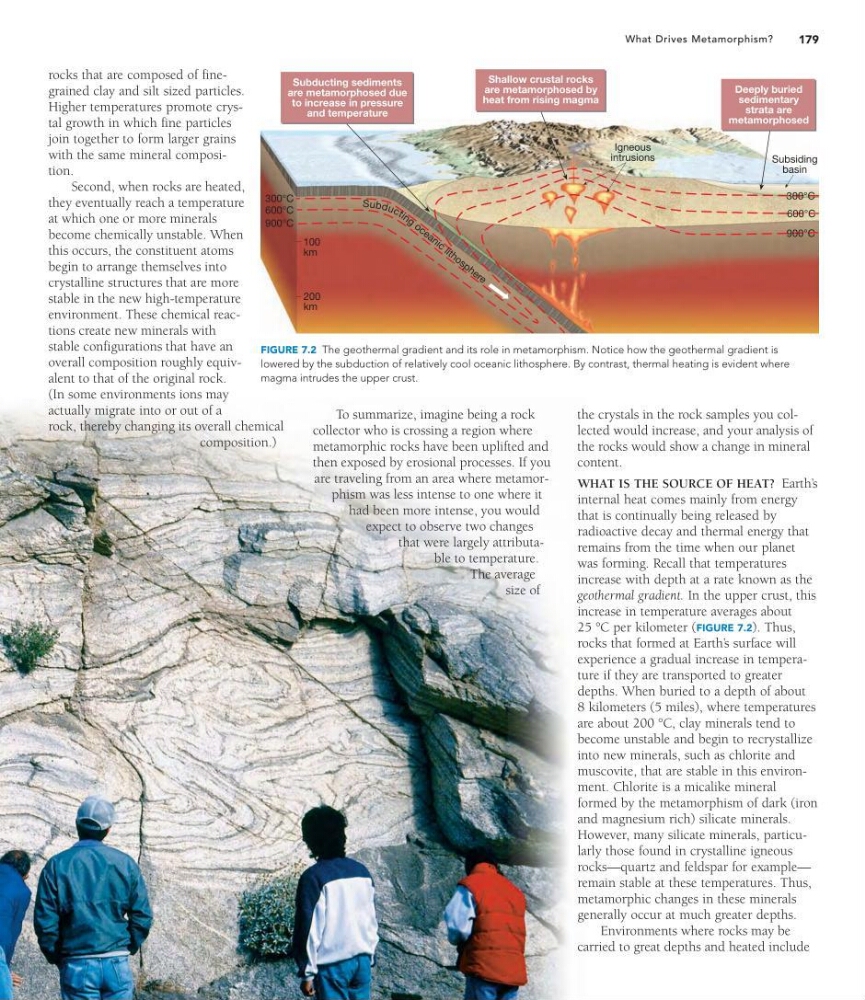
FIGURE 7.2 The geothermal gradient and its role in metamorphism. Notice how the geothermal gradient is
lowered by the subduction of relatively cool oceanic lithosphere. By contrast, thermal heating is evident where
magma intrudes the upper crust.
To summarize, imagine being a rock
collector who is crossing a region where
metamorphic rocks have been uplifted and
then exposed by erosional processes. If you
are traveling from an area where metamorphism was less intense to one where it
had been more intense, you would
expect to observe two changes
that were largely attributable to temperature.
The average
size of
the crystals in the rock samples you collected would increase, and your analysis of
the rocks would show a change in mineral
content.
WHAT IS THE SOURCE OF HEAT? Earth’ s
internal heat comes mainly from energy
that is continually being released by
radioactive decay and thermal energy that
remains from the time when our planet
was forming. Recall that temperatures
increase with depth at a rate known as the
geothermal gradient. In the upper crust, this
increase in temperature averages about
25 °C per kilometer (FIGURE 7.2). Thus,
rocks that formed at Earth’ s surface will
experience a gradual increase in temperature if they are transported to greater
depths. When buried to a depth of about
8 kilometers (5 miles), where temperatures
are about 200 °C, clay minerals tend to
become unstable and begin to recrystallize
into new minerals, such as chlorite and
muscovite, that are stable in this environment. Chlorite is a micalike mineral
formed by the metamorphism of dark (iron
and magnesium rich) silicate minerals.
However, many silicate minerals, particularly those found in crystalline igneous
rocks—quartz and feldspar for example—
remain stable at these temperatures. Thus,
metamorphic changes in these minerals
generally occur at much greater depths.
Environments where rocks may be
carried to great depths and heated include
What Drives Metamorphism?
rocks that are composed of finegrained clay and silt sized particles.
Higher temperatures promote crystal growth in which fine particles
join together to form larger grains
with the same mineral composition.
Second, when rocks are heated,
they eventually reach a temperature
at which one or more minerals
become chemically unstable. When
this occurs, the constituent atoms
begin to arrange themselves into
crystalline structures that are more
stable in the new high-temperature
environment. These chemical reactions create new minerals with
stable configurations that have an
overall composition roughly equivalent to that of the original rock.
(In some environments ions may
actually migrate into or out of a
rock, thereby changing its overall chemical
composition.)
300°C
600°C
900°C
100
km
200
km
Igneous
intrusions
Shallow crustal rocks
are metamorphosed by
heat from rising magma
Subducting sediments
are metamorphosed due
to increase in pressure
and temperature
300°C
600°C
900°C
Deeply buried
sedimentary
strata are
metamorphosed
Subsiding
basin
Su bd u c t i n g o c e a n i c l i t h o s p h e r e
FIGURE 7.2 The geothermal gradient and its role in metamorphism. Notice how the geothermal gradient is
lowered by the subduction of relatively cool oceanic lithosphere. By contrast, thermal heating is evident where
magma intrudes the upper crust.
To summarize, imagine being a rock
collector who is crossing a region where
metamorphic rocks have been uplifted and
then exposed by erosional processes. If you
are traveling from an area where metamorphism was less intense to one where it
had been more intense, you would
expect to observe two changes
that were largely attributable to temperature.
The average
size of
the crystals in the rock samples you collected would increase, and your analysis of
the rocks would show a change in mineral
content.
WHAT IS THE SOURCE OF HEAT? Earth’ s
internal heat comes mainly from energy
that is continually being released by
radioactive decay and thermal energy that
remains from the time when our planet
was forming. Recall that temperatures
increase with depth at a rate known as the
geothermal gradient. In the upper crust, this
increase in temperature averages about
25 °C per kilometer (FIGURE 7.2). Thus,
rocks that formed at Earth’ s surface will
experience a gradual increase in temperature if they are transported to greater
depths. When buried to a depth of about
8 kilometers (5 miles), where temperatures
are about 200 °C, clay minerals tend to
become unstable and begin to recrystallize
into new minerals, such as chlorite and
muscovite, that are stable in this environment. Chlorite is a micalike mineral
formed by the metamorphism of dark (iron
and magnesium rich) silicate minerals.
However, many silicate minerals, particularly those found in crystalline igneous
rocks—quartz and feldspar for example—
remain stable at these temperatures. Thus,
metamorphic changes in these minerals
generally occur at much greater depths.
Environments where rocks may be
carried to great depths and heated include