

CHAPTER 6 Sedimentary Rocks
168
D I D Y O U K N O W ?
Producing one ton of steel requires
about one-third ton of limestone and
between 2 and 20 lbs. of fluorspar
(fluorite).
A.
B.
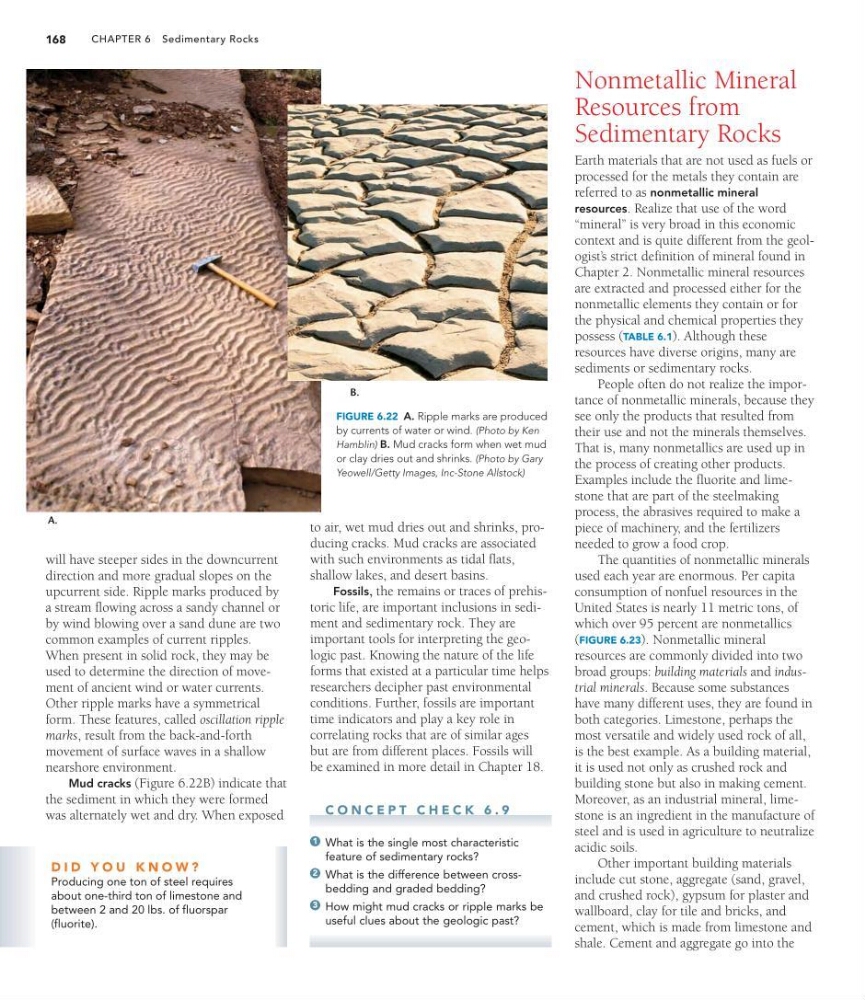
FIGURE 6.22 A. Ripple marks are produced
by currents of water or wind. (Photo by Ken
Hamblin) B. Mud cracks form when wet mud
or clay dries out and shrinks. (Photo by Gary
Yeowell/Getty Images, Inc-Stone Allstock)
will have steeper sides in the downcurrent
direction and more gradual slopes on the
upcurrent side. Ripple marks produced by
a stream flowing across a sandy channel or
by wind blowing over a sand dune are two
common examples of current ripples.
When present in solid rock, they may be
used to determine the direction of movement of ancient wind or water currents.
Other ripple marks have a symmetrical
form. These features, called oscillation ripple
marks, result from the back-and-forth
movement of surface waves in a shallow
nearshore environment.
Mud cracks (Figure 6.22B) indicate that
the sediment in which they were formed
was alternately wet and dry. When exposed
to air, wet mud dries out and shrinks, producing cracks. Mud cracks are associated
with such environments as tidal flats,
shallow lakes, and desert basins.
Fossils, the remains or traces of prehistoric life, are important inclusions in sediment and sedimentary rock. They are
important tools for interpreting the geologic past. Knowing the nature of the life
forms that existed at a particular time helps
researchers decipher past environmental
conditions. Further, fossils are important
time indicators and play a key role in
correlating rocks that are of similar ages
but are from different places. Fossils will
be examined in more detail in Chapter 18.
C O N C E P T C H E C K 6 . 9
What is the single most characteristic
feature of sedimentary rocks?
What is the difference between crossbedding and graded bedding?
How might mud cracks or ripple marks be
useful clues about the geologic past?
3
2
1
Nonmetallic Mineral
Resources from
Sedimentary Rocks
Earth materials that are not used as fuels or
processed for the metals they contain are
referred to as nonmetallic mineral
resources. Realize that use of the word
“mineral” is very broad in this economic
context and is quite different from the geologist’ s strict definition of mineral found in
Chapter 2. Nonmetallic mineral resources
are extracted and processed either for the
nonmetallic elements they contain or for
the physical and chemical properties they
possess (TABLE 6.1). Although these
resources have diverse origins, many are
sediments or sedimentary rocks.
People often do not realize the importance of nonmetallic minerals, because they
see only the products that resulted from
their use and not the minerals themselves.
That is, many nonmetallics are used up in
the process of creating other products.
Examples include the fluorite and limestone that are part of the steelmaking
process, the abrasives required to make a
piece of machinery, and the fertilizers
needed to grow a food crop.
The quantities of nonmetallic minerals
used each year are enormous. Per capita
consumption of nonfuel resources in the
United States is nearly 11 metric tons, of
which over 95 percent are nonmetallics
(FIGURE 6.23). Nonmetallic mineral
resources are commonly divided into two
broad groups: building materials and industrial minerals. Because some substances
have many different uses, they are found in
both categories. Limestone, perhaps the
most versatile and widely used rock of all,
is the best example. As a building material,
it is used not only as crushed rock and
building stone but also in making cement.
Moreover, as an industrial mineral, limestone is an ingredient in the manufacture of
steel and is used in agriculture to neutralize
acidic soils.
Other important building materials
include cut stone, aggregate (sand, gravel,
and crushed rock), gypsum for plaster and
wallboard, clay for tile and bricks, and
cement, which is made from limestone and
shale. Cement and aggregate go into the
168
D I D Y O U K N O W ?
Producing one ton of steel requires
about one-third ton of limestone and
between 2 and 20 lbs. of fluorspar
(fluorite).
A.
B.
FIGURE 6.22 A. Ripple marks are produced
by currents of water or wind. (Photo by Ken
Hamblin) B. Mud cracks form when wet mud
or clay dries out and shrinks. (Photo by Gary
Yeowell/Getty Images, Inc-Stone Allstock)
will have steeper sides in the downcurrent
direction and more gradual slopes on the
upcurrent side. Ripple marks produced by
a stream flowing across a sandy channel or
by wind blowing over a sand dune are two
common examples of current ripples.
When present in solid rock, they may be
used to determine the direction of movement of ancient wind or water currents.
Other ripple marks have a symmetrical
form. These features, called oscillation ripple
marks, result from the back-and-forth
movement of surface waves in a shallow
nearshore environment.
Mud cracks (Figure 6.22B) indicate that
the sediment in which they were formed
was alternately wet and dry. When exposed
to air, wet mud dries out and shrinks, producing cracks. Mud cracks are associated
with such environments as tidal flats,
shallow lakes, and desert basins.
Fossils, the remains or traces of prehistoric life, are important inclusions in sediment and sedimentary rock. They are
important tools for interpreting the geologic past. Knowing the nature of the life
forms that existed at a particular time helps
researchers decipher past environmental
conditions. Further, fossils are important
time indicators and play a key role in
correlating rocks that are of similar ages
but are from different places. Fossils will
be examined in more detail in Chapter 18.
C O N C E P T C H E C K 6 . 9
What is the single most characteristic
feature of sedimentary rocks?
What is the difference between crossbedding and graded bedding?
How might mud cracks or ripple marks be
useful clues about the geologic past?
3
2
1
Nonmetallic Mineral
Resources from
Sedimentary Rocks
Earth materials that are not used as fuels or
processed for the metals they contain are
referred to as nonmetallic mineral
resources. Realize that use of the word
“mineral” is very broad in this economic
context and is quite different from the geologist’ s strict definition of mineral found in
Chapter 2. Nonmetallic mineral resources
are extracted and processed either for the
nonmetallic elements they contain or for
the physical and chemical properties they
possess (TABLE 6.1). Although these
resources have diverse origins, many are
sediments or sedimentary rocks.
People often do not realize the importance of nonmetallic minerals, because they
see only the products that resulted from
their use and not the minerals themselves.
That is, many nonmetallics are used up in
the process of creating other products.
Examples include the fluorite and limestone that are part of the steelmaking
process, the abrasives required to make a
piece of machinery, and the fertilizers
needed to grow a food crop.
The quantities of nonmetallic minerals
used each year are enormous. Per capita
consumption of nonfuel resources in the
United States is nearly 11 metric tons, of
which over 95 percent are nonmetallics
(FIGURE 6.23). Nonmetallic mineral
resources are commonly divided into two
broad groups: building materials and industrial minerals. Because some substances
have many different uses, they are found in
both categories. Limestone, perhaps the
most versatile and widely used rock of all,
is the best example. As a building material,
it is used not only as crushed rock and
building stone but also in making cement.
Moreover, as an industrial mineral, limestone is an ingredient in the manufacture of
steel and is used in agriculture to neutralize
acidic soils.
Other important building materials
include cut stone, aggregate (sand, gravel,
and crushed rock), gypsum for plaster and
wallboard, clay for tile and bricks, and
cement, which is made from limestone and
shale. Cement and aggregate go into the