

167
Sedimentary Structures
Photo to come
B.
A.
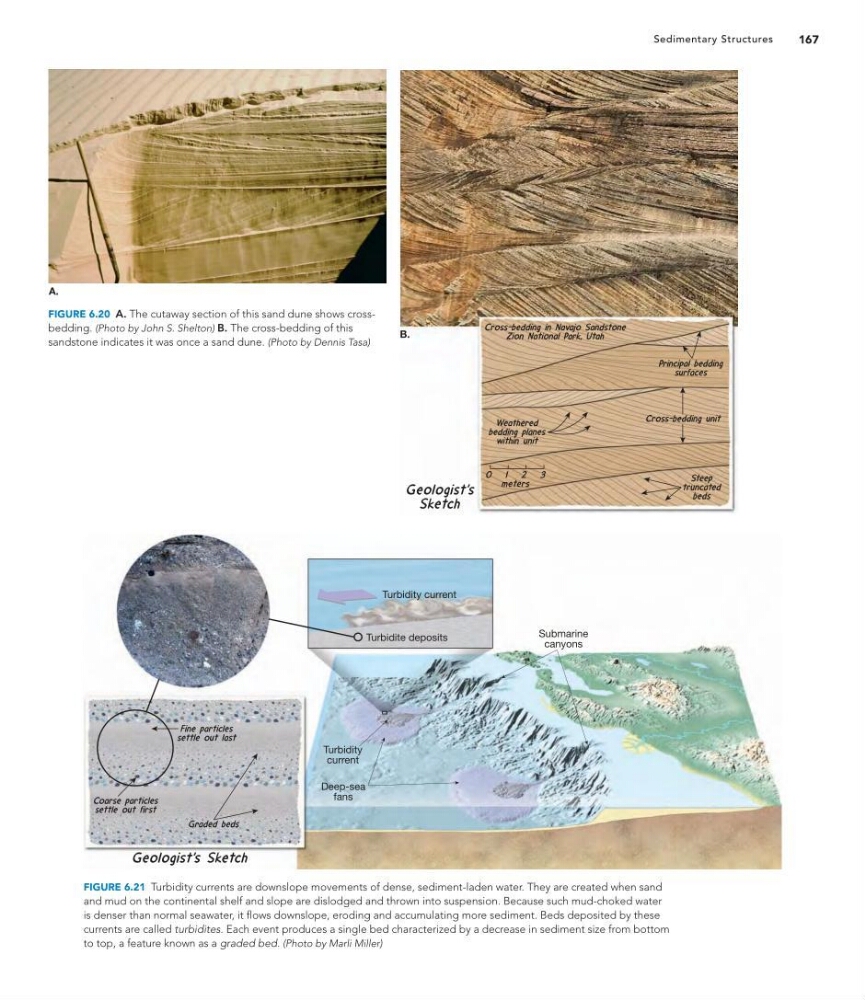
FIGURE 6.20 A. The cutaway section of this sand dune shows crossbedding. (Photo by John S. Shelton) B. The cross-bedding of this
sandstone indicates it was once a sand dune. (Photo by Dennis Tasa)
Submarine
canyons
Turbidity current
Turbidity
current
Turbidite deposits
Deep-sea
fans
FIGURE 6.21 Turbidity currents are downslope movements of dense, sediment-laden water. They are created when sand
and mud on the continental shelf and slope are dislodged and thrown into suspension. Because such mud-choked water
is denser than normal seawater, it flows downslope, eroding and accumulating more sediment. Beds deposited by these
currents are called turbidites. Each event produces a single bed characterized by a decrease in sediment size from bottom
to top, a feature known as a graded bed. (Photo by Marli Miller)
Sedimentary Structures
Photo to come
B.
A.
FIGURE 6.20 A. The cutaway section of this sand dune shows crossbedding. (Photo by John S. Shelton) B. The cross-bedding of this
sandstone indicates it was once a sand dune. (Photo by Dennis Tasa)
Submarine
canyons
Turbidity current
Turbidity
current
Turbidite deposits
Deep-sea
fans
FIGURE 6.21 Turbidity currents are downslope movements of dense, sediment-laden water. They are created when sand
and mud on the continental shelf and slope are dislodged and thrown into suspension. Because such mud-choked water
is denser than normal seawater, it flows downslope, eroding and accumulating more sediment. Beds deposited by these
currents are called turbidites. Each event produces a single bed characterized by a decrease in sediment size from bottom
to top, a feature known as a graded bed. (Photo by Marli Miller)