

CHAPTER 6 Sedimentary Rocks
162
As is the case with many (perhaps
most) classifications of natural phenomena,
the categories presented in Figure 6.16 are
more rigid than the actual state of nature.
In reality, many of the sedimentary rocks
classified into the chemical group also
contain at least small quantities of detrital
sediment. Many limestones, for example,
contain varying amounts of mud or sand,
giving them a “sandy” or “shaly” quality.
Conversely, because practically all detrital
rocks are cemented with material that was
originally dissolved in water, they too are
far from being “pure.”
As was the case with the igneous rocks
examined in Chapter 3, texture is a part of
sedimentary rock classification. Two major
textures are used in the classification of
sedimentary rocks: clastic and nonclastic.
The term clastic is taken from a Greek word
meaning “broken.” Rocks that display a
clastic texture consist of discrete
fragments and particles that are cemented
and compacted together. Although cement
is present in the spaces between particles,
ClasticTexture
(particle size)
Sediment Name
Rock Name
Coarse
(over 2 mm)
Gravel
(Rounded particles)
Gravel
(Angular particles)
Medium
(1/16 to 2 mm)
Sand
(If abundant feldspar
is present the rock
is called Arkose)
Conglomerate
Breccia
Sandstone
Fine
(1/16 to
1/256 mm)
Very fine
(less than
1/256 mm)
Mud
Mud
Siltstone
Shale or
Mudstone
Coquina
Chalk
Chert (light colored)
Flint (dark colored)
Rock Gypsum
Rock Salt
Bituminous Coal
Calcite, CaCO 3
Quartz, SiO 2
Gypsum
CaSO 4 •2H 2 O
Halite, NaCl
Altered plant
fragments
Nonclastic:
Fine to coarse
crystalline
Crystalline
Limestone
Clastic: Visible
shells and shell
fragments loosely
cemented
Clastic: Various size
shells and shell
fragments cemented
with calcite cement
Clastic: Microscopic
shells and clay
Nonclastic: Very
fine crystalline
Nonclastic: Fine to
coarse crystalline
Nonclastic: Fine to
coarse crystalline
Nonclastic:
Fine-grained
organic matter
Fossiliferous
Limestone
B
i
o
c
h
e
m
i
c
a
l
L
i
m
e
s
t
o
n
e
Texture
Composition
Rock Name
Detrital Sedimentary Rocks
Chemical and Organic Sedimentary Rocks
Travertine
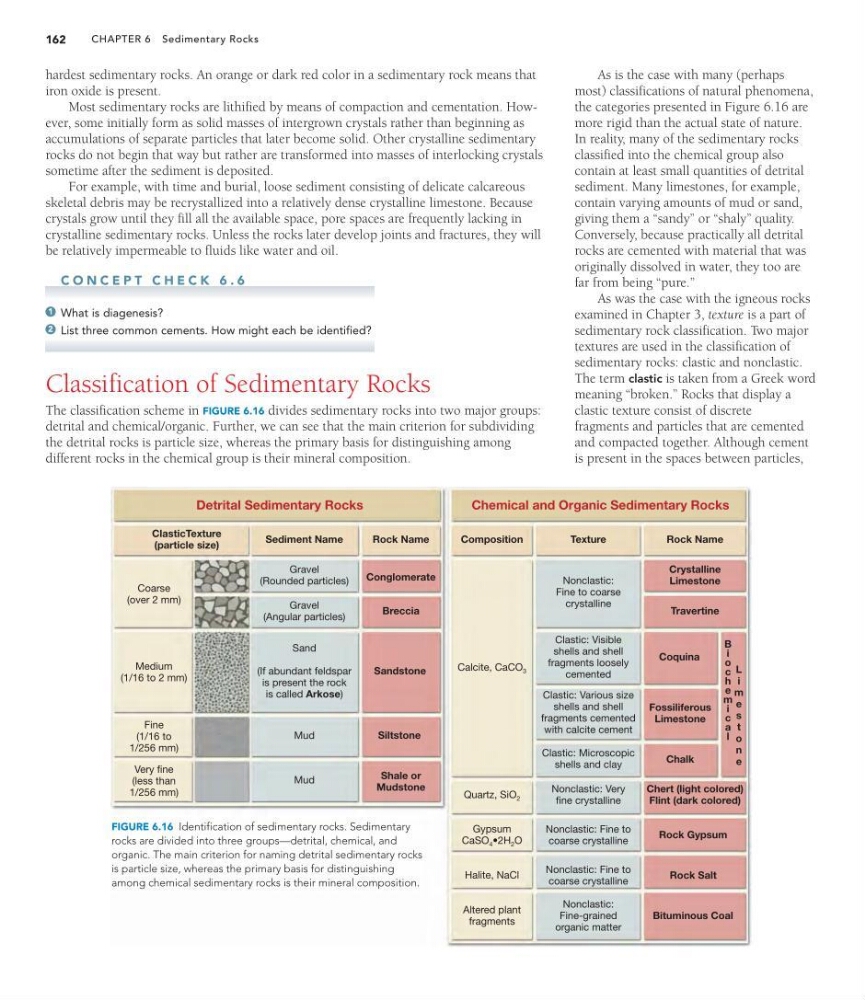
FIGURE 6.16 Identification of sedimentary rocks. Sedimentary
rocks are divided into three groups—detrital, chemical, and
organic. The main criterion for naming detrital sedimentary rocks
is particle size, whereas the primary basis for distinguishing
among chemical sedimentary rocks is their mineral composition.
hardest sedimentary rocks. An orange or dark red color in a sedimentary rock means that
iron oxide is present.
Most sedimentary rocks are lithified by means of compaction and cementation. However, some initially form as solid masses of intergrown crystals rather than beginning as
accumulations of separate particles that later become solid. Other crystalline sedimentary
rocks do not begin that way but rather are transformed into masses of interlocking crystals
sometime after the sediment is deposited.
For example, with time and burial, loose sediment consisting of delicate calcareous
skeletal debris may be recrystallized into a relatively dense crystalline limestone. Because
crystals grow until they fill all the available space, pore spaces are frequently lacking in
crystalline sedimentary rocks. Unless the rocks later develop joints and fractures, they will
be relatively impermeable to fluids like water and oil.
C O N C E P T C H E C K 6 . 6
What is diagenesis?
List three common cements. How might each be identified?
Classification of Sedimentary Rocks
The classification scheme in FIGURE 6.16 divides sedimentary rocks into two major groups:
detrital and chemical/organic. Further, we can see that the main criterion for subdividing
the detrital rocks is particle size, whereas the primary basis for distinguishing among
different rocks in the chemical group is their mineral composition.
2
1
162
As is the case with many (perhaps
most) classifications of natural phenomena,
the categories presented in Figure 6.16 are
more rigid than the actual state of nature.
In reality, many of the sedimentary rocks
classified into the chemical group also
contain at least small quantities of detrital
sediment. Many limestones, for example,
contain varying amounts of mud or sand,
giving them a “sandy” or “shaly” quality.
Conversely, because practically all detrital
rocks are cemented with material that was
originally dissolved in water, they too are
far from being “pure.”
As was the case with the igneous rocks
examined in Chapter 3, texture is a part of
sedimentary rock classification. Two major
textures are used in the classification of
sedimentary rocks: clastic and nonclastic.
The term clastic is taken from a Greek word
meaning “broken.” Rocks that display a
clastic texture consist of discrete
fragments and particles that are cemented
and compacted together. Although cement
is present in the spaces between particles,
ClasticTexture
(particle size)
Sediment Name
Rock Name
Coarse
(over 2 mm)
Gravel
(Rounded particles)
Gravel
(Angular particles)
Medium
(1/16 to 2 mm)
Sand
(If abundant feldspar
is present the rock
is called Arkose)
Conglomerate
Breccia
Sandstone
Fine
(1/16 to
1/256 mm)
Very fine
(less than
1/256 mm)
Mud
Mud
Siltstone
Shale or
Mudstone
Coquina
Chalk
Chert (light colored)
Flint (dark colored)
Rock Gypsum
Rock Salt
Bituminous Coal
Calcite, CaCO 3
Quartz, SiO 2
Gypsum
CaSO 4 •2H 2 O
Halite, NaCl
Altered plant
fragments
Nonclastic:
Fine to coarse
crystalline
Crystalline
Limestone
Clastic: Visible
shells and shell
fragments loosely
cemented
Clastic: Various size
shells and shell
fragments cemented
with calcite cement
Clastic: Microscopic
shells and clay
Nonclastic: Very
fine crystalline
Nonclastic: Fine to
coarse crystalline
Nonclastic: Fine to
coarse crystalline
Nonclastic:
Fine-grained
organic matter
Fossiliferous
Limestone
B
i
o
c
h
e
m
i
c
a
l
L
i
m
e
s
t
o
n
e
Texture
Composition
Rock Name
Detrital Sedimentary Rocks
Chemical and Organic Sedimentary Rocks
Travertine
FIGURE 6.16 Identification of sedimentary rocks. Sedimentary
rocks are divided into three groups—detrital, chemical, and
organic. The main criterion for naming detrital sedimentary rocks
is particle size, whereas the primary basis for distinguishing
among chemical sedimentary rocks is their mineral composition.
hardest sedimentary rocks. An orange or dark red color in a sedimentary rock means that
iron oxide is present.
Most sedimentary rocks are lithified by means of compaction and cementation. However, some initially form as solid masses of intergrown crystals rather than beginning as
accumulations of separate particles that later become solid. Other crystalline sedimentary
rocks do not begin that way but rather are transformed into masses of interlocking crystals
sometime after the sediment is deposited.
For example, with time and burial, loose sediment consisting of delicate calcareous
skeletal debris may be recrystallized into a relatively dense crystalline limestone. Because
crystals grow until they fill all the available space, pore spaces are frequently lacking in
crystalline sedimentary rocks. Unless the rocks later develop joints and fractures, they will
be relatively impermeable to fluids like water and oil.
C O N C E P T C H E C K 6 . 6
What is diagenesis?
List three common cements. How might each be identified?
Classification of Sedimentary Rocks
The classification scheme in FIGURE 6.16 divides sedimentary rocks into two major groups:
detrital and chemical/organic. Further, we can see that the main criterion for subdividing
the detrital rocks is particle size, whereas the primary basis for distinguishing among
different rocks in the chemical group is their mineral composition.
2
1