

CHAPTER 6 Sedimentary Rocks
160
ID
AZ
NV
UT
Salt Lake
Salt Lake
City City
Great
Salt Salt
Lake
Bonneville
Salt Flats
Salt Flats
OR
CA
ID
AZ
NV
UT
Salt Lake
City
Great
Salt
Lake
Bonneville
Salt Flats
OR
CA
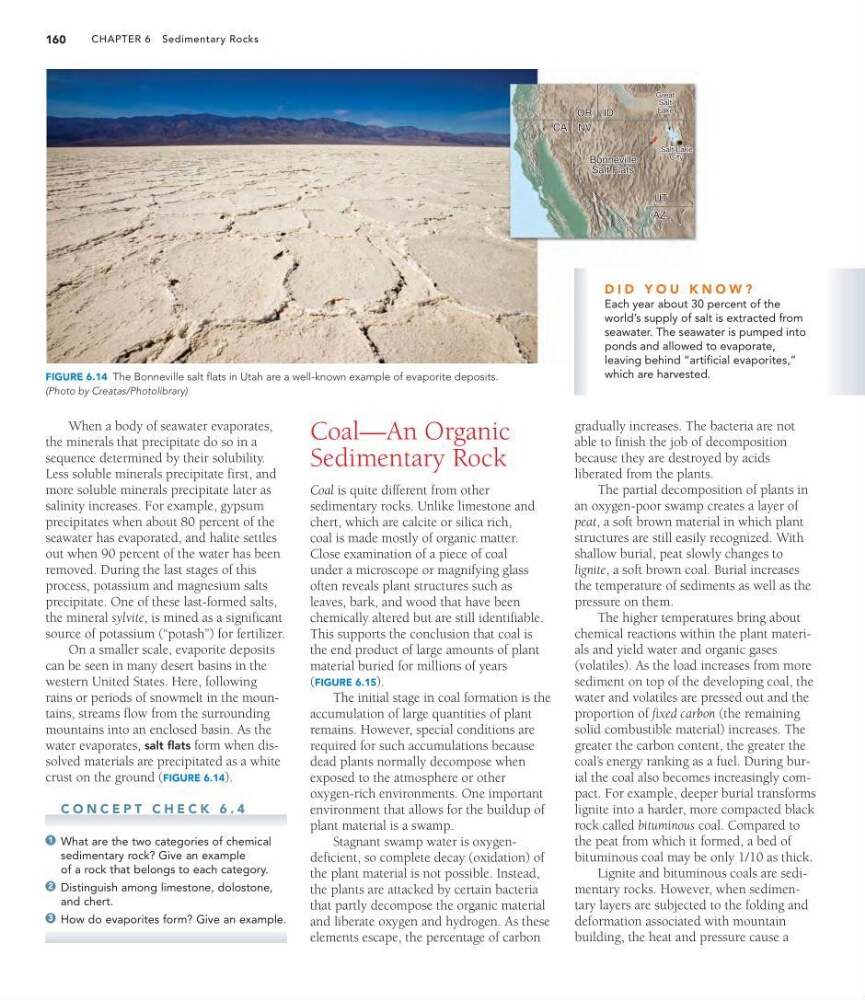
FIGURE 6.14 The Bonneville salt flats in Utah are a well-known example of evaporite deposits.
(Photo by Creatas/Photolibrary)
D I D Y O U K N O W ?
Each year about 30 percent of the
world’s supply of salt is extracted from
seawater. The seawater is pumped into
ponds and allowed to evaporate,
leaving behind “artificial evaporites,”
which are harvested.
Coal—An Organic
Sedimentary Rock
Coal is quite different from other
sedimentary rocks. Unlike limestone and
chert, which are calcite or silica rich,
coal is made mostly of organic matter.
Close examination of a piece of coal
under a microscope or magnifying glass
often reveals plant structures such as
leaves, bark, and wood that have been
chemically altered but are still identifiable.
This supports the conclusion that coal is
the end product of large amounts of plant
material buried for millions of years
(FIGURE 6.15).
The initial stage in coal formation is the
accumulation of large quantities of plant
remains. However, special conditions are
required for such accumulations because
dead plants normally decompose when
exposed to the atmosphere or other
oxygen-rich environments. One important
environment that allows for the buildup of
plant material is a swamp.
Stagnant swamp water is oxygendeficient, so complete decay (oxidation) of
the plant material is not possible. Instead,
the plants are attacked by certain bacteria
that partly decompose the organic material
and liberate oxygen and hydrogen. As these
elements escape, the percentage of carbon
When a body of seawater evaporates,
the minerals that precipitate do so in a
sequence determined by their solubility.
Less soluble minerals precipitate first, and
more soluble minerals precipitate later as
salinity increases. For example, gypsum
precipitates when about 80 percent of the
seawater has evaporated, and halite settles
out when 90 percent of the water has been
removed. During the last stages of this
process, potassium and magnesium salts
precipitate. One of these last-formed salts,
the mineral sylvite, is mined as a significant
source of potassium (“potash”) for fertilizer.
On a smaller scale, evaporite deposits
can be seen in many desert basins in the
western United States. Here, following
rains or periods of snowmelt in the mountains, streams flow from the surrounding
mountains into an enclosed basin. As the
water evaporates, salt flats form when dissolved materials are precipitated as a white
crust on the ground (FIGURE 6.14).
C O N C E P T C H E C K 6 . 4
What are the two categories of chemical
sedimentary rock? Give an example
of a rock that belongs to each category.
Distinguish among limestone, dolostone,
and chert.
How do evaporites form? Give an example.
3
2
1
gradually increases. The bacteria are not
able to finish the job of decomposition
because they are destroyed by acids
liberated from the plants.
The partial decomposition of plants in
an oxygen-poor swamp creates a layer of
peat, a soft brown material in which plant
structures are still easily recognized. With
shallow burial, peat slowly changes to
lignite, a soft brown coal. Burial increases
the temperature of sediments as well as the
pressure on them.
The higher temperatures bring about
chemical reactions within the plant materials and yield water and organic gases
(volatiles). As the load increases from more
sediment on top of the developing coal, the
water and volatiles are pressed out and the
proportion of fixed carbon (the remaining
solid combustible material) increases. The
greater the carbon content, the greater the
coal’ s energy ranking as a fuel. During burial the coal also becomes increasingly compact. For example, deeper burial transforms
lignite into a harder, more compacted black
rock called bituminous coal. Compared to
the peat from which it formed, a bed of
bituminous coal may be only 1/10 as thick.
Lignite and bituminous coals are sedimentary rocks. However, when sedimentary layers are subjected to the folding and
deformation associated with mountain
building, the heat and pressure cause a
160
ID
AZ
NV
UT
Salt Lake
Salt Lake
City City
Great
Salt Salt
Lake
Bonneville
Salt Flats
Salt Flats
OR
CA
ID
AZ
NV
UT
Salt Lake
City
Great
Salt
Lake
Bonneville
Salt Flats
OR
CA
FIGURE 6.14 The Bonneville salt flats in Utah are a well-known example of evaporite deposits.
(Photo by Creatas/Photolibrary)
D I D Y O U K N O W ?
Each year about 30 percent of the
world’s supply of salt is extracted from
seawater. The seawater is pumped into
ponds and allowed to evaporate,
leaving behind “artificial evaporites,”
which are harvested.
Coal—An Organic
Sedimentary Rock
Coal is quite different from other
sedimentary rocks. Unlike limestone and
chert, which are calcite or silica rich,
coal is made mostly of organic matter.
Close examination of a piece of coal
under a microscope or magnifying glass
often reveals plant structures such as
leaves, bark, and wood that have been
chemically altered but are still identifiable.
This supports the conclusion that coal is
the end product of large amounts of plant
material buried for millions of years
(FIGURE 6.15).
The initial stage in coal formation is the
accumulation of large quantities of plant
remains. However, special conditions are
required for such accumulations because
dead plants normally decompose when
exposed to the atmosphere or other
oxygen-rich environments. One important
environment that allows for the buildup of
plant material is a swamp.
Stagnant swamp water is oxygendeficient, so complete decay (oxidation) of
the plant material is not possible. Instead,
the plants are attacked by certain bacteria
that partly decompose the organic material
and liberate oxygen and hydrogen. As these
elements escape, the percentage of carbon
When a body of seawater evaporates,
the minerals that precipitate do so in a
sequence determined by their solubility.
Less soluble minerals precipitate first, and
more soluble minerals precipitate later as
salinity increases. For example, gypsum
precipitates when about 80 percent of the
seawater has evaporated, and halite settles
out when 90 percent of the water has been
removed. During the last stages of this
process, potassium and magnesium salts
precipitate. One of these last-formed salts,
the mineral sylvite, is mined as a significant
source of potassium (“potash”) for fertilizer.
On a smaller scale, evaporite deposits
can be seen in many desert basins in the
western United States. Here, following
rains or periods of snowmelt in the mountains, streams flow from the surrounding
mountains into an enclosed basin. As the
water evaporates, salt flats form when dissolved materials are precipitated as a white
crust on the ground (FIGURE 6.14).
C O N C E P T C H E C K 6 . 4
What are the two categories of chemical
sedimentary rock? Give an example
of a rock that belongs to each category.
Distinguish among limestone, dolostone,
and chert.
How do evaporites form? Give an example.
3
2
1
gradually increases. The bacteria are not
able to finish the job of decomposition
because they are destroyed by acids
liberated from the plants.
The partial decomposition of plants in
an oxygen-poor swamp creates a layer of
peat, a soft brown material in which plant
structures are still easily recognized. With
shallow burial, peat slowly changes to
lignite, a soft brown coal. Burial increases
the temperature of sediments as well as the
pressure on them.
The higher temperatures bring about
chemical reactions within the plant materials and yield water and organic gases
(volatiles). As the load increases from more
sediment on top of the developing coal, the
water and volatiles are pressed out and the
proportion of fixed carbon (the remaining
solid combustible material) increases. The
greater the carbon content, the greater the
coal’ s energy ranking as a fuel. During burial the coal also becomes increasingly compact. For example, deeper burial transforms
lignite into a harder, more compacted black
rock called bituminous coal. Compared to
the peat from which it formed, a bed of
bituminous coal may be only 1/10 as thick.
Lignite and bituminous coals are sedimentary rocks. However, when sedimentary layers are subjected to the folding and
deformation associated with mountain
building, the heat and pressure cause a