

CHAPTER 6 Sedimentary Rocks
158
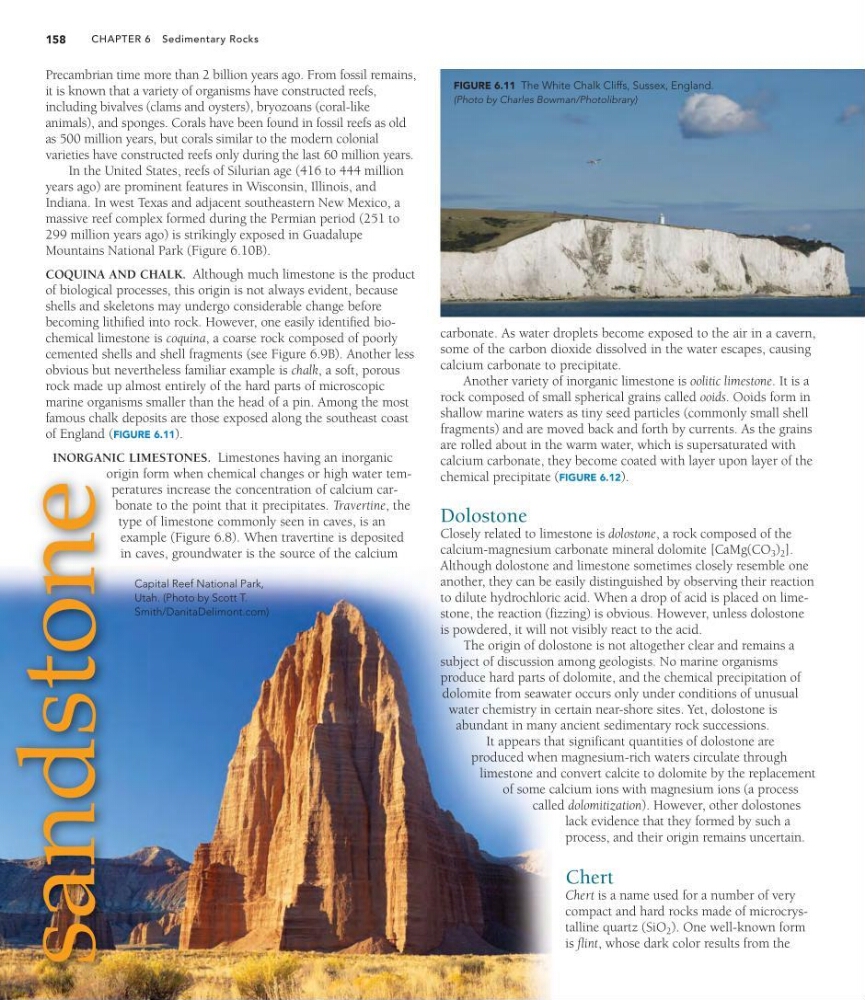
FIGURE 6.11 The White Chalk Cliffs, Sussex, England.
(Photo by Charles Bowman/Photolibrary)
sandstone
carbonate. As water droplets become exposed to the air in a cavern,
some of the carbon dioxide dissolved in the water escapes, causing
calcium carbonate to precipitate.
Another variety of inorganic limestone is oolitic limestone. It is a
rock composed of small spherical grains called ooids. Ooids form in
shallow marine waters as tiny seed particles (commonly small shell
fragments) and are moved back and forth by currents. As the grains
are rolled about in the warm water, which is supersaturated with
calcium carbonate, they become coated with layer upon layer of the
chemical precipitate (FIGURE 6.12).
Dolostone
Closely related to limestone is dolostone, a rock composed of the
calcium-magnesium carbonate mineral dolomite [CaMg(CO 3 ) 2 ].
Although dolostone and limestone sometimes closely resemble one
another, they can be easily distinguished by observing their reaction
to dilute hydrochloric acid. When a drop of acid is placed on limestone, the reaction (fizzing) is obvious. However, unless dolostone
is powdered, it will not visibly react to the acid.
The origin of dolostone is not altogether clear and remains a
subject of discussion among geologists. No marine organisms
produce hard parts of dolomite, and the chemical precipitation of
dolomite from seawater occurs only under conditions of unusual
water chemistry in certain near-shore sites. Yet, dolostone is
abundant in many ancient sedimentary rock successions.
It appears that significant quantities of dolostone are
produced when magnesium-rich waters circulate through
limestone and convert calcite to dolomite by the replacement
of some calcium ions with magnesium ions (a process
called dolomitization). However, other dolostones
lack evidence that they formed by such a
process, and their origin remains uncertain.
Chert
Chert is a name used for a number of very
compact and hard rocks made of microcrystalline quartz (SiO 2 ). One well-known form
is flint, whose dark color results from the
Capital Reef National Park,
Utah. (Photo by Scott T.
Smith/DanitaDelimont.com)
Precambrian time more than 2 billion years ago. From fossil remains,
it is known that a variety of organisms have constructed reefs,
including bivalves (clams and oysters), bryozoans (coral-like
animals), and sponges. Corals have been found in fossil reefs as old
as 500 million years, but corals similar to the modern colonial
varieties have constructed reefs only during the last 60 million years.
In the United States, reefs of Silurian age (416 to 444 million
years ago) are prominent features in Wisconsin, Illinois, and
Indiana. In west Texas and adjacent southeastern New Mexico, a
massive reef complex formed during the Permian period (251 to
299 million years ago) is strikingly exposed in Guadalupe
Mountains National Park (Figure 6.10B).
COQUINA AND CHALK. Although much limestone is the product
of biological processes, this origin is not always evident, because
shells and skeletons may undergo considerable change before
becoming lithified into rock. However, one easily identified biochemical limestone is coquina, a coarse rock composed of poorly
cemented shells and shell fragments (see Figure 6.9B). Another less
obvious but nevertheless familiar example is chalk, a soft, porous
rock made up almost entirely of the hard parts of microscopic
marine organisms smaller than the head of a pin. Among the most
famous chalk deposits are those exposed along the southeast coast
of England (FIGURE 6.11).
INORGANIC LIMESTONES. Limestones having an inorganic
origin form when chemical changes or high water temperatures increase the concentration of calcium carbonate to the point that it precipitates. Travertine, the
type of limestone commonly seen in caves, is an
example (Figure 6.8). When travertine is deposited
in caves, groundwater is the source of the calcium
158
FIGURE 6.11 The White Chalk Cliffs, Sussex, England.
(Photo by Charles Bowman/Photolibrary)
sandstone
carbonate. As water droplets become exposed to the air in a cavern,
some of the carbon dioxide dissolved in the water escapes, causing
calcium carbonate to precipitate.
Another variety of inorganic limestone is oolitic limestone. It is a
rock composed of small spherical grains called ooids. Ooids form in
shallow marine waters as tiny seed particles (commonly small shell
fragments) and are moved back and forth by currents. As the grains
are rolled about in the warm water, which is supersaturated with
calcium carbonate, they become coated with layer upon layer of the
chemical precipitate (FIGURE 6.12).
Dolostone
Closely related to limestone is dolostone, a rock composed of the
calcium-magnesium carbonate mineral dolomite [CaMg(CO 3 ) 2 ].
Although dolostone and limestone sometimes closely resemble one
another, they can be easily distinguished by observing their reaction
to dilute hydrochloric acid. When a drop of acid is placed on limestone, the reaction (fizzing) is obvious. However, unless dolostone
is powdered, it will not visibly react to the acid.
The origin of dolostone is not altogether clear and remains a
subject of discussion among geologists. No marine organisms
produce hard parts of dolomite, and the chemical precipitation of
dolomite from seawater occurs only under conditions of unusual
water chemistry in certain near-shore sites. Yet, dolostone is
abundant in many ancient sedimentary rock successions.
It appears that significant quantities of dolostone are
produced when magnesium-rich waters circulate through
limestone and convert calcite to dolomite by the replacement
of some calcium ions with magnesium ions (a process
called dolomitization). However, other dolostones
lack evidence that they formed by such a
process, and their origin remains uncertain.
Chert
Chert is a name used for a number of very
compact and hard rocks made of microcrystalline quartz (SiO 2 ). One well-known form
is flint, whose dark color results from the
Capital Reef National Park,
Utah. (Photo by Scott T.
Smith/DanitaDelimont.com)
Precambrian time more than 2 billion years ago. From fossil remains,
it is known that a variety of organisms have constructed reefs,
including bivalves (clams and oysters), bryozoans (coral-like
animals), and sponges. Corals have been found in fossil reefs as old
as 500 million years, but corals similar to the modern colonial
varieties have constructed reefs only during the last 60 million years.
In the United States, reefs of Silurian age (416 to 444 million
years ago) are prominent features in Wisconsin, Illinois, and
Indiana. In west Texas and adjacent southeastern New Mexico, a
massive reef complex formed during the Permian period (251 to
299 million years ago) is strikingly exposed in Guadalupe
Mountains National Park (Figure 6.10B).
COQUINA AND CHALK. Although much limestone is the product
of biological processes, this origin is not always evident, because
shells and skeletons may undergo considerable change before
becoming lithified into rock. However, one easily identified biochemical limestone is coquina, a coarse rock composed of poorly
cemented shells and shell fragments (see Figure 6.9B). Another less
obvious but nevertheless familiar example is chalk, a soft, porous
rock made up almost entirely of the hard parts of microscopic
marine organisms smaller than the head of a pin. Among the most
famous chalk deposits are those exposed along the southeast coast
of England (FIGURE 6.11).
INORGANIC LIMESTONES. Limestones having an inorganic
origin form when chemical changes or high water temperatures increase the concentration of calcium carbonate to the point that it precipitates. Travertine, the
type of limestone commonly seen in caves, is an
example (Figure 6.8). When travertine is deposited
in caves, groundwater is the source of the calcium