

CHAPTER 6 Sedimentary Rocks
154
A. Sorting
B. Angularity and Sphericity
High sphericity
Low sphericity
Very poorly sorted
Very well sorted
Well sorted
Poorly sorted
Angular
Subangular
Subrounded
Rounded
D I D Y O U K N O W ?
The Navajo Sandstone pictured in
Figure 6.6A represents a vast area of
sand dunes that once covered up to
400,000 sq km (156,000 sq mi), an area
the size of California.
of sorting, we can learn much about the
depositing current. Deposits of windblown
sand are usually better sorted than deposits
sorted by wave activity (FIGURE 6.6). Particles washed by waves are commonly better
sorted than materials deposited by streams.
Sediment accumulations that exhibit poor
sorting usually result when particles are
transported for only a relatively short
time and then rapidly deposited. For
example, when a turbulent stream reaches
the gentler slopes at the base of a steep
mountain, its velocity is quickly reduced,
and poorly sorted sands and gravels are
deposited.
The shapes of sand grains can also help
decipher the history of a sandstone (Figure
6.5B). When streams, winds, or waves
move sand and other larger sedimentary
particles, the grains lose their sharp edges
and corners and become more rounded as they
collide with other particles during transport. Thus,
rounded grains likely have been airborne or waterborne. Further, the degree of rounding indicates the
distance or time involved in the transportation of
sediment by currents of air or water. Highly
rounded grains indicate that a great deal of abrasion
and hence a great deal of transport has occurred.
Very angular grains, on the other hand, imply
two things: that the materials were transported only
a short distance before they were deposited and that
some other medium may have transported them.
For example, when glaciers move sediment, the
particles are usually made more irregular by the
crushing and grinding action of the ice.
In addition to affecting the degree of rounding
and the amount of sorting that particles undergo,
the length of transport by turbulent air and water
currents also influences the mineral composition of
a sedimentary deposit. Substantial weathering and
long transport lead to the gradual destruction of
weaker and less stable minerals, including the
feldspars and ferromagnesians. Because quartz is
very durable, it is usually the mineral that survives
the long trip in a turbulent environment.
The preceding discussion has shown that the
origin and history of a sandstone can often be
deduced by examining the sorting, roundness, and
mineral composition of its constituent grains. Knowing this information allows us to infer
that a well-sorted, quartz-rich sandstone consisting of highly rounded grains must be the
result of a great deal of transport. Such a rock, in fact, may represent several cycles of
weathering, transport, and deposition. We may also conclude that a sandstone containing a
significant amount of feldspar and angular grains of ferromagnesian minerals underwent
little chemical weathering and transport and was probably deposited close to the source
area of the particles.
COMPOSITION. Owing to its durability, quartz is the predominant mineral in most
sandstones. When this is the case, the rock may simply be called quartz sandstone. When
a sandstone contains appreciable quantities of feldspar (25 percent or more), the rock is
called arkose. In addition to feldspar, arkose usually contains quartz and sparkling bits of
mica. The mineral composition of arkose indicates that the grains were derived from
granitic source rocks. The particles are generally poorly sorted and angular, which suggests
short-distance transport, minimal chemical weathering in a relatively dry climate, and
rapid deposition and burial.
A third variety of sandstone is known as graywacke. Along with quartz and feldspar,
this dark-colored rock contains abundant rock fragments and matrix. Matrix refers to the
silt- and clay-size particles found in spaces between larger sand grains. More than 15 percent of graywacke’ s volume is matrix. The poor sorting and angular grains characteristic of
graywacke suggest that the particles were
transported only a relatively short distance
from their source area and then rapidly
deposited. Before the sediment could be
reworked and sorted further, it was most
likely buried by additional layers of material.
Graywacke is frequently associated with submarine deposits made by dense sedimentchoked torrents called turbidity currents.
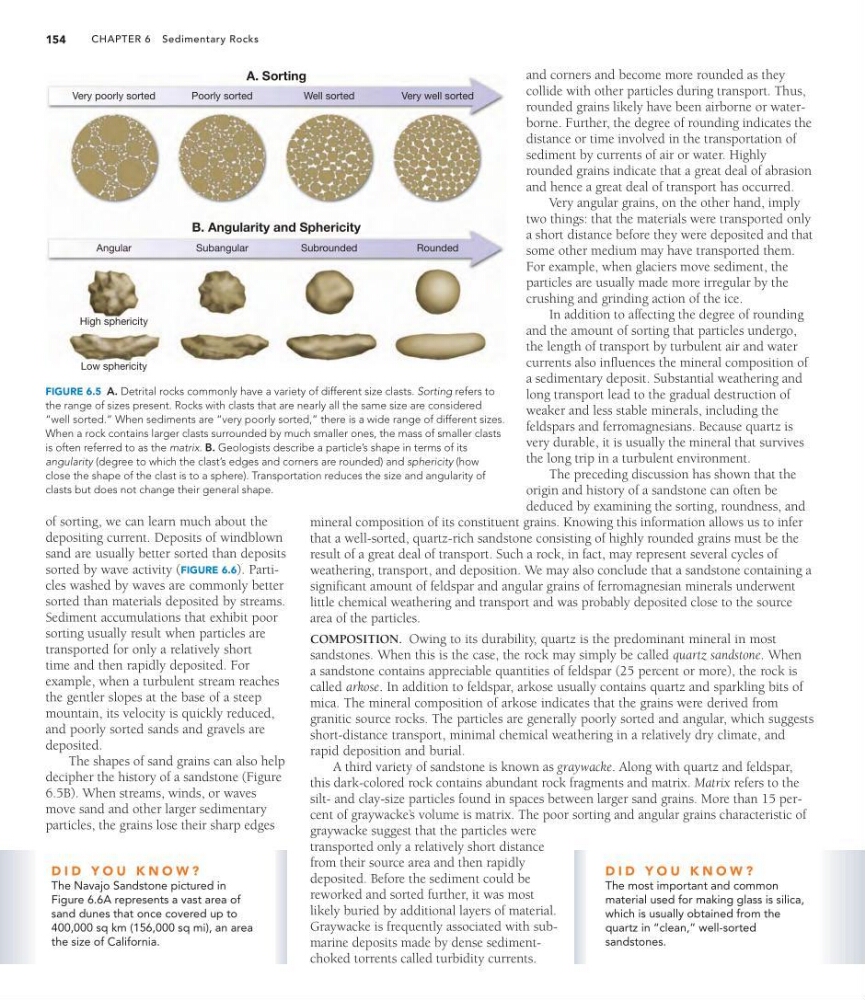
FIGURE 6.5 A. Detrital rocks commonly have a variety of different size clasts. Sorting refers to
the range of sizes present. Rocks with clasts that are nearly all the same size are considered
“well sorted.” When sediments are “very poorly sorted,” there is a wide range of different sizes.
When a rock contains larger clasts surrounded by much smaller ones, the mass of smaller clasts
is often referred to as the matrix. B. Geologists describe a particle’s shape in terms of its
angularity (degree to which the clast’s edges and corners are rounded) and sphericity (how
close the shape of the clast is to a sphere). Transportation reduces the size and angularity of
clasts but does not change their general shape.
D I D Y O U K N O W ?
The most important and common
material used for making glass is silica,
which is usually obtained from the
quartz in “clean,” well-sorted
sandstones.
154
A. Sorting
B. Angularity and Sphericity
High sphericity
Low sphericity
Very poorly sorted
Very well sorted
Well sorted
Poorly sorted
Angular
Subangular
Subrounded
Rounded
D I D Y O U K N O W ?
The Navajo Sandstone pictured in
Figure 6.6A represents a vast area of
sand dunes that once covered up to
400,000 sq km (156,000 sq mi), an area
the size of California.
of sorting, we can learn much about the
depositing current. Deposits of windblown
sand are usually better sorted than deposits
sorted by wave activity (FIGURE 6.6). Particles washed by waves are commonly better
sorted than materials deposited by streams.
Sediment accumulations that exhibit poor
sorting usually result when particles are
transported for only a relatively short
time and then rapidly deposited. For
example, when a turbulent stream reaches
the gentler slopes at the base of a steep
mountain, its velocity is quickly reduced,
and poorly sorted sands and gravels are
deposited.
The shapes of sand grains can also help
decipher the history of a sandstone (Figure
6.5B). When streams, winds, or waves
move sand and other larger sedimentary
particles, the grains lose their sharp edges
and corners and become more rounded as they
collide with other particles during transport. Thus,
rounded grains likely have been airborne or waterborne. Further, the degree of rounding indicates the
distance or time involved in the transportation of
sediment by currents of air or water. Highly
rounded grains indicate that a great deal of abrasion
and hence a great deal of transport has occurred.
Very angular grains, on the other hand, imply
two things: that the materials were transported only
a short distance before they were deposited and that
some other medium may have transported them.
For example, when glaciers move sediment, the
particles are usually made more irregular by the
crushing and grinding action of the ice.
In addition to affecting the degree of rounding
and the amount of sorting that particles undergo,
the length of transport by turbulent air and water
currents also influences the mineral composition of
a sedimentary deposit. Substantial weathering and
long transport lead to the gradual destruction of
weaker and less stable minerals, including the
feldspars and ferromagnesians. Because quartz is
very durable, it is usually the mineral that survives
the long trip in a turbulent environment.
The preceding discussion has shown that the
origin and history of a sandstone can often be
deduced by examining the sorting, roundness, and
mineral composition of its constituent grains. Knowing this information allows us to infer
that a well-sorted, quartz-rich sandstone consisting of highly rounded grains must be the
result of a great deal of transport. Such a rock, in fact, may represent several cycles of
weathering, transport, and deposition. We may also conclude that a sandstone containing a
significant amount of feldspar and angular grains of ferromagnesian minerals underwent
little chemical weathering and transport and was probably deposited close to the source
area of the particles.
COMPOSITION. Owing to its durability, quartz is the predominant mineral in most
sandstones. When this is the case, the rock may simply be called quartz sandstone. When
a sandstone contains appreciable quantities of feldspar (25 percent or more), the rock is
called arkose. In addition to feldspar, arkose usually contains quartz and sparkling bits of
mica. The mineral composition of arkose indicates that the grains were derived from
granitic source rocks. The particles are generally poorly sorted and angular, which suggests
short-distance transport, minimal chemical weathering in a relatively dry climate, and
rapid deposition and burial.
A third variety of sandstone is known as graywacke. Along with quartz and feldspar,
this dark-colored rock contains abundant rock fragments and matrix. Matrix refers to the
silt- and clay-size particles found in spaces between larger sand grains. More than 15 percent of graywacke’ s volume is matrix. The poor sorting and angular grains characteristic of
graywacke suggest that the particles were
transported only a relatively short distance
from their source area and then rapidly
deposited. Before the sediment could be
reworked and sorted further, it was most
likely buried by additional layers of material.
Graywacke is frequently associated with submarine deposits made by dense sedimentchoked torrents called turbidity currents.
FIGURE 6.5 A. Detrital rocks commonly have a variety of different size clasts. Sorting refers to
the range of sizes present. Rocks with clasts that are nearly all the same size are considered
“well sorted.” When sediments are “very poorly sorted,” there is a wide range of different sizes.
When a rock contains larger clasts surrounded by much smaller ones, the mass of smaller clasts
is often referred to as the matrix. B. Geologists describe a particle’s shape in terms of its
angularity (degree to which the clast’s edges and corners are rounded) and sphericity (how
close the shape of the clast is to a sphere). Transportation reduces the size and angularity of
clasts but does not change their general shape.
D I D Y O U K N O W ?
The most important and common
material used for making glass is silica,
which is usually obtained from the
quartz in “clean,” well-sorted
sandstones.