

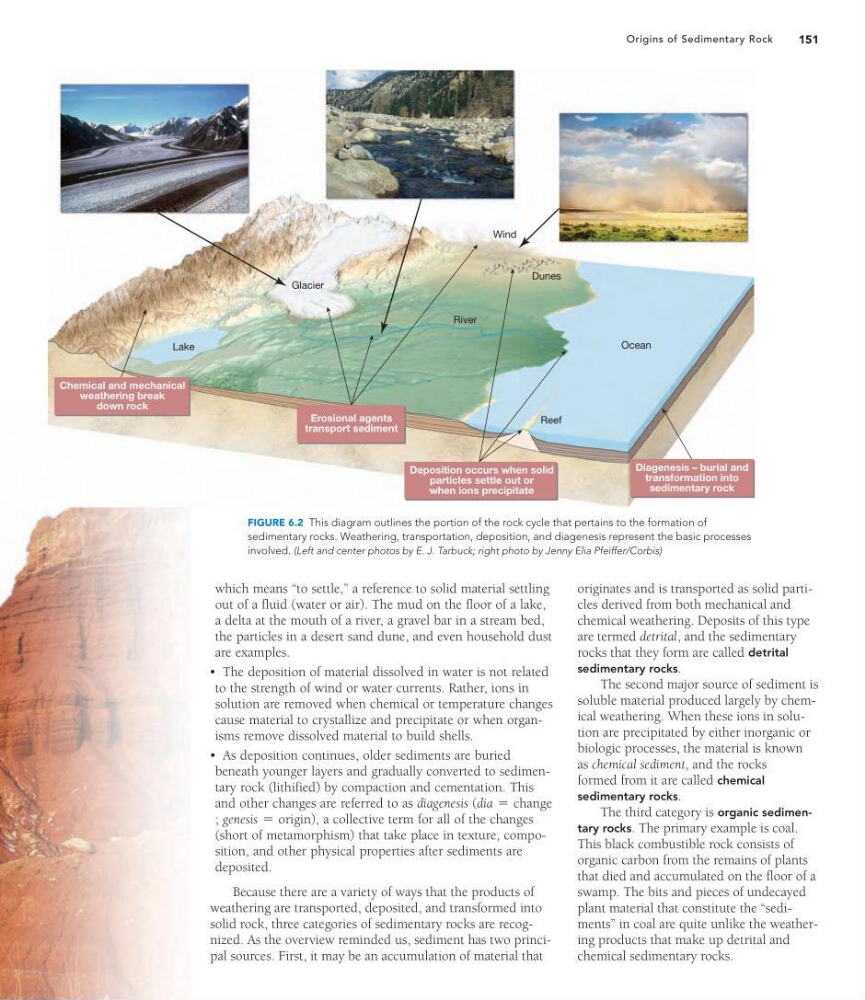
Chemical and mechanical
weathering break
down rock
Erosional agents
transport sediment
Diagenesis – burial and
transformation into
sedimentary rock
Deposition occurs when solid
particles settle out or
when ions precipitate
Lake
Glacier
River
Dunes
Wind
Ocean
Reef
151
Origins of Sedimentary Rock
FIGURE 6.2 This diagram outlines the portion of the rock cycle that pertains to the formation of
sedimentary rocks. Weathering, transportation, deposition, and diagenesis represent the basic processes
involved. (Left and center photos by E. J. Tarbuck; right photo by Jenny Elia Pfeiffer/Corbis)
which means “to settle,” a reference to solid material settling
out of a fluid (water or air). The mud on the floor of a lake,
a delta at the mouth of a river, a gravel bar in a stream bed,
the particles in a desert sand dune, and even household dust
are examples.
• The deposition of material dissolved in water is not related
to the strength of wind or water currents. Rather, ions in
solution are removed when chemical or temperature changes
cause material to crystallize and precipitate or when organisms remove dissolved material to build shells.
• As deposition continues, older sediments are buried
beneath younger layers and gradually converted to sedimentary rock (lithified) by compaction and cementation. This
and other changes are referred to as diagenesis (
;
), a collective term for all of the changes
(short of metamorphism) that take place in texture, composition, and other physical properties after sediments are
deposited.
Because there are a variety of ways that the products of
weathering are transported, deposited, and transformed into
solid rock, three categories of sedimentary rocks are recognized. As the overview reminded us, sediment has two principal sources. First, it may be an accumulation of material that
genesis = origin
dia = change
originates and is transported as solid particles derived from both mechanical and
chemical weathering. Deposits of this type
are termed detrital, and the sedimentary
rocks that they form are called detrital
sedimentary rocks.
The second major source of sediment is
soluble material produced largely by chemical weathering. When these ions in solution are precipitated by either inorganic or
biologic processes, the material is known
as chemical sediment, and the rocks
formed from it are called chemical
sedimentary rocks.
The third category is organic sedimentary rocks. The primary example is coal.
This black combustible rock consists of
organic carbon from the remains of plants
that died and accumulated on the floor of a
swamp. The bits and pieces of undecayed
plant material that constitute the “sediments” in coal are quite unlike the weathering products that make up detrital and
chemical sedimentary rocks.
weathering break
down rock
Erosional agents
transport sediment
Diagenesis – burial and
transformation into
sedimentary rock
Deposition occurs when solid
particles settle out or
when ions precipitate
Lake
Glacier
River
Dunes
Wind
Ocean
Reef
151
Origins of Sedimentary Rock
FIGURE 6.2 This diagram outlines the portion of the rock cycle that pertains to the formation of
sedimentary rocks. Weathering, transportation, deposition, and diagenesis represent the basic processes
involved. (Left and center photos by E. J. Tarbuck; right photo by Jenny Elia Pfeiffer/Corbis)
which means “to settle,” a reference to solid material settling
out of a fluid (water or air). The mud on the floor of a lake,
a delta at the mouth of a river, a gravel bar in a stream bed,
the particles in a desert sand dune, and even household dust
are examples.
• The deposition of material dissolved in water is not related
to the strength of wind or water currents. Rather, ions in
solution are removed when chemical or temperature changes
cause material to crystallize and precipitate or when organisms remove dissolved material to build shells.
• As deposition continues, older sediments are buried
beneath younger layers and gradually converted to sedimentary rock (lithified) by compaction and cementation. This
and other changes are referred to as diagenesis (
;
), a collective term for all of the changes
(short of metamorphism) that take place in texture, composition, and other physical properties after sediments are
deposited.
Because there are a variety of ways that the products of
weathering are transported, deposited, and transformed into
solid rock, three categories of sedimentary rocks are recognized. As the overview reminded us, sediment has two principal sources. First, it may be an accumulation of material that
genesis = origin
dia = change
originates and is transported as solid particles derived from both mechanical and
chemical weathering. Deposits of this type
are termed detrital, and the sedimentary
rocks that they form are called detrital
sedimentary rocks.
The second major source of sediment is
soluble material produced largely by chemical weathering. When these ions in solution are precipitated by either inorganic or
biologic processes, the material is known
as chemical sediment, and the rocks
formed from it are called chemical
sedimentary rocks.
The third category is organic sedimentary rocks. The primary example is coal.
This black combustible rock consists of
organic carbon from the remains of plants
that died and accumulated on the floor of a
swamp. The bits and pieces of undecayed
plant material that constitute the “sediments” in coal are quite unlike the weathering products that make up detrital and
chemical sedimentary rocks.