

143
Soil Erosion
What caused the Dust Bowl? Clearly
the fact that portions of the Great Plains
experience some of North America’ s
strongest winds is important. However, it
was the expansion of agriculture during an
unusually wet period that set the stage for
the disastrous period of soil erosion.
Mechanization allowed the rapid transformation of the grass-covered prairies of
this semiarid region into farms. As long as
precipitation was adequate, the soil
remained in place. However, when a prolonged drought struck in the 1930s, the
unprotected soils were vulnerable to the
wind. The result was severe soil loss, crop
failure, and economic hardship.
*
In many regions the rate of soil erosion
is significantly greater than the rate of soil
formation. This means that a renewable
resource has become nonrenewable in these
places. At present, it is estimated that topsoil is eroding faster than it forms on more
than one-third of the world’ s croplands.
The result is lower productivity, poorer
crop quality, reduced agricultural income,
and an ominous future.
Sedimentation
and Chemical Pollution
Another problem related to excessive
soil erosion involves the deposition of
sediment. Each year in the United States
hundreds of millions of tons of eroded
soil are deposited in lakes, reservoirs, and
streams. The detrimental impact of this
process can be significant. For example,
as more and more sediment is deposited
in a reservoir, the capacity of the reservoir
is reduced, limiting its usefulness for
flood control, water supply, and/or hydroelectric power generation. In addition,
sedimentation in streams and other
waterways can restrict navigation and
lead to the need for costly dredging
operations.
In some cases soil particles are
contaminated with pesticides used in
farming. When these chemicals are
introduced into a lake or reservoir, the
quality of the water supply is threatened,
and aquatic organisms may be endangered.
In addition to pesticides, nutrients found
naturally in soils as well as those added by
agricultural fertilizers make their way into
streams and lakes, where they stimulate
the growth of plants. Over a period of
time, excessive nutrients accelerate the
process by which plant growth leads to
the depletion of oxygen and an early death
of the lake.
The availability of good soils is critical
if the world’ s rapidly growing population is
to be fed. On every continent, unnecessary
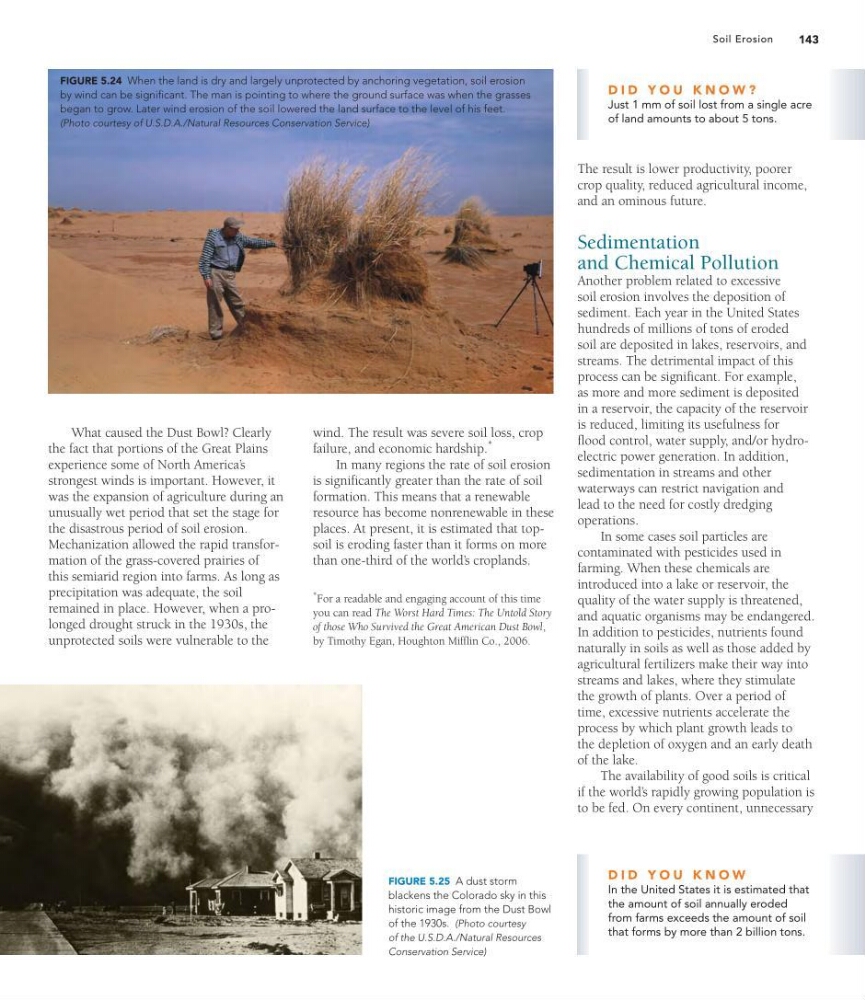
FIGURE 5.24 When the land is dry and largely unprotected by anchoring vegetation, soil erosion
by wind can be significant. The man is pointing to where the ground surface was when the grasses
began to grow. Later wind erosion of the soil lowered the land surface to the level of his feet.
(Photo courtesy of U.S.D.A./Natural Resources Conservation Service)
FIGURE 5.25 A dust storm
blackens the Colorado sky in this
historic image from the Dust Bowl
of the 1930s. (Photo courtesy
of the U.S.D.A./Natural Resources
Conservation Service)
* For a readable and engaging account of this time
you can read The Worst Hard Times: The Untold Story
of those Who Survived the Great American Dust Bowl,
by Timothy Egan, Houghton Mifflin Co., 2006.
D I D Y O U K N O W ?
Just 1 mm of soil lost from a single acre
of land amounts to about 5 tons.
D I D Y O U K N O W
In the United States it is estimated that
the amount of soil annually eroded
from farms exceeds the amount of soil
that forms by more than 2 billion tons.
Soil Erosion
What caused the Dust Bowl? Clearly
the fact that portions of the Great Plains
experience some of North America’ s
strongest winds is important. However, it
was the expansion of agriculture during an
unusually wet period that set the stage for
the disastrous period of soil erosion.
Mechanization allowed the rapid transformation of the grass-covered prairies of
this semiarid region into farms. As long as
precipitation was adequate, the soil
remained in place. However, when a prolonged drought struck in the 1930s, the
unprotected soils were vulnerable to the
wind. The result was severe soil loss, crop
failure, and economic hardship.
*
In many regions the rate of soil erosion
is significantly greater than the rate of soil
formation. This means that a renewable
resource has become nonrenewable in these
places. At present, it is estimated that topsoil is eroding faster than it forms on more
than one-third of the world’ s croplands.
The result is lower productivity, poorer
crop quality, reduced agricultural income,
and an ominous future.
Sedimentation
and Chemical Pollution
Another problem related to excessive
soil erosion involves the deposition of
sediment. Each year in the United States
hundreds of millions of tons of eroded
soil are deposited in lakes, reservoirs, and
streams. The detrimental impact of this
process can be significant. For example,
as more and more sediment is deposited
in a reservoir, the capacity of the reservoir
is reduced, limiting its usefulness for
flood control, water supply, and/or hydroelectric power generation. In addition,
sedimentation in streams and other
waterways can restrict navigation and
lead to the need for costly dredging
operations.
In some cases soil particles are
contaminated with pesticides used in
farming. When these chemicals are
introduced into a lake or reservoir, the
quality of the water supply is threatened,
and aquatic organisms may be endangered.
In addition to pesticides, nutrients found
naturally in soils as well as those added by
agricultural fertilizers make their way into
streams and lakes, where they stimulate
the growth of plants. Over a period of
time, excessive nutrients accelerate the
process by which plant growth leads to
the depletion of oxygen and an early death
of the lake.
The availability of good soils is critical
if the world’ s rapidly growing population is
to be fed. On every continent, unnecessary
FIGURE 5.24 When the land is dry and largely unprotected by anchoring vegetation, soil erosion
by wind can be significant. The man is pointing to where the ground surface was when the grasses
began to grow. Later wind erosion of the soil lowered the land surface to the level of his feet.
(Photo courtesy of U.S.D.A./Natural Resources Conservation Service)
FIGURE 5.25 A dust storm
blackens the Colorado sky in this
historic image from the Dust Bowl
of the 1930s. (Photo courtesy
of the U.S.D.A./Natural Resources
Conservation Service)
* For a readable and engaging account of this time
you can read The Worst Hard Times: The Untold Story
of those Who Survived the Great American Dust Bowl,
by Timothy Egan, Houghton Mifflin Co., 2006.
D I D Y O U K N O W ?
Just 1 mm of soil lost from a single acre
of land amounts to about 5 tons.
D I D Y O U K N O W
In the United States it is estimated that
the amount of soil annually eroded
from farms exceeds the amount of soil
that forms by more than 2 billion tons.