

CHAPTER 5 Weathering and Soils
144
A.
B.
soil loss is occurring because appropriate
conservation measures are not being used.
Although it is a recognized fact that soil
erosion can never be completely eliminated, soil conservation programs can
substantially reduce the loss of this basic
resource (FIGURE 5.26). Windbreaks (rows
of trees), terracing, and plowing along the
contours of hills are effective measures, as
are special tillage practices and crop
rotation.
C O N C E P T C H E C K 5 . 1 1
How have human activities affected the
rate of soil erosion?
What are two detrimental effects of soil
erosion aside from the loss of topsoil?
2
1
FIGURE 5.27 Bauxite is the principal ore
of aluminum and forms as a result of
weathering processes under tropical
conditions. Its color varies from
red or brown to nearly white.
(Photo by E. J. Tarbuck)
Weathering
and Ore Deposits
Weathering creates many important
mineral deposits by concentrating minor
amounts of metals that are scattered
through unweathered rock into economically valuable concentrations. Such a transformation is often termed secondary
enrichment and takes place in one of two
ways. In one situation, chemical weathering
coupled with downward-percolating water
removes undesired materials from decomposing rock, leaving the desired elements
enriched in the upper zones of the soil.
The second way is basically the reverse of
the first. That is, the desirable elements
that are found in low concentrations near
the surface are removed and carried to
lower zones, where they are redeposited
and become more concentrated.
Bauxite
The formation of bauxite, the principal
ore of aluminum, is one important example
of an ore created as a result of enrichment
by weathering processes (FIGURE 5.27).
Although aluminum is the third most
abundant element in Earth’ s crust,
economically valuable concentrations of
this important metal are not common
because most aluminum is tied up in
silicate minerals, from which it is extremely
difficult to extract.
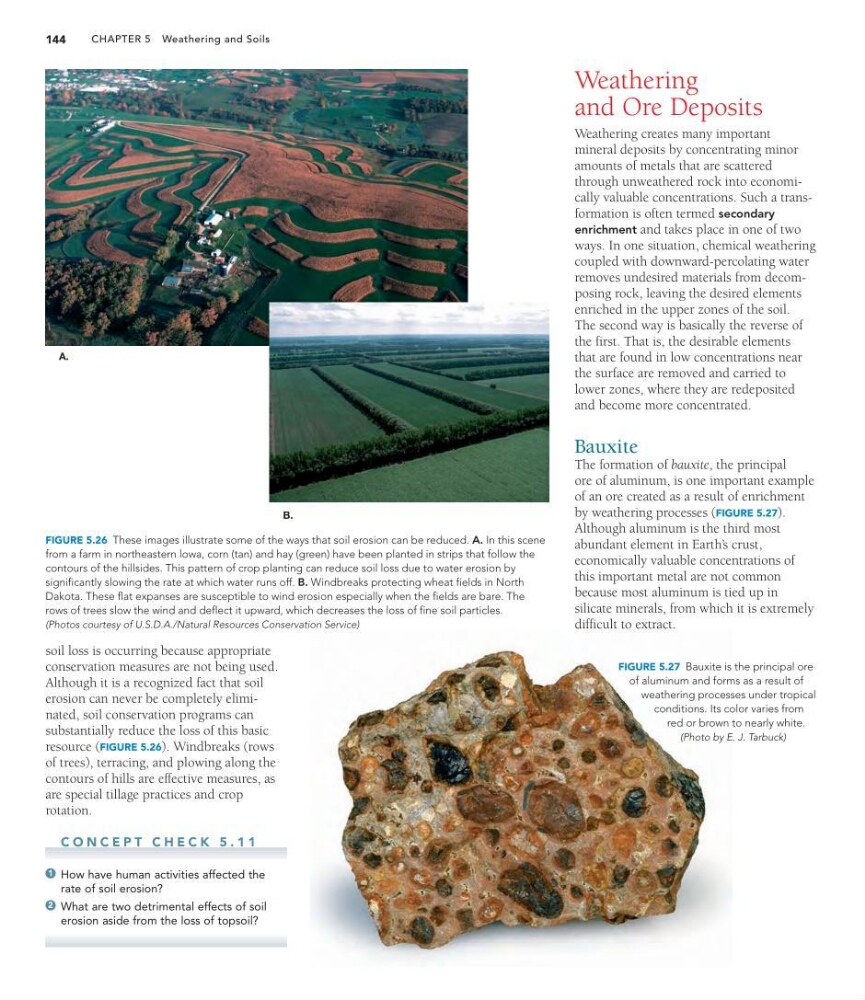
FIGURE 5.26 These images illustrate some of the ways that soil erosion can be reduced. A. In this scene
from a farm in northeastern lowa, corn (tan) and hay (green) have been planted in strips that follow the
contours of the hillsides. This pattern of crop planting can reduce soil loss due to water erosion by
significantly slowing the rate at which water runs off. B. Windbreaks protecting wheat fields in North
Dakota. These flat expanses are susceptible to wind erosion especially when the fields are bare. The
rows of trees slow the wind and deflect it upward, which decreases the loss of fine soil particles.
(Photos courtesy of U.S.D.A./Natural Resources Conservation Service)
144
A.
B.
soil loss is occurring because appropriate
conservation measures are not being used.
Although it is a recognized fact that soil
erosion can never be completely eliminated, soil conservation programs can
substantially reduce the loss of this basic
resource (FIGURE 5.26). Windbreaks (rows
of trees), terracing, and plowing along the
contours of hills are effective measures, as
are special tillage practices and crop
rotation.
C O N C E P T C H E C K 5 . 1 1
How have human activities affected the
rate of soil erosion?
What are two detrimental effects of soil
erosion aside from the loss of topsoil?
2
1
FIGURE 5.27 Bauxite is the principal ore
of aluminum and forms as a result of
weathering processes under tropical
conditions. Its color varies from
red or brown to nearly white.
(Photo by E. J. Tarbuck)
Weathering
and Ore Deposits
Weathering creates many important
mineral deposits by concentrating minor
amounts of metals that are scattered
through unweathered rock into economically valuable concentrations. Such a transformation is often termed secondary
enrichment and takes place in one of two
ways. In one situation, chemical weathering
coupled with downward-percolating water
removes undesired materials from decomposing rock, leaving the desired elements
enriched in the upper zones of the soil.
The second way is basically the reverse of
the first. That is, the desirable elements
that are found in low concentrations near
the surface are removed and carried to
lower zones, where they are redeposited
and become more concentrated.
Bauxite
The formation of bauxite, the principal
ore of aluminum, is one important example
of an ore created as a result of enrichment
by weathering processes (FIGURE 5.27).
Although aluminum is the third most
abundant element in Earth’ s crust,
economically valuable concentrations of
this important metal are not common
because most aluminum is tied up in
silicate minerals, from which it is extremely
difficult to extract.
FIGURE 5.26 These images illustrate some of the ways that soil erosion can be reduced. A. In this scene
from a farm in northeastern lowa, corn (tan) and hay (green) have been planted in strips that follow the
contours of the hillsides. This pattern of crop planting can reduce soil loss due to water erosion by
significantly slowing the rate at which water runs off. B. Windbreaks protecting wheat fields in North
Dakota. These flat expanses are susceptible to wind erosion especially when the fields are bare. The
rows of trees slow the wind and deflect it upward, which decreases the loss of fine soil particles.
(Photos courtesy of U.S.D.A./Natural Resources Conservation Service)