

CHAPTER 5 Weathering and Soils
138
O horizon
Loose and partly
decayed organic
matter
A horizon
Mineral matter mixed
with some humus
E horizon
Zone of eluviation
and leaching
B horizon
Accumulation of clay
transported from above
C horizon
Partially altered
parent material
Unweathered
parent material
Topsoil
Subsoil
Solum or “true soil”
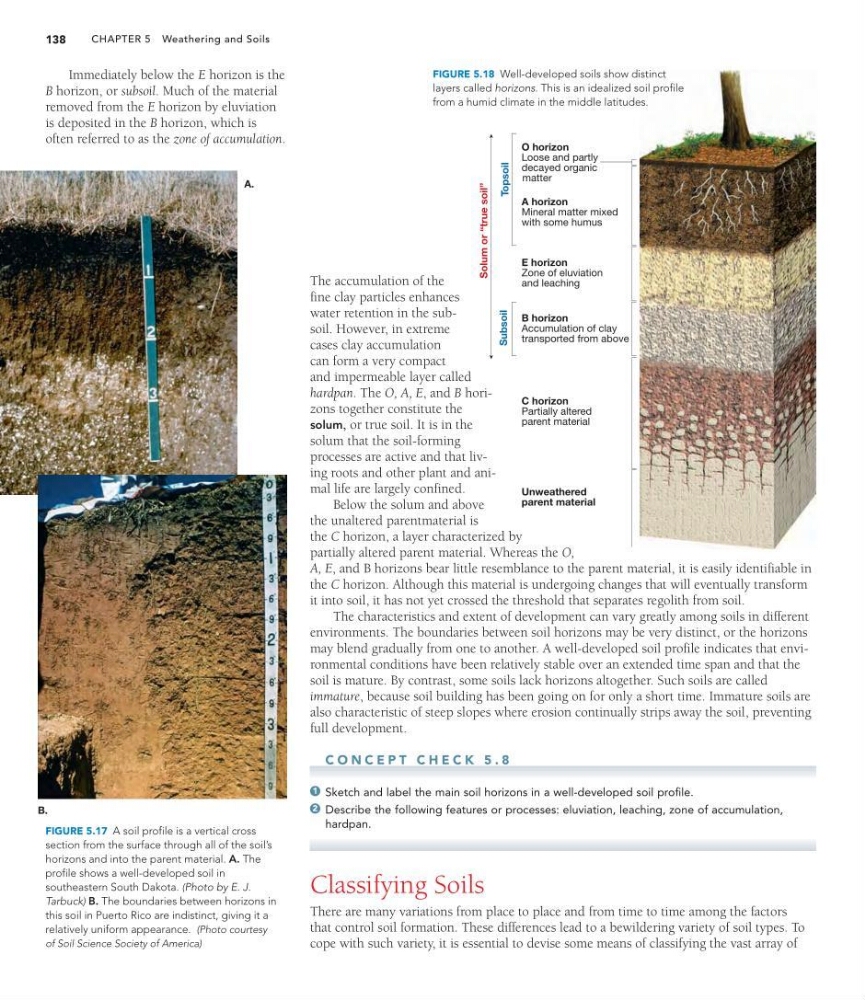
FIGURE 5.18 Well-developed soils show distinct
layers called horizons. This is an idealized soil profile
from a humid climate in the middle latitudes.
A.
B.
FIGURE 5.17 A soil profile is a vertical cross
section from the surface through all of the soil’s
horizons and into the parent material. A. The
profile shows a well-developed soil in
southeastern South Dakota. (Photo by E. J.
Tarbuck) B. The boundaries between horizons in
this soil in Puerto Rico are indistinct, giving it a
relatively uniform appearance. (Photo courtesy
of Soil Science Society of America)
Immediately below the E horizon is the
B horizon, or subsoil. Much of the material
removed from the E horizon by eluviation
is deposited in the B horizon, which is
often referred to as the zone of accumulation.
The accumulation of the
fine clay particles enhances
water retention in the subsoil. However, in extreme
cases clay accumulation
can form a very compact
and impermeable layer called
hardpan. The O, A, E, and B horizons together constitute the
solum, or true soil. It is in the
solum that the soil-forming
processes are active and that living roots and other plant and animal life are largely confined.
Below the solum and above
the unaltered parentmaterial is
the C horizon, a layer characterized by
partially altered parent material. Whereas the O,
A, E, and B horizons bear little resemblance to the parent material, it is easily identifiable in
the C horizon. Although this material is undergoing changes that will eventually transform
it into soil, it has not yet crossed the threshold that separates regolith from soil.
The characteristics and extent of development can vary greatly among soils in different
environments. The boundaries between soil horizons may be very distinct, or the horizons
may blend gradually from one to another. A well-developed soil profile indicates that environmental conditions have been relatively stable over an extended time span and that the
soil is mature. By contrast, some soils lack horizons altogether. Such soils are called
immature, because soil building has been going on for only a short time. Immature soils are
also characteristic of steep slopes where erosion continually strips away the soil, preventing
full development.
C O N C E P T C H E C K 5 . 8
Sketch and label the main soil horizons in a well-developed soil profile.
Describe the following features or processes: eluviation, leaching, zone of accumulation,
hardpan.
Classifying Soils
There are many variations from place to place and from time to time among the factors
that control soil formation. These differences lead to a bewildering variety of soil types. To
cope with such variety, it is essential to devise some means of classifying the vast array of
2
1
138
O horizon
Loose and partly
decayed organic
matter
A horizon
Mineral matter mixed
with some humus
E horizon
Zone of eluviation
and leaching
B horizon
Accumulation of clay
transported from above
C horizon
Partially altered
parent material
Unweathered
parent material
Topsoil
Subsoil
Solum or “true soil”
FIGURE 5.18 Well-developed soils show distinct
layers called horizons. This is an idealized soil profile
from a humid climate in the middle latitudes.
A.
B.
FIGURE 5.17 A soil profile is a vertical cross
section from the surface through all of the soil’s
horizons and into the parent material. A. The
profile shows a well-developed soil in
southeastern South Dakota. (Photo by E. J.
Tarbuck) B. The boundaries between horizons in
this soil in Puerto Rico are indistinct, giving it a
relatively uniform appearance. (Photo courtesy
of Soil Science Society of America)
Immediately below the E horizon is the
B horizon, or subsoil. Much of the material
removed from the E horizon by eluviation
is deposited in the B horizon, which is
often referred to as the zone of accumulation.
The accumulation of the
fine clay particles enhances
water retention in the subsoil. However, in extreme
cases clay accumulation
can form a very compact
and impermeable layer called
hardpan. The O, A, E, and B horizons together constitute the
solum, or true soil. It is in the
solum that the soil-forming
processes are active and that living roots and other plant and animal life are largely confined.
Below the solum and above
the unaltered parentmaterial is
the C horizon, a layer characterized by
partially altered parent material. Whereas the O,
A, E, and B horizons bear little resemblance to the parent material, it is easily identifiable in
the C horizon. Although this material is undergoing changes that will eventually transform
it into soil, it has not yet crossed the threshold that separates regolith from soil.
The characteristics and extent of development can vary greatly among soils in different
environments. The boundaries between soil horizons may be very distinct, or the horizons
may blend gradually from one to another. A well-developed soil profile indicates that environmental conditions have been relatively stable over an extended time span and that the
soil is mature. By contrast, some soils lack horizons altogether. Such soils are called
immature, because soil building has been going on for only a short time. Immature soils are
also characteristic of steep slopes where erosion continually strips away the soil, preventing
full development.
C O N C E P T C H E C K 5 . 8
Sketch and label the main soil horizons in a well-developed soil profile.
Describe the following features or processes: eluviation, leaching, zone of accumulation,
hardpan.
Classifying Soils
There are many variations from place to place and from time to time among the factors
that control soil formation. These differences lead to a bewildering variety of soil types. To
cope with such variety, it is essential to devise some means of classifying the vast array of
2
1