

117
Plate Tectonics and Volcanic Activity
Plate motion
Plate motion
T I M E
Plate motion
Oceanic
lithosphere
Oceanic
lithosphere
Head
Tail
Rising
mantle
plume
Flood basalts
Volcanic trail
Rising
plume
tail
Rising
plume
tail
Hot spot
volcanic
activity
Oceanic
plateau
A.
B.
C.
Partial
melting
Asthenosphere
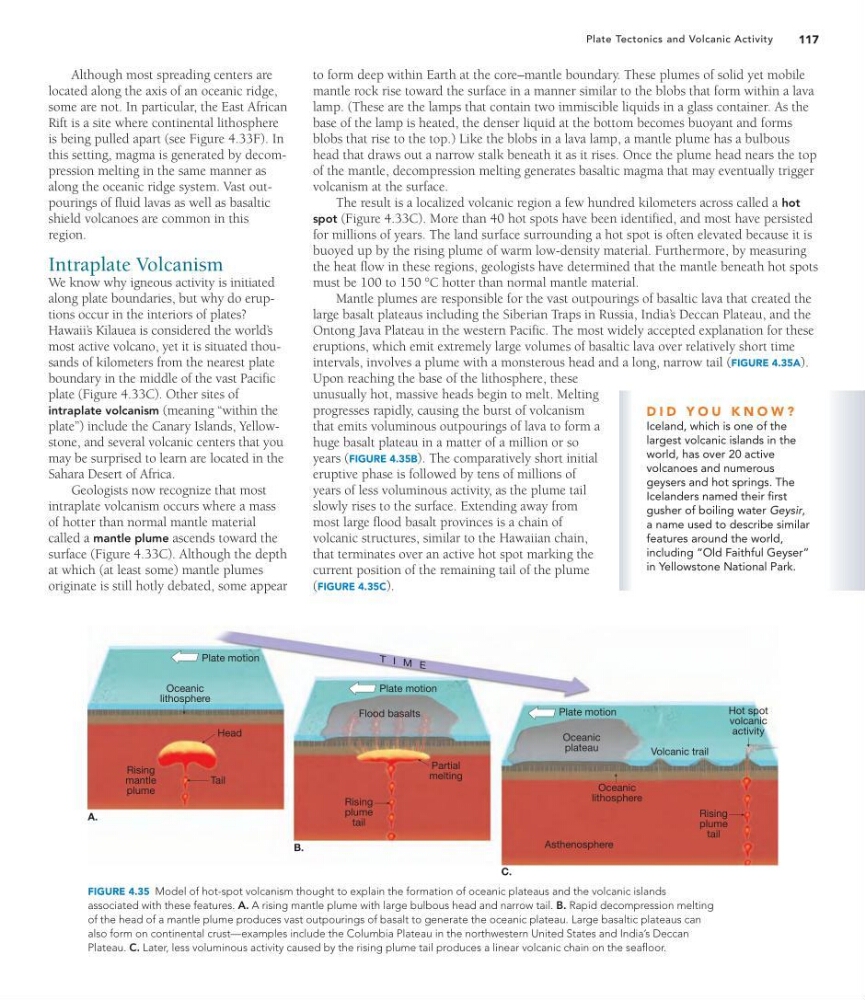
FIGURE 4.35 Model of hot-spot volcanism thought to explain the formation of oceanic plateaus and the volcanic islands
associated with these features. A. A rising mantle plume with large bulbous head and narrow tail. B. Rapid decompression melting
of the head of a mantle plume produces vast outpourings of basalt to generate the oceanic plateau. Large basaltic plateaus can
also form on continental crust—examples include the Columbia Plateau in the northwestern United States and India’s Deccan
Plateau. C. Later, less voluminous activity caused by the rising plume tail produces a linear volcanic chain on the seafloor.
Although most spreading centers are
located along the axis of an oceanic ridge,
some are not. In particular, the East African
Rift is a site where continental lithosphere
is being pulled apart (see Figure 4.33F). In
this setting, magma is generated by decompression melting in the same manner as
along the oceanic ridge system. Vast outpourings of fluid lavas as well as basaltic
shield volcanoes are common in this
region.
Intraplate Volcanism
We know why igneous activity is initiated
along plate boundaries, but why do eruptions occur in the interiors of plates?
Hawaii’ s Kilauea is considered the world’ s
most active volcano, yet it is situated thousands of kilometers from the nearest plate
boundary in the middle of the vast Pacific
plate (Figure 4.33C). Other sites of
intraplate volcanism (meaning “within the
plate”) include the Canary Islands, Yellowstone, and several volcanic centers that you
may be surprised to learn are located in the
Sahara Desert of Africa.
Geologists now recognize that most
intraplate volcanism occurs where a mass
of hotter than normal mantle material
called a mantle plume ascends toward the
surface (Figure 4.33C). Although the depth
at which (at least some) mantle plumes
originate is still hotly debated, some appear
to form deep within Earth at the core–mantle boundary. These plumes of solid yet mobile
mantle rock rise toward the surface in a manner similar to the blobs that form within a lava
lamp. (These are the lamps that contain two immiscible liquids in a glass container. As the
base of the lamp is heated, the denser liquid at the bottom becomes buoyant and forms
blobs that rise to the top.) Like the blobs in a lava lamp, a mantle plume has a bulbous
head that draws out a narrow stalk beneath it as it rises. Once the plume head nears the top
of the mantle, decompression melting generates basaltic magma that may eventually trigger
volcanism at the surface.
The result is a localized volcanic region a few hundred kilometers across called a hot
spot (Figure 4.33C). More than 40 hot spots have been identified, and most have persisted
for millions of years. The land surface surrounding a hot spot is often elevated because it is
buoyed up by the rising plume of warm low-density material. Furthermore, by measuring
the heat flow in these regions, geologists have determined that the mantle beneath hot spots
must be 100 to 150 °C hotter than normal mantle material.
Mantle plumes are responsible for the vast outpourings of basaltic lava that created the
large basalt plateaus including the Siberian Traps in Russia, India’ s Deccan Plateau, and the
Ontong Java Plateau in the western Pacific. The most widely accepted explanation for these
eruptions, which emit extremely large volumes of basaltic lava over relatively short time
intervals, involves a plume with a monsterous head and a long, narrow tail (FIGURE 4.35A).
Upon reaching the base of the lithosphere, these
unusually hot, massive heads begin to melt. Melting
progresses rapidly, causing the burst of volcanism
that emits voluminous outpourings of lava to form a
huge basalt plateau in a matter of a million or so
years (FIGURE 4.35B). The comparatively short initial
eruptive phase is followed by tens of millions of
years of less voluminous activity, as the plume tail
slowly rises to the surface. Extending away from
most large flood basalt provinces is a chain of
volcanic structures, similar to the Hawaiian chain,
that terminates over an active hot spot marking the
current position of the remaining tail of the plume
(FIGURE 4.35C).
D I D Y O U K N O W ?
Iceland, which is one of the
largest volcanic islands in the
world, has over 20 active
volcanoes and numerous
geysers and hot springs. The
Icelanders named their first
gusher of boiling water Geysir,
a name used to describe similar
features around the world,
including “Old Faithful Geyser”
in Yellowstone National Park.
Plate Tectonics and Volcanic Activity
Plate motion
Plate motion
T I M E
Plate motion
Oceanic
lithosphere
Oceanic
lithosphere
Head
Tail
Rising
mantle
plume
Flood basalts
Volcanic trail
Rising
plume
tail
Rising
plume
tail
Hot spot
volcanic
activity
Oceanic
plateau
A.
B.
C.
Partial
melting
Asthenosphere
FIGURE 4.35 Model of hot-spot volcanism thought to explain the formation of oceanic plateaus and the volcanic islands
associated with these features. A. A rising mantle plume with large bulbous head and narrow tail. B. Rapid decompression melting
of the head of a mantle plume produces vast outpourings of basalt to generate the oceanic plateau. Large basaltic plateaus can
also form on continental crust—examples include the Columbia Plateau in the northwestern United States and India’s Deccan
Plateau. C. Later, less voluminous activity caused by the rising plume tail produces a linear volcanic chain on the seafloor.
Although most spreading centers are
located along the axis of an oceanic ridge,
some are not. In particular, the East African
Rift is a site where continental lithosphere
is being pulled apart (see Figure 4.33F). In
this setting, magma is generated by decompression melting in the same manner as
along the oceanic ridge system. Vast outpourings of fluid lavas as well as basaltic
shield volcanoes are common in this
region.
Intraplate Volcanism
We know why igneous activity is initiated
along plate boundaries, but why do eruptions occur in the interiors of plates?
Hawaii’ s Kilauea is considered the world’ s
most active volcano, yet it is situated thousands of kilometers from the nearest plate
boundary in the middle of the vast Pacific
plate (Figure 4.33C). Other sites of
intraplate volcanism (meaning “within the
plate”) include the Canary Islands, Yellowstone, and several volcanic centers that you
may be surprised to learn are located in the
Sahara Desert of Africa.
Geologists now recognize that most
intraplate volcanism occurs where a mass
of hotter than normal mantle material
called a mantle plume ascends toward the
surface (Figure 4.33C). Although the depth
at which (at least some) mantle plumes
originate is still hotly debated, some appear
to form deep within Earth at the core–mantle boundary. These plumes of solid yet mobile
mantle rock rise toward the surface in a manner similar to the blobs that form within a lava
lamp. (These are the lamps that contain two immiscible liquids in a glass container. As the
base of the lamp is heated, the denser liquid at the bottom becomes buoyant and forms
blobs that rise to the top.) Like the blobs in a lava lamp, a mantle plume has a bulbous
head that draws out a narrow stalk beneath it as it rises. Once the plume head nears the top
of the mantle, decompression melting generates basaltic magma that may eventually trigger
volcanism at the surface.
The result is a localized volcanic region a few hundred kilometers across called a hot
spot (Figure 4.33C). More than 40 hot spots have been identified, and most have persisted
for millions of years. The land surface surrounding a hot spot is often elevated because it is
buoyed up by the rising plume of warm low-density material. Furthermore, by measuring
the heat flow in these regions, geologists have determined that the mantle beneath hot spots
must be 100 to 150 °C hotter than normal mantle material.
Mantle plumes are responsible for the vast outpourings of basaltic lava that created the
large basalt plateaus including the Siberian Traps in Russia, India’ s Deccan Plateau, and the
Ontong Java Plateau in the western Pacific. The most widely accepted explanation for these
eruptions, which emit extremely large volumes of basaltic lava over relatively short time
intervals, involves a plume with a monsterous head and a long, narrow tail (FIGURE 4.35A).
Upon reaching the base of the lithosphere, these
unusually hot, massive heads begin to melt. Melting
progresses rapidly, causing the burst of volcanism
that emits voluminous outpourings of lava to form a
huge basalt plateau in a matter of a million or so
years (FIGURE 4.35B). The comparatively short initial
eruptive phase is followed by tens of millions of
years of less voluminous activity, as the plume tail
slowly rises to the surface. Extending away from
most large flood basalt provinces is a chain of
volcanic structures, similar to the Hawaiian chain,
that terminates over an active hot spot marking the
current position of the remaining tail of the plume
(FIGURE 4.35C).
D I D Y O U K N O W ?
Iceland, which is one of the
largest volcanic islands in the
world, has over 20 active
volcanoes and numerous
geysers and hot springs. The
Icelanders named their first
gusher of boiling water Geysir,
a name used to describe similar
features around the world,
including “Old Faithful Geyser”
in Yellowstone National Park.