

113
Plate Tectonics and Volcanic Activity
Bezymianny
Krakatau
Tambora
Mt. Mayon
Fujiyama
Mariana Is.
Mauna Loa
Tonga Is.
New Zealand
RING OF
RING OF
FIRE
Pavlof
Shishaldin
Katmai
(“Valley of
10,000 Smokes”)
Kilauea
Parícutin
Popocatepetl
Galapagos Is.
Cotopaxi
Easter Is.
Surtsey
Hekla
Laki
Canary Is.
Pelée
Deception Is.
Vesuvius
Mt. St. Helens
Misti
Etna
Santorini
Kilimanjaro
Pinatubo
Mt. Unzen
Nevado del Ruiz
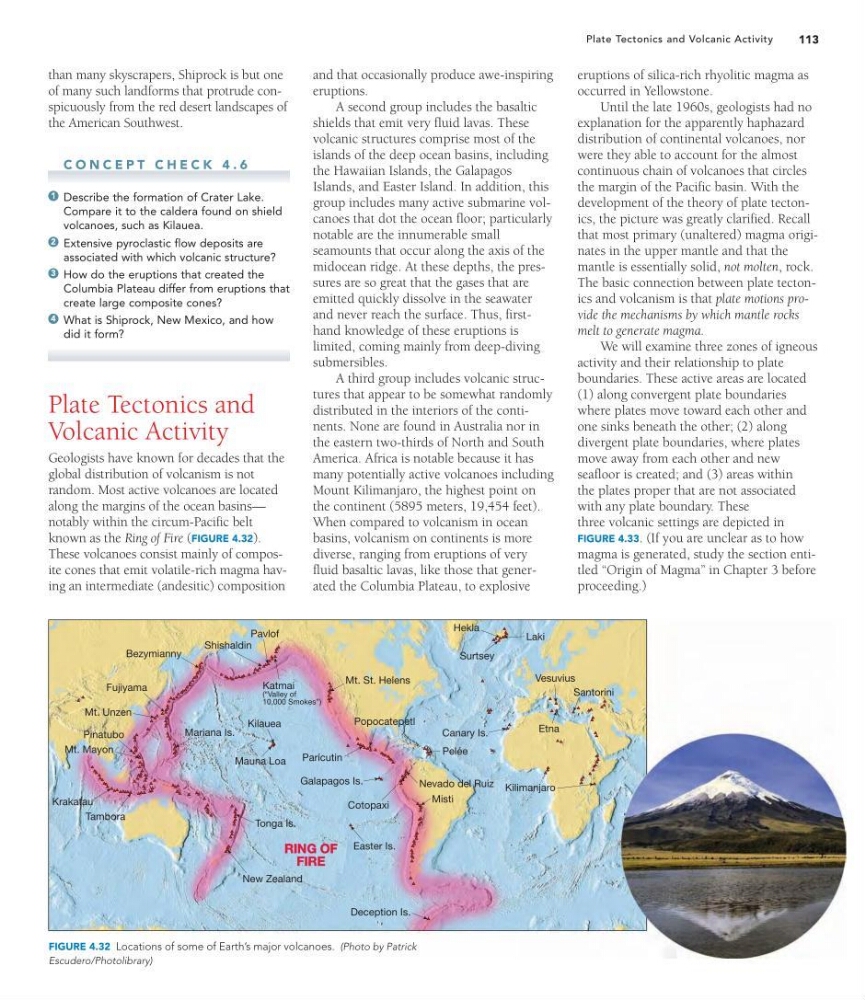
FIGURE 4.32 Locations of some of Earth’s major volcanoes. (Photo by Patrick
Escudero/Photolibrary)
than many skyscrapers, Shiprock is but one
of many such landforms that protrude conspicuously from the red desert landscapes of
the American Southwest.
C O N C E P T C H E C K 4 . 6
Describe the formation of Crater Lake.
Compare it to the caldera found on shield
volcanoes, such as Kilauea.
Extensive pyroclastic flow deposits are
associated with which volcanic structure?
How do the eruptions that created the
Columbia Plateau differ from eruptions that
create large composite cones?
What is Shiprock, New Mexico, and how
did it form?
Plate Tectonics and
Volcanic Activity
Geologists have known for decades that the
global distribution of volcanism is not
random. Most active volcanoes are located
along the margins of the ocean basins—
notably within the circum-Pacific belt
known as the Ring of Fire (FIGURE 4.32).
These volcanoes consist mainly of composite cones that emit volatile-rich magma having an intermediate (andesitic) composition
4
3
2
1
and that occasionally produce awe-inspiring
eruptions.
A second group includes the basaltic
shields that emit very fluid lavas. These
volcanic structures comprise most of the
islands of the deep ocean basins, including
the Hawaiian Islands, the Galapagos
Islands, and Easter Island. In addition, this
group includes many active submarine volcanoes that dot the ocean floor; particularly
notable are the innumerable small
seamounts that occur along the axis of the
midocean ridge. At these depths, the pressures are so great that the gases that are
emitted quickly dissolve in the seawater
and never reach the surface. Thus, firsthand knowledge of these eruptions is
limited, coming mainly from deep-diving
submersibles.
A third group includes volcanic structures that appear to be somewhat randomly
distributed in the interiors of the continents. None are found in Australia nor in
the eastern two-thirds of North and South
America. Africa is notable because it has
many potentially active volcanoes including
Mount Kilimanjaro, the highest point on
the continent (5895 meters, 19,454 feet).
When compared to volcanism in ocean
basins, volcanism on continents is more
diverse, ranging from eruptions of very
fluid basaltic lavas, like those that generated the Columbia Plateau, to explosive
eruptions of silica-rich rhyolitic magma as
occurred in Yellowstone.
Until the late 1960s, geologists had no
explanation for the apparently haphazard
distribution of continental volcanoes, nor
were they able to account for the almost
continuous chain of volcanoes that circles
the margin of the Pacific basin. With the
development of the theory of plate tectonics, the picture was greatly clarified. Recall
that most primary (unaltered) magma originates in the upper mantle and that the
mantle is essentially solid, not molten, rock.
The basic connection between plate tectonics and volcanism is that plate motions provide the mechanisms by which mantle rocks
melt to generate magma.
We will examine three zones of igneous
activity and their relationship to plate
boundaries. These active areas are located
(1) along convergent plate boundaries
where plates move toward each other and
one sinks beneath the other; (2) along
divergent plate boundaries, where plates
move away from each other and new
seafloor is created; and (3) areas within
the plates proper that are not associated
with any plate boundary. These
three volcanic settings are depicted in
FIGURE 4.33. (If you are unclear as to how
magma is generated, study the section entitled “Origin of Magma” in Chapter 3 before
proceeding.)
Plate Tectonics and Volcanic Activity
Bezymianny
Krakatau
Tambora
Mt. Mayon
Fujiyama
Mariana Is.
Mauna Loa
Tonga Is.
New Zealand
RING OF
RING OF
FIRE
Pavlof
Shishaldin
Katmai
(“Valley of
10,000 Smokes”)
Kilauea
Parícutin
Popocatepetl
Galapagos Is.
Cotopaxi
Easter Is.
Surtsey
Hekla
Laki
Canary Is.
Pelée
Deception Is.
Vesuvius
Mt. St. Helens
Misti
Etna
Santorini
Kilimanjaro
Pinatubo
Mt. Unzen
Nevado del Ruiz
FIGURE 4.32 Locations of some of Earth’s major volcanoes. (Photo by Patrick
Escudero/Photolibrary)
than many skyscrapers, Shiprock is but one
of many such landforms that protrude conspicuously from the red desert landscapes of
the American Southwest.
C O N C E P T C H E C K 4 . 6
Describe the formation of Crater Lake.
Compare it to the caldera found on shield
volcanoes, such as Kilauea.
Extensive pyroclastic flow deposits are
associated with which volcanic structure?
How do the eruptions that created the
Columbia Plateau differ from eruptions that
create large composite cones?
What is Shiprock, New Mexico, and how
did it form?
Plate Tectonics and
Volcanic Activity
Geologists have known for decades that the
global distribution of volcanism is not
random. Most active volcanoes are located
along the margins of the ocean basins—
notably within the circum-Pacific belt
known as the Ring of Fire (FIGURE 4.32).
These volcanoes consist mainly of composite cones that emit volatile-rich magma having an intermediate (andesitic) composition
4
3
2
1
and that occasionally produce awe-inspiring
eruptions.
A second group includes the basaltic
shields that emit very fluid lavas. These
volcanic structures comprise most of the
islands of the deep ocean basins, including
the Hawaiian Islands, the Galapagos
Islands, and Easter Island. In addition, this
group includes many active submarine volcanoes that dot the ocean floor; particularly
notable are the innumerable small
seamounts that occur along the axis of the
midocean ridge. At these depths, the pressures are so great that the gases that are
emitted quickly dissolve in the seawater
and never reach the surface. Thus, firsthand knowledge of these eruptions is
limited, coming mainly from deep-diving
submersibles.
A third group includes volcanic structures that appear to be somewhat randomly
distributed in the interiors of the continents. None are found in Australia nor in
the eastern two-thirds of North and South
America. Africa is notable because it has
many potentially active volcanoes including
Mount Kilimanjaro, the highest point on
the continent (5895 meters, 19,454 feet).
When compared to volcanism in ocean
basins, volcanism on continents is more
diverse, ranging from eruptions of very
fluid basaltic lavas, like those that generated the Columbia Plateau, to explosive
eruptions of silica-rich rhyolitic magma as
occurred in Yellowstone.
Until the late 1960s, geologists had no
explanation for the apparently haphazard
distribution of continental volcanoes, nor
were they able to account for the almost
continuous chain of volcanoes that circles
the margin of the Pacific basin. With the
development of the theory of plate tectonics, the picture was greatly clarified. Recall
that most primary (unaltered) magma originates in the upper mantle and that the
mantle is essentially solid, not molten, rock.
The basic connection between plate tectonics and volcanism is that plate motions provide the mechanisms by which mantle rocks
melt to generate magma.
We will examine three zones of igneous
activity and their relationship to plate
boundaries. These active areas are located
(1) along convergent plate boundaries
where plates move toward each other and
one sinks beneath the other; (2) along
divergent plate boundaries, where plates
move away from each other and new
seafloor is created; and (3) areas within
the plates proper that are not associated
with any plate boundary. These
three volcanic settings are depicted in
FIGURE 4.33. (If you are unclear as to how
magma is generated, study the section entitled “Origin of Magma” in Chapter 3 before
proceeding.)