

111
Other Volcanic Landforms
n nake R iv
S
e r P la in
A.
B.
Yellowstone ellowstone
National Park
National Park
C as ca d e R an ge
C as ca d e R an ge
WASHINGTON ASHINGTON
OREGON OREGON
MONT MONTANA ANA
IDAHO IDAHO
UT UTAH AH
NEV NEVADA ADA
CALIFORNIA CALIFORNIA
Yellowstone
National Park
C as ca d e R an ge
WASHINGTON
OREGON
MONTANA
IDAHO
UTAH
NEVADA
CALIFORNIA
Snake R iv e r P la in
Columbia Columbia
River River
basalts basalts
Other Other
volcanic volcanic
rocks ocks
Columbia
River
basalts
Other
volcanic
rocks
Massive accumulations of basaltic lava, similar to those of the Columbia Plateau,
occur elsewhere in the world. One of the largest examples is the Deccan Traps, a thick
sequence of flat-lying basalt flows covering nearly 500,000 square kilometers
(195,000 square miles) of west central India. When the Deccan Traps formed about
66 million years ago, nearly 2 million cubic kilometers of lava were extruded in less
than 1 million years. Several other huge deposits of flood basalts, including the
Ontong Java Plateau, are found on the floor of the ocean.
Lava Domes
In contrast to mafic lavas, silica-rich felsic lavas are so viscous they hardly flow at all.
As the thick lava is “squeezed” out of the vent, it often produces a dome-shaped mass
called a lava dome (FIGURE 4.29). Most lava domes are
only a few tens of meters high, but some are more than
1 kilometer high.
Lava domes come in a variety of shapes that range
from pancake-like flows to steep-sided plugs that were
pushed upward like pistons. Most develop over a period
of several years following an explosive eruption of gasrich magma. A recent example is the dome that continues
to grow in the crater of Mount St. Helens (Figure 4.29).
A second dome building event began in October 2004.
Although these eruptive phases produced some ash
plumes, they were benign compared to the May 18,
1980, eruption.
FIGURE 4.29 This lava dome began to develop
following the May, 1980, eruption of Mount St.
Helens. (Photo by Lyn Topinka/U.S. Geological Survey)
D I D Y O U K N O W ?
In 1783 the deadly Laki fissure
eruption took place in Iceland
along a 15-mile rift. The
eruption extruded 12 cubic
kilometers of fluid basaltic lava.
In addition, sulfurous gases and
ash were emitted that
destroyed grasslands, killing
most of Iceland’s livestock. The
eruption and ensuing famine
killed 10,000 Icelanders—
roughly one in five. Recently, a
volcanologist who is an expert
on the Laki eruption concluded
that a similar eruption today
would disrupt commercial
aviation in the Northern
Hemisphere for several months.
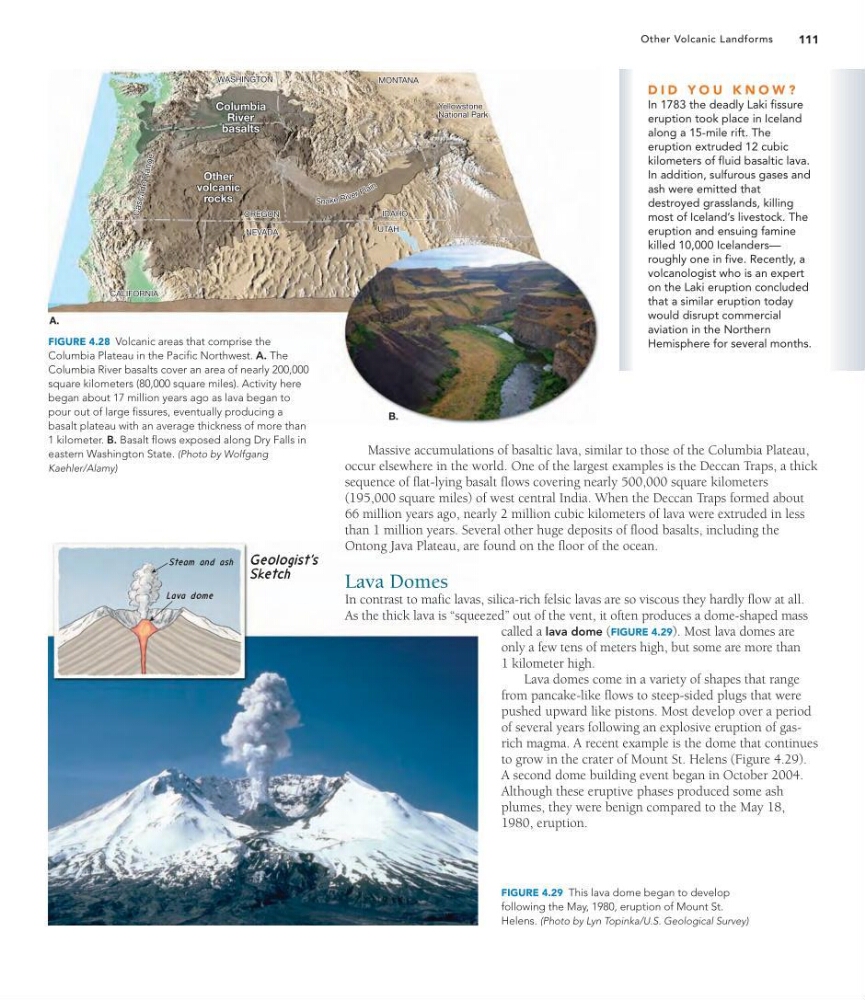
FIGURE 4.28 Volcanic areas that comprise the
Columbia Plateau in the Pacific Northwest. A. The
Columbia River basalts cover an area of nearly 200,000
square kilometers (80,000 square miles). Activity here
began about 17 million years ago as lava began to
pour out of large fissures, eventually producing a
basalt plateau with an average thickness of more than
1 kilometer. B. Basalt flows exposed along Dry Falls in
eastern Washington State. (Photo by Wolfgang
Kaehler/Alamy)
Other Volcanic Landforms
n nake R iv
S
e r P la in
A.
B.
Yellowstone ellowstone
National Park
National Park
C as ca d e R an ge
C as ca d e R an ge
WASHINGTON ASHINGTON
OREGON OREGON
MONT MONTANA ANA
IDAHO IDAHO
UT UTAH AH
NEV NEVADA ADA
CALIFORNIA CALIFORNIA
Yellowstone
National Park
C as ca d e R an ge
WASHINGTON
OREGON
MONTANA
IDAHO
UTAH
NEVADA
CALIFORNIA
Snake R iv e r P la in
Columbia Columbia
River River
basalts basalts
Other Other
volcanic volcanic
rocks ocks
Columbia
River
basalts
Other
volcanic
rocks
Massive accumulations of basaltic lava, similar to those of the Columbia Plateau,
occur elsewhere in the world. One of the largest examples is the Deccan Traps, a thick
sequence of flat-lying basalt flows covering nearly 500,000 square kilometers
(195,000 square miles) of west central India. When the Deccan Traps formed about
66 million years ago, nearly 2 million cubic kilometers of lava were extruded in less
than 1 million years. Several other huge deposits of flood basalts, including the
Ontong Java Plateau, are found on the floor of the ocean.
Lava Domes
In contrast to mafic lavas, silica-rich felsic lavas are so viscous they hardly flow at all.
As the thick lava is “squeezed” out of the vent, it often produces a dome-shaped mass
called a lava dome (FIGURE 4.29). Most lava domes are
only a few tens of meters high, but some are more than
1 kilometer high.
Lava domes come in a variety of shapes that range
from pancake-like flows to steep-sided plugs that were
pushed upward like pistons. Most develop over a period
of several years following an explosive eruption of gasrich magma. A recent example is the dome that continues
to grow in the crater of Mount St. Helens (Figure 4.29).
A second dome building event began in October 2004.
Although these eruptive phases produced some ash
plumes, they were benign compared to the May 18,
1980, eruption.
FIGURE 4.29 This lava dome began to develop
following the May, 1980, eruption of Mount St.
Helens. (Photo by Lyn Topinka/U.S. Geological Survey)
D I D Y O U K N O W ?
In 1783 the deadly Laki fissure
eruption took place in Iceland
along a 15-mile rift. The
eruption extruded 12 cubic
kilometers of fluid basaltic lava.
In addition, sulfurous gases and
ash were emitted that
destroyed grasslands, killing
most of Iceland’s livestock. The
eruption and ensuing famine
killed 10,000 Icelanders—
roughly one in five. Recently, a
volcanologist who is an expert
on the Laki eruption concluded
that a similar eruption today
would disrupt commercial
aviation in the Northern
Hemisphere for several months.
FIGURE 4.28 Volcanic areas that comprise the
Columbia Plateau in the Pacific Northwest. A. The
Columbia River basalts cover an area of nearly 200,000
square kilometers (80,000 square miles). Activity here
began about 17 million years ago as lava began to
pour out of large fissures, eventually producing a
basalt plateau with an average thickness of more than
1 kilometer. B. Basalt flows exposed along Dry Falls in
eastern Washington State. (Photo by Wolfgang
Kaehler/Alamy)