

103
Volcanic Structures and Eruptive Styles
Crater
Pyroclastic
material
Central vent filled
with rock fragments
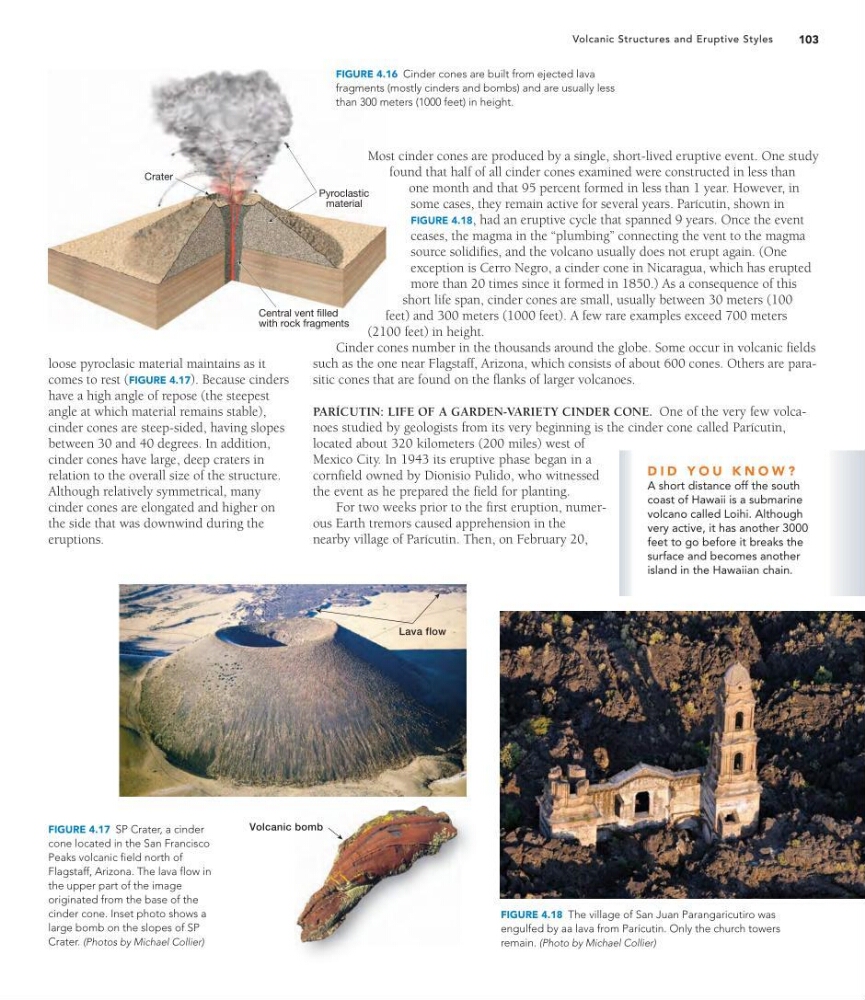
FIGURE 4.16 Cinder cones are built from ejected lava
fragments (mostly cinders and bombs) and are usually less
than 300 meters (1000 feet) in height.
loose pyroclasic material maintains as it
comes to rest (FIGURE 4.17). Because cinders
have a high angle of repose (the steepest
angle at which material remains stable),
cinder cones are steep-sided, having slopes
between 30 and 40 degrees. In addition,
cinder cones have large, deep craters in
relation to the overall size of the structure.
Although relatively symmetrical, many
cinder cones are elongated and higher on
the side that was downwind during the
eruptions.
Most cinder cones are produced by a single, short-lived eruptive event. One study
found that half of all cinder cones examined were constructed in less than
one month and that 95 percent formed in less than 1 year. However, in
some cases, they remain active for several years. Parícutin, shown in
FIGURE 4.18, had an eruptive cycle that spanned 9 years. Once the event
ceases, the magma in the “plumbing” connecting the vent to the magma
source solidifies, and the volcano usually does not erupt again. (One
exception is Cerro Negro, a cinder cone in Nicaragua, which has erupted
more than 20 times since it formed in 1850.) As a consequence of this
short life span, cinder cones are small, usually between 30 meters (100
feet) and 300 meters (1000 feet). A few rare examples exceed 700 meters
(2100 feet) in height.
Cinder cones number in the thousands around the globe. Some occur in volcanic fields
such as the one near Flagstaff, Arizona, which consists of about 600 cones. Others are parasitic cones that are found on the flanks of larger volcanoes.
PARÍCUTIN: LIFE OF A GARDEN-VARIETY CINDER CONE. One of the very few volcanoes studied by geologists from its very beginning is the cinder cone called Parícutin,
located about 320 kilometers (200 miles) west of
Mexico City. In 1943 its eruptive phase began in a
cornfield owned by Dionisio Pulido, who witnessed
the event as he prepared the field for planting.
For two weeks prior to the first eruption, numerous Earth tremors caused apprehension in the
nearby village of Parícutin. Then, on February 20,
Lava flow
Volcanic bomb
FIGURE 4.17 SP Crater, a cinder
cone located in the San Francisco
Peaks volcanic field north of
Flagstaff, Arizona. The lava flow in
the upper part of the image
originated from the base of the
cinder cone. Inset photo shows a
large bomb on the slopes of SP
Crater. (Photos by Michael Collier)
FIGURE 4.18 The village of San Juan Parangaricutiro was
engulfed by aa lava from Parícutin. Only the church towers
remain. (Photo by Michael Collier)
D I D Y O U K N O W ?
A short distance off the south
coast of Hawaii is a submarine
volcano called Loihi. Although
very active, it has another 3000
feet to go before it breaks the
surface and becomes another
island in the Hawaiian chain.
Volcanic Structures and Eruptive Styles
Crater
Pyroclastic
material
Central vent filled
with rock fragments
FIGURE 4.16 Cinder cones are built from ejected lava
fragments (mostly cinders and bombs) and are usually less
than 300 meters (1000 feet) in height.
loose pyroclasic material maintains as it
comes to rest (FIGURE 4.17). Because cinders
have a high angle of repose (the steepest
angle at which material remains stable),
cinder cones are steep-sided, having slopes
between 30 and 40 degrees. In addition,
cinder cones have large, deep craters in
relation to the overall size of the structure.
Although relatively symmetrical, many
cinder cones are elongated and higher on
the side that was downwind during the
eruptions.
Most cinder cones are produced by a single, short-lived eruptive event. One study
found that half of all cinder cones examined were constructed in less than
one month and that 95 percent formed in less than 1 year. However, in
some cases, they remain active for several years. Parícutin, shown in
FIGURE 4.18, had an eruptive cycle that spanned 9 years. Once the event
ceases, the magma in the “plumbing” connecting the vent to the magma
source solidifies, and the volcano usually does not erupt again. (One
exception is Cerro Negro, a cinder cone in Nicaragua, which has erupted
more than 20 times since it formed in 1850.) As a consequence of this
short life span, cinder cones are small, usually between 30 meters (100
feet) and 300 meters (1000 feet). A few rare examples exceed 700 meters
(2100 feet) in height.
Cinder cones number in the thousands around the globe. Some occur in volcanic fields
such as the one near Flagstaff, Arizona, which consists of about 600 cones. Others are parasitic cones that are found on the flanks of larger volcanoes.
PARÍCUTIN: LIFE OF A GARDEN-VARIETY CINDER CONE. One of the very few volcanoes studied by geologists from its very beginning is the cinder cone called Parícutin,
located about 320 kilometers (200 miles) west of
Mexico City. In 1943 its eruptive phase began in a
cornfield owned by Dionisio Pulido, who witnessed
the event as he prepared the field for planting.
For two weeks prior to the first eruption, numerous Earth tremors caused apprehension in the
nearby village of Parícutin. Then, on February 20,
Lava flow
Volcanic bomb
FIGURE 4.17 SP Crater, a cinder
cone located in the San Francisco
Peaks volcanic field north of
Flagstaff, Arizona. The lava flow in
the upper part of the image
originated from the base of the
cinder cone. Inset photo shows a
large bomb on the slopes of SP
Crater. (Photos by Michael Collier)
FIGURE 4.18 The village of San Juan Parangaricutiro was
engulfed by aa lava from Parícutin. Only the church towers
remain. (Photo by Michael Collier)
D I D Y O U K N O W ?
A short distance off the south
coast of Hawaii is a submarine
volcano called Loihi. Although
very active, it has another 3000
feet to go before it breaks the
surface and becomes another
island in the Hawaiian chain.