

volcanism
A.
B.
97
Materials Extruded during an Eruption
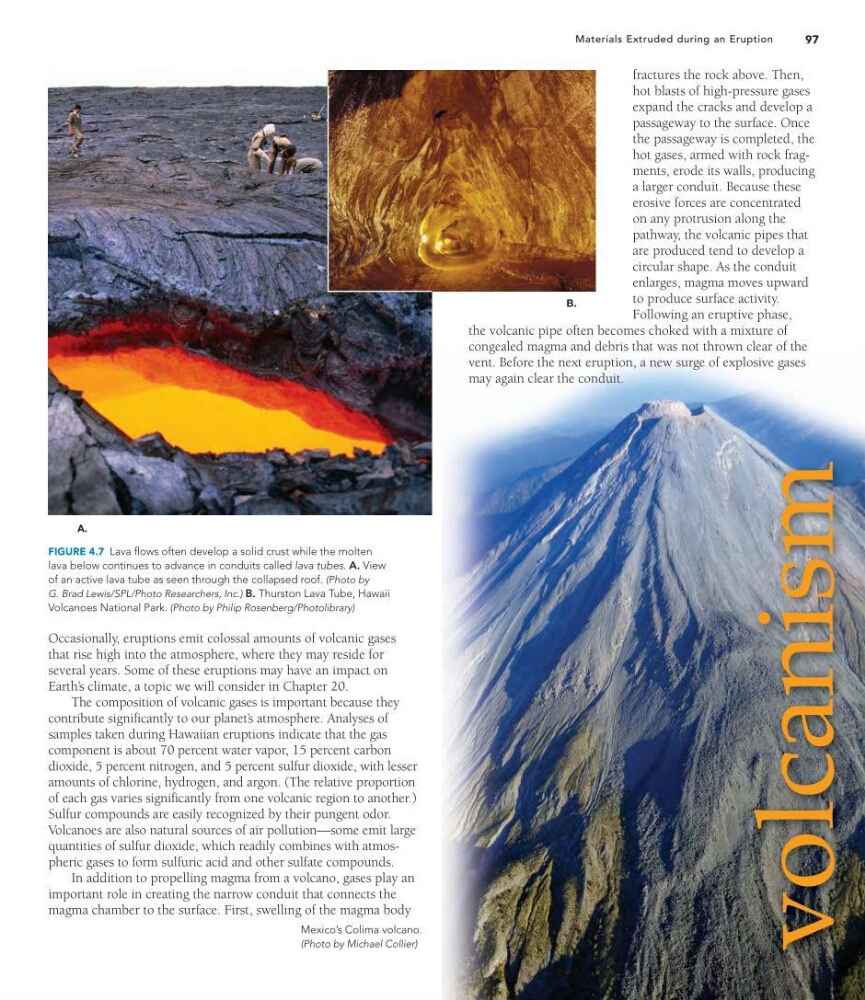
FIGURE 4.7 Lava flows often develop a solid crust while the molten
lava below continues to advance in conduits called lava tubes. A. View
of an active lava tube as seen through the collapsed roof. (Photo by
G. Brad Lewis/SPL/Photo Researchers, Inc.) B. Thurston Lava Tube, Hawaii
Volcanoes National Park. (Photo by Philip Rosenberg/Photolibrary)
fractures the rock above. Then,
hot blasts of high-pressure gases
expand the cracks and develop a
passageway to the surface. Once
the passageway is completed, the
hot gases, armed with rock fragments, erode its walls, producing
a larger conduit. Because these
erosive forces are concentrated
on any protrusion along the
pathway, the volcanic pipes that
are produced tend to develop a
circular shape. As the conduit
enlarges, magma moves upward
to produce surface activity.
Following an eruptive phase,
the volcanic pipe often becomes choked with a mixture of
congealed magma and debris that was not thrown clear of the
vent. Before the next eruption, a new surge of explosive gases
may again clear the conduit.
Mexico’s Colima volcano.
(Photo by Michael Collier)
Occasionally, eruptions emit colossal amounts of volcanic gases
that rise high into the atmosphere, where they may reside for
several years. Some of these eruptions may have an impact on
Earth’ s climate, a topic we will consider in Chapter 20.
The composition of volcanic gases is important because they
contribute significantly to our planet’ s atmosphere. Analyses of
samples taken during Hawaiian eruptions indicate that the gas
component is about 70 percent water vapor, 15 percent carbon
dioxide, 5 percent nitrogen, and 5 percent sulfur dioxide, with lesser
amounts of chlorine, hydrogen, and argon. (The relative proportion
of each gas varies significantly from one volcanic region to another.)
Sulfur compounds are easily recognized by their pungent odor.
Volcanoes are also natural sources of air pollution—some emit large
quantities of sulfur dioxide, which readily combines with atmospheric gases to form sulfuric acid and other sulfate compounds.
In addition to propelling magma from a volcano, gases play an
important role in creating the narrow conduit that connects the
magma chamber to the surface. First, swelling of the magma body
A.
B.
97
Materials Extruded during an Eruption
FIGURE 4.7 Lava flows often develop a solid crust while the molten
lava below continues to advance in conduits called lava tubes. A. View
of an active lava tube as seen through the collapsed roof. (Photo by
G. Brad Lewis/SPL/Photo Researchers, Inc.) B. Thurston Lava Tube, Hawaii
Volcanoes National Park. (Photo by Philip Rosenberg/Photolibrary)
fractures the rock above. Then,
hot blasts of high-pressure gases
expand the cracks and develop a
passageway to the surface. Once
the passageway is completed, the
hot gases, armed with rock fragments, erode its walls, producing
a larger conduit. Because these
erosive forces are concentrated
on any protrusion along the
pathway, the volcanic pipes that
are produced tend to develop a
circular shape. As the conduit
enlarges, magma moves upward
to produce surface activity.
Following an eruptive phase,
the volcanic pipe often becomes choked with a mixture of
congealed magma and debris that was not thrown clear of the
vent. Before the next eruption, a new surge of explosive gases
may again clear the conduit.
Mexico’s Colima volcano.
(Photo by Michael Collier)
Occasionally, eruptions emit colossal amounts of volcanic gases
that rise high into the atmosphere, where they may reside for
several years. Some of these eruptions may have an impact on
Earth’ s climate, a topic we will consider in Chapter 20.
The composition of volcanic gases is important because they
contribute significantly to our planet’ s atmosphere. Analyses of
samples taken during Hawaiian eruptions indicate that the gas
component is about 70 percent water vapor, 15 percent carbon
dioxide, 5 percent nitrogen, and 5 percent sulfur dioxide, with lesser
amounts of chlorine, hydrogen, and argon. (The relative proportion
of each gas varies significantly from one volcanic region to another.)
Sulfur compounds are easily recognized by their pungent odor.
Volcanoes are also natural sources of air pollution—some emit large
quantities of sulfur dioxide, which readily combines with atmospheric gases to form sulfuric acid and other sulfate compounds.
In addition to propelling magma from a volcano, gases play an
important role in creating the narrow conduit that connects the
magma chamber to the surface. First, swelling of the magma body