

93
The Nature of Volcanic Eruptions
The Nature of
Volcanic Eruptions
Volcanoes
The Nature of Volcanic Eruptions
Volcanic activity is commonly perceived as a
process that produces a picturesque, coneshaped structure that periodically erupts in
a violent manner, like Mount St. Helens.
Although some eruptions may be very
explosive, many are not. What determines
whether a volcano extrudes magma
violently or “gently”? The primary factors
include the magma’ s composition, its temperature, and the amount of dissolved gases it
contains. To varying degrees, these factors affect the magma’ s mobility, or viscosity (viscos =
stickly). The more viscous the material, the greater its resistance to flow. For example,
compare syrup to water—syrup is more viscous, and thus more resistant to flow, than
water. Magma associated with an explosive eruption may be five times more viscous than
magma that is extruded in a quiescent manner.
Factors Affecting Viscosity
The effect of temperature on viscosity is easily seen. Just as heating syrup makes it more fluid
(less viscous), the mobility of lava is strongly influenced by temperature. As lava cools and
begins to congeal, its mobility decreases and eventually the flow halts.
A more significant factor influencing volcanic behavior is the chemical composition of
the magma. Recall that a major difference among various igneous rocks is their silica (SiO 2 )
content (TABLE 4.1). Magmas that produce mafic rocks such as basalt contain about 50 percent silica, whereas magmas that produce felsic rocks (granite and its extrusive equivalent,
rhyolite) contain more than 70 percent silica. Intermediate rock types—andesite and
diorite—contain about 60 percent silica.
A magma’ s viscosity is directly related to its silica content—the more silica in magma,
the greater its viscosity. Silica impedes the flow of magma because silicate structures start
GEODe
ESSENTIALS
OF GEOLOGY
to link together into long chains early in
the crystallization process. Consequently,
rhyolitic (felsic) lavas are very viscous
and tend to form comparatively short,
thick flows. By contrast, basaltic lavas,
which contain less silica, are relatively
fluid and have been known to travel
150 kilometers (90 miles) or more before
congealing.
The amount of volatiles (the gaseous
components of magma, mainly water) contained in magma also affects its mobility.
Other factors being equal, water dissolved
in the magma tends to increase fluidity
because it reduces polymerization (formation of long silicate chains) by breaking
silicon–oxygen bonds. It follows, therefore,
that the loss of gases renders magma (lava)
more viscous.
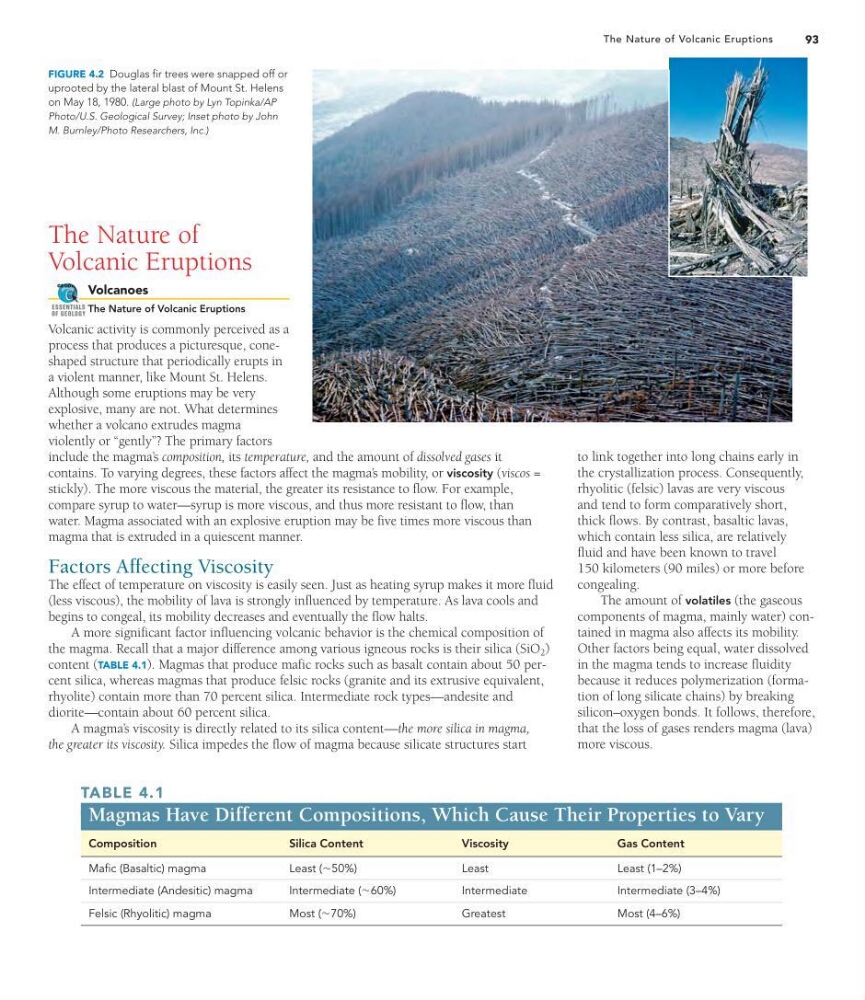
FIGURE 4.2 Douglas fir trees were snapped off or
uprooted by the lateral blast of Mount St. Helens
on May 18, 1980. (Large photo by Lyn Topinka/AP
Photo/U.S. Geological Survey; Inset photo by John
M. Burnley/Photo Researchers, Inc.)
TABLE 4.1
Magmas Have Different Compositions, Which Cause Their Properties to Vary
Composition
Silica Content
Viscosity
Gas Content
Mafic (Basaltic) magma
Least ( 50%)
'
Least
Least (1–2%)
Intermediate (Andesitic) magma
Intermediate ( 60%)
'
Intermediate
Intermediate (3–4%)
Felsic (Rhyolitic) magma
Most ( 70%)
'
Greatest
Most (4–6%)
The Nature of Volcanic Eruptions
The Nature of
Volcanic Eruptions
Volcanoes
The Nature of Volcanic Eruptions
Volcanic activity is commonly perceived as a
process that produces a picturesque, coneshaped structure that periodically erupts in
a violent manner, like Mount St. Helens.
Although some eruptions may be very
explosive, many are not. What determines
whether a volcano extrudes magma
violently or “gently”? The primary factors
include the magma’ s composition, its temperature, and the amount of dissolved gases it
contains. To varying degrees, these factors affect the magma’ s mobility, or viscosity (viscos =
stickly). The more viscous the material, the greater its resistance to flow. For example,
compare syrup to water—syrup is more viscous, and thus more resistant to flow, than
water. Magma associated with an explosive eruption may be five times more viscous than
magma that is extruded in a quiescent manner.
Factors Affecting Viscosity
The effect of temperature on viscosity is easily seen. Just as heating syrup makes it more fluid
(less viscous), the mobility of lava is strongly influenced by temperature. As lava cools and
begins to congeal, its mobility decreases and eventually the flow halts.
A more significant factor influencing volcanic behavior is the chemical composition of
the magma. Recall that a major difference among various igneous rocks is their silica (SiO 2 )
content (TABLE 4.1). Magmas that produce mafic rocks such as basalt contain about 50 percent silica, whereas magmas that produce felsic rocks (granite and its extrusive equivalent,
rhyolite) contain more than 70 percent silica. Intermediate rock types—andesite and
diorite—contain about 60 percent silica.
A magma’ s viscosity is directly related to its silica content—the more silica in magma,
the greater its viscosity. Silica impedes the flow of magma because silicate structures start
GEODe
ESSENTIALS
OF GEOLOGY
to link together into long chains early in
the crystallization process. Consequently,
rhyolitic (felsic) lavas are very viscous
and tend to form comparatively short,
thick flows. By contrast, basaltic lavas,
which contain less silica, are relatively
fluid and have been known to travel
150 kilometers (90 miles) or more before
congealing.
The amount of volatiles (the gaseous
components of magma, mainly water) contained in magma also affects its mobility.
Other factors being equal, water dissolved
in the magma tends to increase fluidity
because it reduces polymerization (formation of long silicate chains) by breaking
silicon–oxygen bonds. It follows, therefore,
that the loss of gases renders magma (lava)
more viscous.
FIGURE 4.2 Douglas fir trees were snapped off or
uprooted by the lateral blast of Mount St. Helens
on May 18, 1980. (Large photo by Lyn Topinka/AP
Photo/U.S. Geological Survey; Inset photo by John
M. Burnley/Photo Researchers, Inc.)
TABLE 4.1
Magmas Have Different Compositions, Which Cause Their Properties to Vary
Composition
Silica Content
Viscosity
Gas Content
Mafic (Basaltic) magma
Least ( 50%)
'
Least
Least (1–2%)
Intermediate (Andesitic) magma
Intermediate ( 60%)
'
Intermediate
Intermediate (3–4%)
Felsic (Rhyolitic) magma
Most ( 70%)
'
Greatest
Most (4–6%)