

6.3 SEDIMENTARY MODELS
255
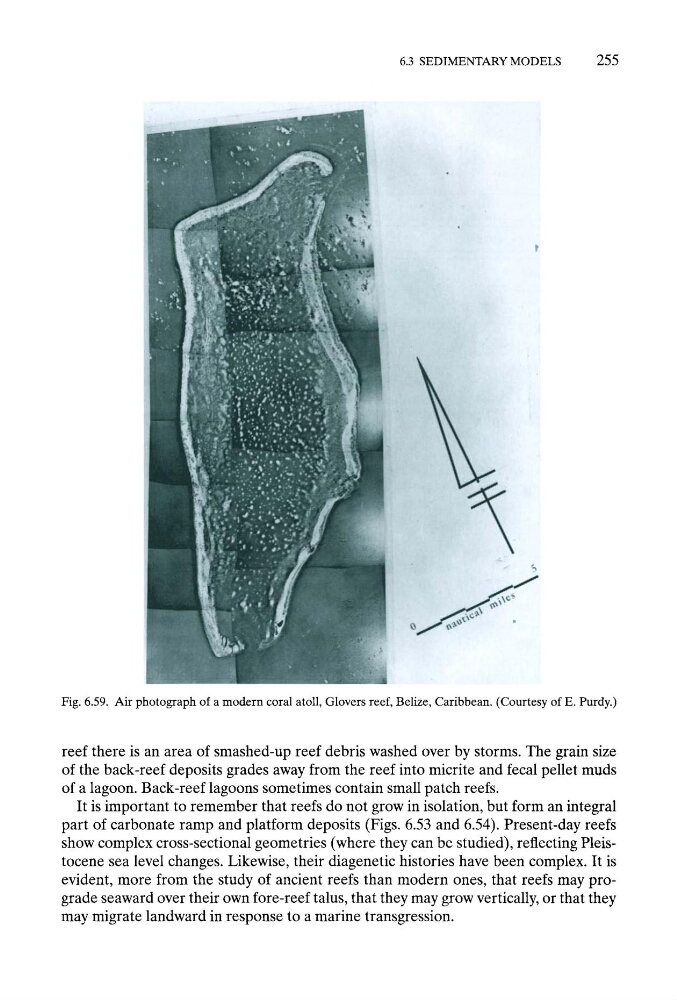
Fig. 6.59. Air photograph of a modern coral atoll, Glovers reef, Belize, Caribbean. (Courtesy of E. Purdy.)
reef there is an area of smashed-up reef debris washed over by storms. The grain size
of the back-reef deposits grades away from the reef into micrite and fecal pellet muds
of a lagoon. Back-reef lagoons sometimes contain small patch reefs.
It is important to remember that reefs do not grow in isolation, but form an integral
part of carbonate ramp and platform deposits (Figs. 6.53 and 6.54). Present-day reefs
show complex cross-sectional geometries (where they can be studied), reflecting Pleistocene sea level changes. Likewise, their diagenetic histories have been complex. It is
evident, more from the study of ancient reefs than modern ones, that reefs may prograde seaward over their own fore-reef talus, that they may grow vertically, or that they
may migrate landward in response to a marine transgression.
255
Fig. 6.59. Air photograph of a modern coral atoll, Glovers reef, Belize, Caribbean. (Courtesy of E. Purdy.)
reef there is an area of smashed-up reef debris washed over by storms. The grain size
of the back-reef deposits grades away from the reef into micrite and fecal pellet muds
of a lagoon. Back-reef lagoons sometimes contain small patch reefs.
It is important to remember that reefs do not grow in isolation, but form an integral
part of carbonate ramp and platform deposits (Figs. 6.53 and 6.54). Present-day reefs
show complex cross-sectional geometries (where they can be studied), reflecting Pleistocene sea level changes. Likewise, their diagenetic histories have been complex. It is
evident, more from the study of ancient reefs than modern ones, that reefs may prograde seaward over their own fore-reef talus, that they may grow vertically, or that they
may migrate landward in response to a marine transgression.