

6.3 SEDIMENTARY MODELS
253
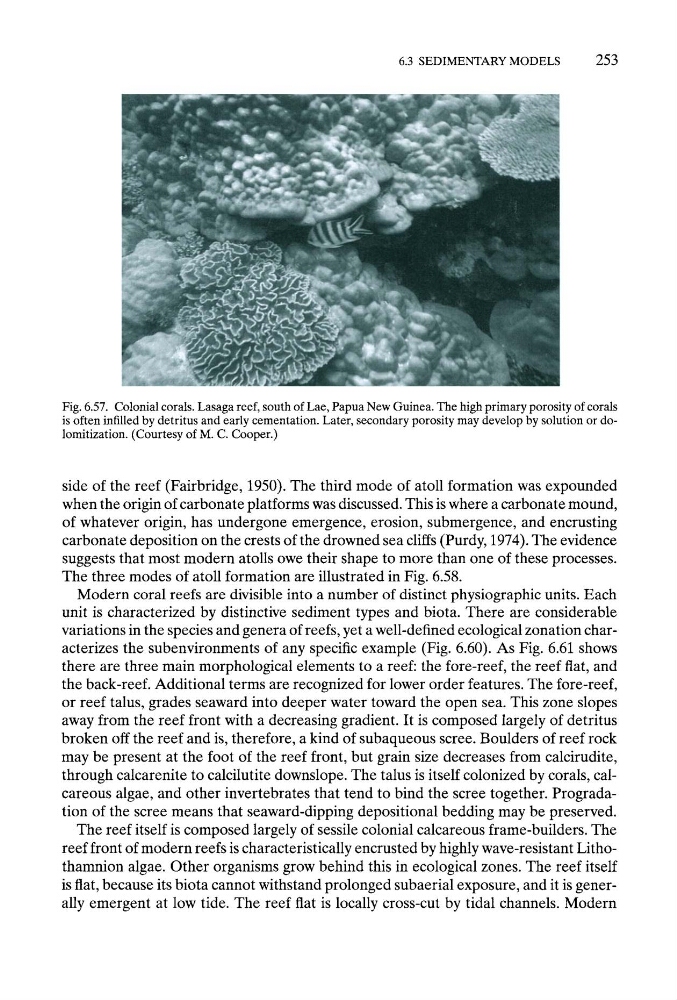
Fig. 6.57. Colonial corals. Lasaga reef, south of Lae, Papua New Guinea. The high primary porosity of corals
is often infilled by detritus and early cementation. Later, secondary porosity may develop by solution or dolomitization. (Courtesy of M. C. Cooper.)
side of the reef (Fairbridge, 1950). The third mode of atoll formation was expounded
when the origin of carbonate platforms was discussed. This is where a carbonate mound,
of whatever origin, has undergone emergence, erosion, submergence, and encrusting
carbonate deposition on the crests of the drowned sea cliffs (Purdy, 1974). The evidence
suggests that most modern atolls owe their shape to more than one of these processes.
The three modes of atoll formation are illustrated in Fig. 6.58.
Modern coral reefs are divisible into a number of distinct physiographic units. Each
unit is characterized by distinctive sediment types and biota. There are considerable
variations in the species and genera of reefs, yet a well-defined ecological zonation characterizes the subenvironments of any specific example (Fig. 6.60). As Fig. 6.61 shows
there are three main morphological elements to a reef: the fore-reef, the reef fiat, and
the back-reef. Additional terms are recognized for lower order features. The fore-reef,
or reef talus, grades seaward into deeper water toward the open sea. This zone slopes
away from the reef front with a decreasing gradient. It is composed largely of detritus
broken off the reef and is, therefore, a kind of subaqueous scree. Boulders of reef rock
may be present at the foot of the reef front, but grain size decreases from calcirudite,
through calcarenite to calcilutite downslope. The talus is itself colonized by corals, calcareous algae, and other invertebrates that tend to bind the scree together. Progradation of the scree means that seaward-dipping depositional bedding may be preserved.
The reef itself is composed largely of sessile colonial calcareous frame-builders. The
reef front of modern reefs is characteristically encrusted by highly wave-resistant Lithothamnion algae. Other organisms grow behind this in ecological zones. The reef itself
is fiat, because its biota cannot withstand prolonged subaerial exposure, and it is generally emergent at low tide. The reef fiat is locally cross-cut by tidal channels. Modern
253
Fig. 6.57. Colonial corals. Lasaga reef, south of Lae, Papua New Guinea. The high primary porosity of corals
is often infilled by detritus and early cementation. Later, secondary porosity may develop by solution or dolomitization. (Courtesy of M. C. Cooper.)
side of the reef (Fairbridge, 1950). The third mode of atoll formation was expounded
when the origin of carbonate platforms was discussed. This is where a carbonate mound,
of whatever origin, has undergone emergence, erosion, submergence, and encrusting
carbonate deposition on the crests of the drowned sea cliffs (Purdy, 1974). The evidence
suggests that most modern atolls owe their shape to more than one of these processes.
The three modes of atoll formation are illustrated in Fig. 6.58.
Modern coral reefs are divisible into a number of distinct physiographic units. Each
unit is characterized by distinctive sediment types and biota. There are considerable
variations in the species and genera of reefs, yet a well-defined ecological zonation characterizes the subenvironments of any specific example (Fig. 6.60). As Fig. 6.61 shows
there are three main morphological elements to a reef: the fore-reef, the reef fiat, and
the back-reef. Additional terms are recognized for lower order features. The fore-reef,
or reef talus, grades seaward into deeper water toward the open sea. This zone slopes
away from the reef front with a decreasing gradient. It is composed largely of detritus
broken off the reef and is, therefore, a kind of subaqueous scree. Boulders of reef rock
may be present at the foot of the reef front, but grain size decreases from calcirudite,
through calcarenite to calcilutite downslope. The talus is itself colonized by corals, calcareous algae, and other invertebrates that tend to bind the scree together. Progradation of the scree means that seaward-dipping depositional bedding may be preserved.
The reef itself is composed largely of sessile colonial calcareous frame-builders. The
reef front of modern reefs is characteristically encrusted by highly wave-resistant Lithothamnion algae. Other organisms grow behind this in ecological zones. The reef itself
is fiat, because its biota cannot withstand prolonged subaerial exposure, and it is generally emergent at low tide. The reef fiat is locally cross-cut by tidal channels. Modern