

226
6 DEPOSITIONAL SYSTEMS
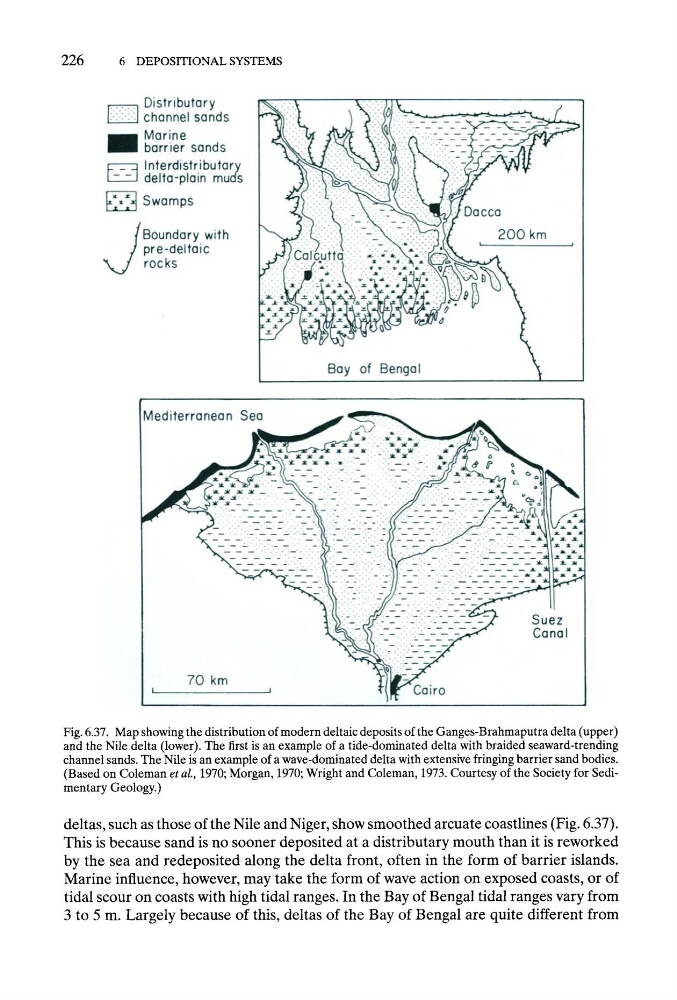
Fig. 6.37. Map showing the distribution of modern deltaic deposits of the Ganges-Brahmaputra delta (upper)
and the Nile delta (lower). The first is an example of a tide-dominated delta with braided seaward-trending
channel sands. The Nile is an example of a wave-dominated delta with extensive fringing barrier sand bodies.
(Based on Coleman et al., 1970; Morgan, 1970; Wright and Coleman, 1973. Courtesy of the Society for Sedimentary Geology.)
deltas, such as those of the Nile and Niger, show smoothed arcuate coastlines (Fig. 6.37).
This is because sand is no sooner deposited at a distributary mouth than it is reworked
by the sea and redeposited along the delta front, often in the form of barrier islands.
Marine influence, however, may take the form of wave action on exposed coasts, or of
tidal scour on coasts with high tidal ranges. In the Bay of Bengal tidal ranges vary from
3 to 5 m. Largely because of this, deltas of the Bay of Bengal are quite different from
6 DEPOSITIONAL SYSTEMS
Fig. 6.37. Map showing the distribution of modern deltaic deposits of the Ganges-Brahmaputra delta (upper)
and the Nile delta (lower). The first is an example of a tide-dominated delta with braided seaward-trending
channel sands. The Nile is an example of a wave-dominated delta with extensive fringing barrier sand bodies.
(Based on Coleman et al., 1970; Morgan, 1970; Wright and Coleman, 1973. Courtesy of the Society for Sedimentary Geology.)
deltas, such as those of the Nile and Niger, show smoothed arcuate coastlines (Fig. 6.37).
This is because sand is no sooner deposited at a distributary mouth than it is reworked
by the sea and redeposited along the delta front, often in the form of barrier islands.
Marine influence, however, may take the form of wave action on exposed coasts, or of
tidal scour on coasts with high tidal ranges. In the Bay of Bengal tidal ranges vary from
3 to 5 m. Largely because of this, deltas of the Bay of Bengal are quite different from