

4.5 GRAVITATIONAL PROCESSES
119
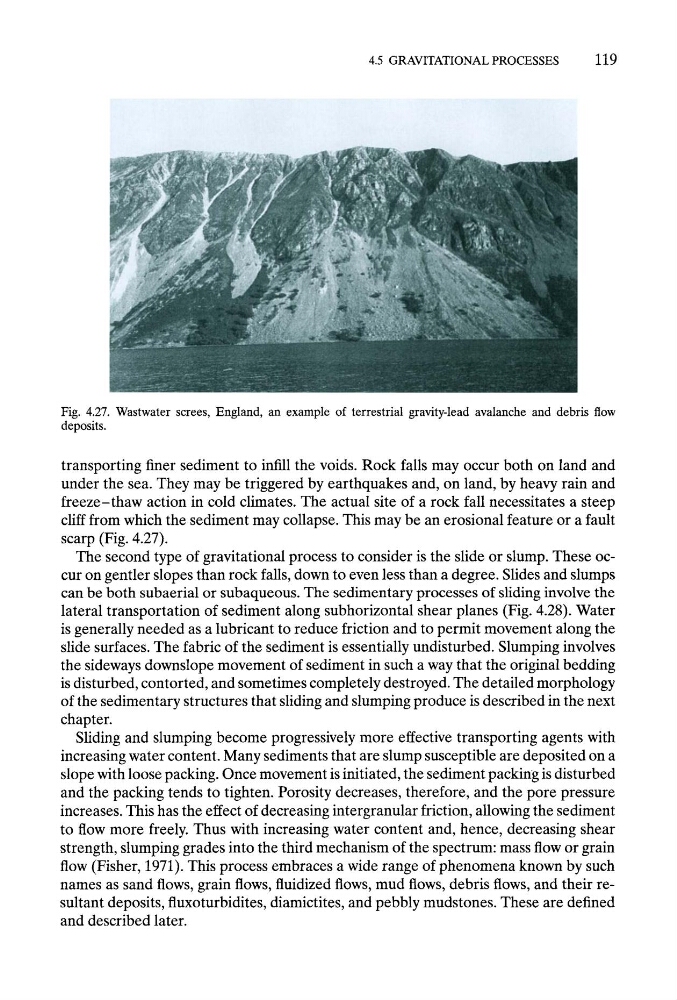
Fig. 4.27. Wastwater screes, England, an example of terrestrial gravity-lead avalanche and debris flow
deposits.
transporting finer sediment to infill the voids. Rock falls may occur both on land and
under the sea. They may be triggered by earthquakes and, on land, by heavy rain and
freeze-thaw action in cold climates. The actual site of a rock fall necessitates a steep
cliff from which the sediment may collapse. This may be an erosional feature or a fault
scarp (Fig. 4.27).
The second type of gravitational process to consider is the slide or slump. These occur on gentler slopes than rock falls, down to even less than a degree. Slides and slumps
can be both subaerial or subaqueous. The sedimentary processes of sliding involve the
lateral transportation of sediment along subhorizontal shear planes (Fig. 4.28). Water
is generally needed as a lubricant to reduce friction and to permit movement along the
slide surfaces. The fabric of the sediment is essentially undisturbed. Slumping involves
the sideways downslope movement of sediment in such a way that the original bedding
is disturbed, contorted, and sometimes completely destroyed. The detailed morphology
of the sedimentary structures that sliding and slumping produce is described in the next
chapter.
Sliding and slumping become progressively more effective transporting agents with
increasing water content. Many sediments that are slump susceptible are deposited on a
slope with loose packing. Once movement is initiated, the sediment packing is disturbed
and the packing tends to tighten. Porosity decreases, therefore, and the pore pressure
increases. This has the effect of decreasing intergranular friction, allowing the sediment
to flow more freely. Thus with increasing water content and, hence, decreasing shear
strength, slumping grades into the third mechanism of the spectrum: mass flow or grain
flow (Fisher, 1971). This process embraces a wide range of phenomena known by such
names as sand flows, grain flows, fluidized flows, mud flows, debris flows, and their resultant deposits, fluxoturbidites, diamictites, and pebbly mudstones. These are defined
and described later.
119
Fig. 4.27. Wastwater screes, England, an example of terrestrial gravity-lead avalanche and debris flow
deposits.
transporting finer sediment to infill the voids. Rock falls may occur both on land and
under the sea. They may be triggered by earthquakes and, on land, by heavy rain and
freeze-thaw action in cold climates. The actual site of a rock fall necessitates a steep
cliff from which the sediment may collapse. This may be an erosional feature or a fault
scarp (Fig. 4.27).
The second type of gravitational process to consider is the slide or slump. These occur on gentler slopes than rock falls, down to even less than a degree. Slides and slumps
can be both subaerial or subaqueous. The sedimentary processes of sliding involve the
lateral transportation of sediment along subhorizontal shear planes (Fig. 4.28). Water
is generally needed as a lubricant to reduce friction and to permit movement along the
slide surfaces. The fabric of the sediment is essentially undisturbed. Slumping involves
the sideways downslope movement of sediment in such a way that the original bedding
is disturbed, contorted, and sometimes completely destroyed. The detailed morphology
of the sedimentary structures that sliding and slumping produce is described in the next
chapter.
Sliding and slumping become progressively more effective transporting agents with
increasing water content. Many sediments that are slump susceptible are deposited on a
slope with loose packing. Once movement is initiated, the sediment packing is disturbed
and the packing tends to tighten. Porosity decreases, therefore, and the pore pressure
increases. This has the effect of decreasing intergranular friction, allowing the sediment
to flow more freely. Thus with increasing water content and, hence, decreasing shear
strength, slumping grades into the third mechanism of the spectrum: mass flow or grain
flow (Fisher, 1971). This process embraces a wide range of phenomena known by such
names as sand flows, grain flows, fluidized flows, mud flows, debris flows, and their resultant deposits, fluxoturbidites, diamictites, and pebbly mudstones. These are defined
and described later.