
 French

Document
1 Result(s)
| Filtré par : Plant genetics ; Trees ; Conservation biology
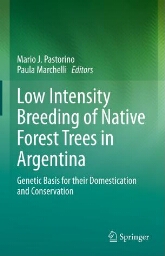
Low intensity breeding of native forest trees in Argentina : genetic basis for their domestication and conservation
Notice: Undefined property: stdClass::$Categories in /srv/www/limbgallery/current/public/themes/ENSSMAL_2/page-records/page-listing.php on line 190
Notice: Trying to get property 'title' of non-object in /srv/www/limbgallery/current/public/themes/ENSSMAL_2/page-records/page-listing.php on line 190
Global climate change requires the development of programs that consider the active restoration of degraded forests and the use of native trees in afforestation to preserve the natural environment. International commitments like the UN REDD program, the Montréal Process and the Convention on Biological Diversity call for the breeding of species rarely contemplated by large industrial companies. Low-intensity breeding is the most rational strategy for those species: simple but robust, and not dependent on continuously increasing funding, and therefore effective even with a relatively small budget. It commonly focuses on high genetic diversity rather than improving economic traits and adaptability rather than productivity. Controlled crosses with full pedigrees typical of high-intensity breeding are replaced by open pollination. This book presents state-of-the-art breeding strategies from the last two decades for several forest tree species of prime importance in the natural forests of Argentina. They are distributed in the three main forestry ecoregions of the country: the subtropical dry forest (Chaco), the subtropical rain forests (Yungas and Alto Paraná rainforests) and the temperate forests of Patagonia. The book also discusses the genetic patterns of the selected species defined using genetic markers together with the analysis of the variation in quantitative traits. Further, it examines the crucial features of their reproductive biology, such as the mating system and gene flow and describes the current breeding programs. Lastly, it presents the latest developments in genetic resources and their emerging applications, concluding with some reflections and perspectives related to the conditioning imposed by climate change.
Low intensity breeding of native forest trees in Argentina : genetic basis for their domestication and conservation
- Auteur
- Pastorino Mario J, Marchelli Paula
- Sujet
- Plant genetics ; Trees ; Conservation biology
- Date_TXT
- UK: Springer International Publishing, 2021
- Type de document
- Livre