

safety of finfish consummate by the Algerian population.
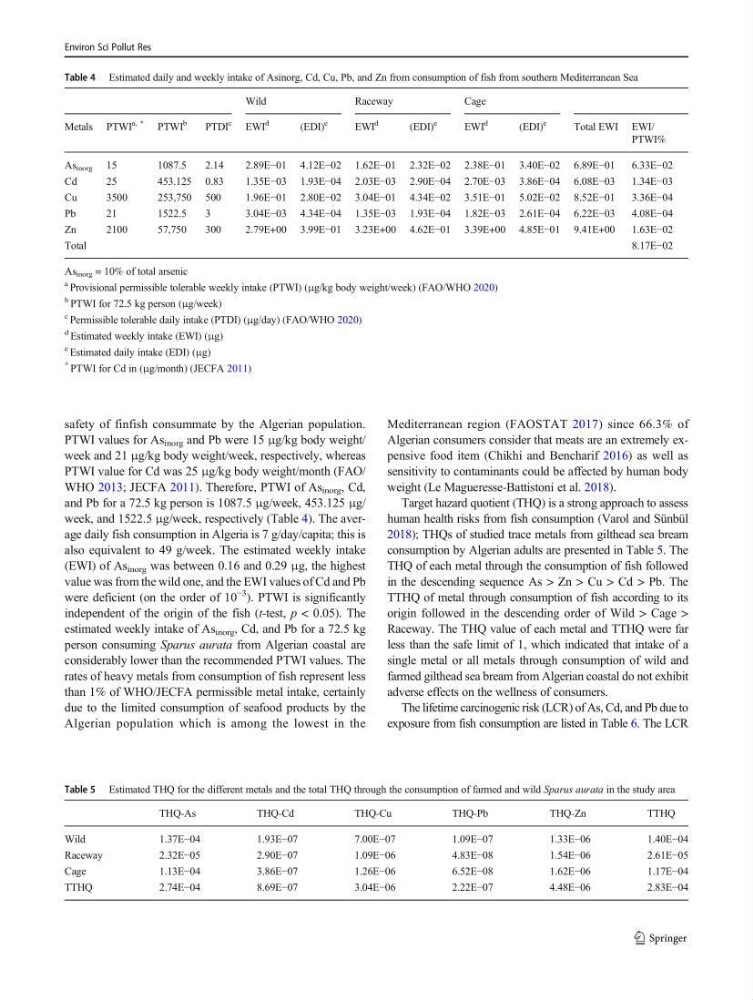
PTWI values for As inorg and Pb were 15 μg/kg body weight/
week and 21 μg/kg body weight/week, respectively, whereas
PTWI value for Cd was 25 μg/kg body weight/month (FAO/
WHO 2013; JECFA 2011). Therefore, PTWI of As inorg , Cd,
and Pb for a 72.5 kg person is 1087.5 μg/week, 453.125 μg/
week, and 1522.5 μg/week, respectively (Table 4). The average daily fish consumption in Algeria is 7 g/day/capita; this is
also equivalent to 49 g/week. The estimated weekly intake
(EWI) of As inorg was between 0.16 and 0.29 μg, the highest
value was from the wild one, and the EWI values of Cd and Pb
were deficient (on the order of 10
−3
). PTWI is significantly
independent of the origin of the fish (t-test, p < 0.05). The
estimated weekly intake of As inorg , Cd, and Pb for a 72.5 kg
person consuming Sparus aurata from Algerian coastal are
considerably lower than the recommended PTWI values. The
rates of heavy metals from consumption of fish represent less
than 1% of WHO/JECFA permissible metal intake, certainly
due to the limited consumption of seafood products by the
Algerian population which is among the lowest in the
Mediterranean region (FAOSTAT 2017) since 66.3% of
Algerian consumers consider that meats are an extremely expensive food item (Chikhi and Bencharif 2016) as well as
sensitivity to contaminants could be affected by human body
weight (Le Magueresse-Battistoni et al. 2018).
Target hazard quotient (THQ) is a strong approach to assess
human health risks from fish consumption (Varol and Sünbül
2018); THQs of studied trace metals from gilthead sea bream
consumption by Algerian adults are presented in Table 5. The
THQ of each metal through the consumption of fish followed
in the descending sequence As > Zn > Cu > Cd > Pb. The
TTHQ of metal through consumption of fish according to its
origin followed in the descending order of Wild > Cage >
Raceway. The THQ value of each metal and TTHQ were far
less than the safe limit of 1, which indicated that intake of a
single metal or all metals through consumption of wild and
farmed gilthead sea bream from Algerian coastal do not exhibit
adverse effects on the wellness of consumers.
The lifetime carcinogenic risk (LCR) of As, Cd, and Pb due to
exposure from fish consumption are listed in Table 6. The LCR
Table 5 Estimated THQ for the different metals and the total THQ through the consumption of farmed and wild Sparus aurata in the study area
THQ-As
THQ-Cd
THQ-Cu
THQ-Pb
THQ-Zn
TTHQ
Wild
1.37E−04
1.93E−07
7.00E−07
1.09E−07
1.33E−06
1.40E−04
Raceway
2.32E−05
2.90E−07
1.09E−06
4.83E−08
1.54E−06
2.61E−05
Cage
1.13E−04
3.86E−07
1.26E−06
6.52E−08
1.62E−06
1.17E−04
TTHQ
2.74E−04
8.69E−07
3.04E−06
2.22E−07
4.48E−06
2.83E−04
Table 4 Estimated daily and weekly intake of Asinorg, Cd, Cu, Pb, and Zn from consumption of fish from southern Mediterranean Sea
Wild
Raceway
Cage
Metals PTWI
a, *
PTWI
b
PTDI
c
EWI
d
(EDI)
e
EWI
d
(EDI)
e
EWI
d
(EDI)
e
Total EWI EWI/
PTWI%
As inorg 15
1087.5
2.14
2.89E−01 4.12E−02 1.62E−01 2.32E−02 2.38E−01 3.40E−02 6.89E−01
6.33E−02
Cd
25
453.125 0.83
1.35E−03 1.93E−04 2.03E−03 2.90E−04 2.70E−03 3.86E−04 6.08E−03
1.34E−03
Cu
3500
253,750 500
1.96E−01 2.80E−02 3.04E−01 4.34E−02 3.51E−01 5.02E−02 8.52E−01
3.36E−04
Pb
21
1522.5
3
3.04E−03 4.34E−04 1.35E−03 1.93E−04 1.82E−03 2.61E−04 6.22E−03
4.08E−04
Zn
2100
57,750
300
2.79E+00 3.99E−01 3.23E+00 4.62E−01 3.39E+00 4.85E−01 9.41E+00
1.63E−02
Total
8.17E−02
As inorg = 10% of total arsenic
a Provisional permissible tolerable weekly intake (PTWI) (μg/kg body weight/week) (FAO/WHO 2020)
b PTWI for 72.5 kg person (μg/week)
c Permissible tolerable daily intake (PTDI) (μg/day) (FAO/WHO 2020)
d Estimated weekly intake (EWI) (μg)
e Estimated daily intake (EDI) (μg)
* PTWI for Cd in (μg/month) (JECFA 2011)
Environ Sci Pollut Res
PTWI values for As inorg and Pb were 15 μg/kg body weight/
week and 21 μg/kg body weight/week, respectively, whereas
PTWI value for Cd was 25 μg/kg body weight/month (FAO/
WHO 2013; JECFA 2011). Therefore, PTWI of As inorg , Cd,
and Pb for a 72.5 kg person is 1087.5 μg/week, 453.125 μg/
week, and 1522.5 μg/week, respectively (Table 4). The average daily fish consumption in Algeria is 7 g/day/capita; this is
also equivalent to 49 g/week. The estimated weekly intake
(EWI) of As inorg was between 0.16 and 0.29 μg, the highest
value was from the wild one, and the EWI values of Cd and Pb
were deficient (on the order of 10
−3
). PTWI is significantly
independent of the origin of the fish (t-test, p < 0.05). The
estimated weekly intake of As inorg , Cd, and Pb for a 72.5 kg
person consuming Sparus aurata from Algerian coastal are
considerably lower than the recommended PTWI values. The
rates of heavy metals from consumption of fish represent less
than 1% of WHO/JECFA permissible metal intake, certainly
due to the limited consumption of seafood products by the
Algerian population which is among the lowest in the
Mediterranean region (FAOSTAT 2017) since 66.3% of
Algerian consumers consider that meats are an extremely expensive food item (Chikhi and Bencharif 2016) as well as
sensitivity to contaminants could be affected by human body
weight (Le Magueresse-Battistoni et al. 2018).
Target hazard quotient (THQ) is a strong approach to assess
human health risks from fish consumption (Varol and Sünbül
2018); THQs of studied trace metals from gilthead sea bream
consumption by Algerian adults are presented in Table 5. The
THQ of each metal through the consumption of fish followed
in the descending sequence As > Zn > Cu > Cd > Pb. The
TTHQ of metal through consumption of fish according to its
origin followed in the descending order of Wild > Cage >
Raceway. The THQ value of each metal and TTHQ were far
less than the safe limit of 1, which indicated that intake of a
single metal or all metals through consumption of wild and
farmed gilthead sea bream from Algerian coastal do not exhibit
adverse effects on the wellness of consumers.
The lifetime carcinogenic risk (LCR) of As, Cd, and Pb due to
exposure from fish consumption are listed in Table 6. The LCR
Table 5 Estimated THQ for the different metals and the total THQ through the consumption of farmed and wild Sparus aurata in the study area
THQ-As
THQ-Cd
THQ-Cu
THQ-Pb
THQ-Zn
TTHQ
Wild
1.37E−04
1.93E−07
7.00E−07
1.09E−07
1.33E−06
1.40E−04
Raceway
2.32E−05
2.90E−07
1.09E−06
4.83E−08
1.54E−06
2.61E−05
Cage
1.13E−04
3.86E−07
1.26E−06
6.52E−08
1.62E−06
1.17E−04
TTHQ
2.74E−04
8.69E−07
3.04E−06
2.22E−07
4.48E−06
2.83E−04
Table 4 Estimated daily and weekly intake of Asinorg, Cd, Cu, Pb, and Zn from consumption of fish from southern Mediterranean Sea
Wild
Raceway
Cage
Metals PTWI
a, *
PTWI
b
PTDI
c
EWI
d
(EDI)
e
EWI
d
(EDI)
e
EWI
d
(EDI)
e
Total EWI EWI/
PTWI%
As inorg 15
1087.5
2.14
2.89E−01 4.12E−02 1.62E−01 2.32E−02 2.38E−01 3.40E−02 6.89E−01
6.33E−02
Cd
25
453.125 0.83
1.35E−03 1.93E−04 2.03E−03 2.90E−04 2.70E−03 3.86E−04 6.08E−03
1.34E−03
Cu
3500
253,750 500
1.96E−01 2.80E−02 3.04E−01 4.34E−02 3.51E−01 5.02E−02 8.52E−01
3.36E−04
Pb
21
1522.5
3
3.04E−03 4.34E−04 1.35E−03 1.93E−04 1.82E−03 2.61E−04 6.22E−03
4.08E−04
Zn
2100
57,750
300
2.79E+00 3.99E−01 3.23E+00 4.62E−01 3.39E+00 4.85E−01 9.41E+00
1.63E−02
Total
8.17E−02
As inorg = 10% of total arsenic
a Provisional permissible tolerable weekly intake (PTWI) (μg/kg body weight/week) (FAO/WHO 2020)
b PTWI for 72.5 kg person (μg/week)
c Permissible tolerable daily intake (PTDI) (μg/day) (FAO/WHO 2020)
d Estimated weekly intake (EWI) (μg)
e Estimated daily intake (EDI) (μg)
* PTWI for Cd in (μg/month) (JECFA 2011)
Environ Sci Pollut Res