

the heating plate set at 120 °C (gradually increased) until a
transparent solution was obtained. The digested aliquots were
cooled to room temperature and then diluted with deionized
water. The trace element concentrations were performed by
flame (As, Cu, Zn), and graphite furnace (Cd, Pb) using atomic absorption spectroscopy (PerkinElmer, AAnalyst 700)
while following the manufacturer’s conditions. All glassware
and containers were cleaned by soaking into 20% nitric acid
for 24 h and rinsed twice with deionized water before use.
Moreover, all chemicals and standard solutions used in the
study were obtained from Merck and were of analytical grade.
The accuracy of the method was checked by analyzing a certified reference material (fish homogenate sample IAEA-407).
The concentrations found were within 91.67–101.22% of the
certified values for all measured trace metals (n = 3). The
results in micrograms per milligram dry weight were multiplied by 0.2 to refer to wet weight based on the estimated
water content of 80% (Plessl et al. 2019).
Health risk assessment of heavy metals
Consumer’s exposure to As, Cd, Cu, Pb, and Zn was determined by calculating the estimated daily intake, according to
the formula below (Griboff et al. 2017).
EDI ¼
Ci  FIR
BW
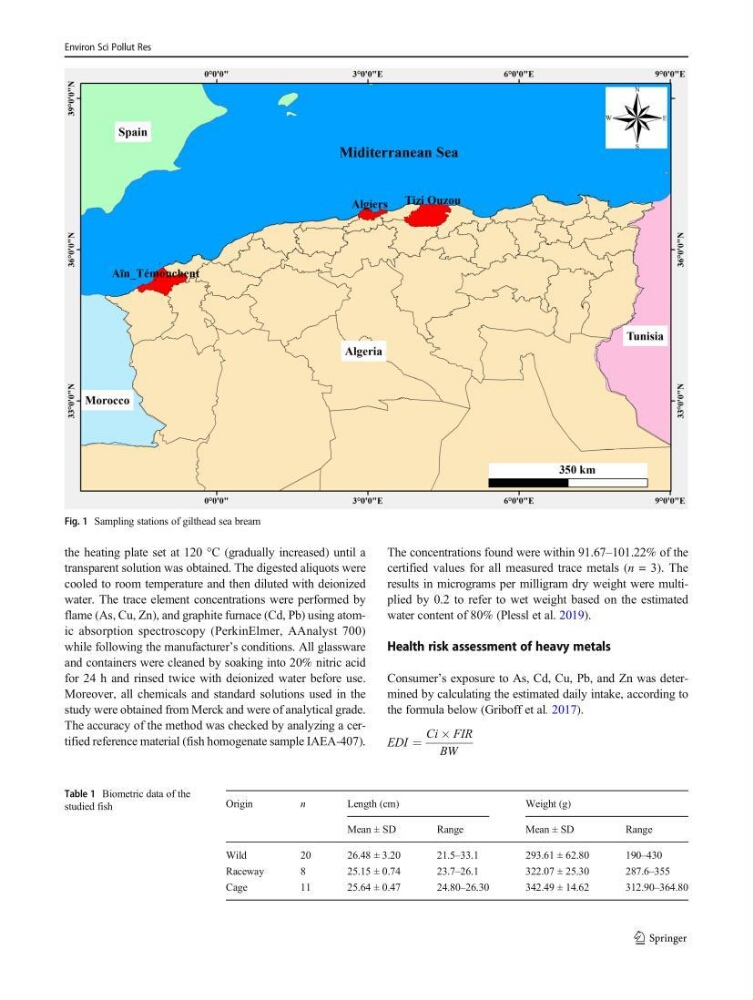
Fig. 1 Sampling stations of gilthead sea bream
Table 1 Biometric data of the
studied fish
Origin
n
Length (cm)
Weight (g)
Mean ± SD
Range
Mean ± SD
Range
Wild
20
26.48 ± 3.20
21.5–33.1
293.61 ± 62.80
190–430
Raceway
8
25.15 ± 0.74
23.7–26.1
322.07 ± 25.30
287.6–355
Cage
11
25.64 ± 0.47
24.80–26.30
342.49 ± 14.62
312.90–364.80
Environ Sci Pollut Res
transparent solution was obtained. The digested aliquots were
cooled to room temperature and then diluted with deionized
water. The trace element concentrations were performed by
flame (As, Cu, Zn), and graphite furnace (Cd, Pb) using atomic absorption spectroscopy (PerkinElmer, AAnalyst 700)
while following the manufacturer’s conditions. All glassware
and containers were cleaned by soaking into 20% nitric acid
for 24 h and rinsed twice with deionized water before use.
Moreover, all chemicals and standard solutions used in the
study were obtained from Merck and were of analytical grade.
The accuracy of the method was checked by analyzing a certified reference material (fish homogenate sample IAEA-407).
The concentrations found were within 91.67–101.22% of the
certified values for all measured trace metals (n = 3). The
results in micrograms per milligram dry weight were multiplied by 0.2 to refer to wet weight based on the estimated
water content of 80% (Plessl et al. 2019).
Health risk assessment of heavy metals
Consumer’s exposure to As, Cd, Cu, Pb, and Zn was determined by calculating the estimated daily intake, according to
the formula below (Griboff et al. 2017).
EDI ¼
Ci  FIR
BW
Fig. 1 Sampling stations of gilthead sea bream
Table 1 Biometric data of the
studied fish
Origin
n
Length (cm)
Weight (g)
Mean ± SD
Range
Mean ± SD
Range
Wild
20
26.48 ± 3.20
21.5–33.1
293.61 ± 62.80
190–430
Raceway
8
25.15 ± 0.74
23.7–26.1
322.07 ± 25.30
287.6–355
Cage
11
25.64 ± 0.47
24.80–26.30
342.49 ± 14.62
312.90–364.80
Environ Sci Pollut Res