

3.8.2 Thermal Response Number
The second characterization measure, the TRN, can be applied whereever there are
overlaps in adjacent flight lines. The TRN was developed in Luvall and Holbo (1989,
1991) as a remote sensing based technique for describing the surface energy budget
within a forested landscape. This procedure treats changes in surface temperature as
an aggregate response of the dissipated thermal energy fluxes (latent heat and sensible
heat exchange and conduction heat exchange with biomass and soil). The TRN is
therefore directly dependent on surface properties (canopy structure, amount and
condition of biomass, heat capacity, and moisture). Surface net radiation integrates
the effects of the nonradiative fluxes, and the rate of change in forest canopy
temperature presents insight on how nonradiative fluxes are reacting to radiant
energy inputs. The ratio of net radiation to change in temperature can be used to
define a surface property referred to as the thermal response number:
TRN =
X t 2
t1
R n Dt=DT kJ=m −2 K
where
P t 2
t 1
R n Dt represents the total amount of net radiation (R n ) for that surface over
the time period between flights (Dt = t 2 − t 1 ) and DT is the change in mean
temperature of that surface. Research by Luvall and Holbo (1989, 1991) and Luvall
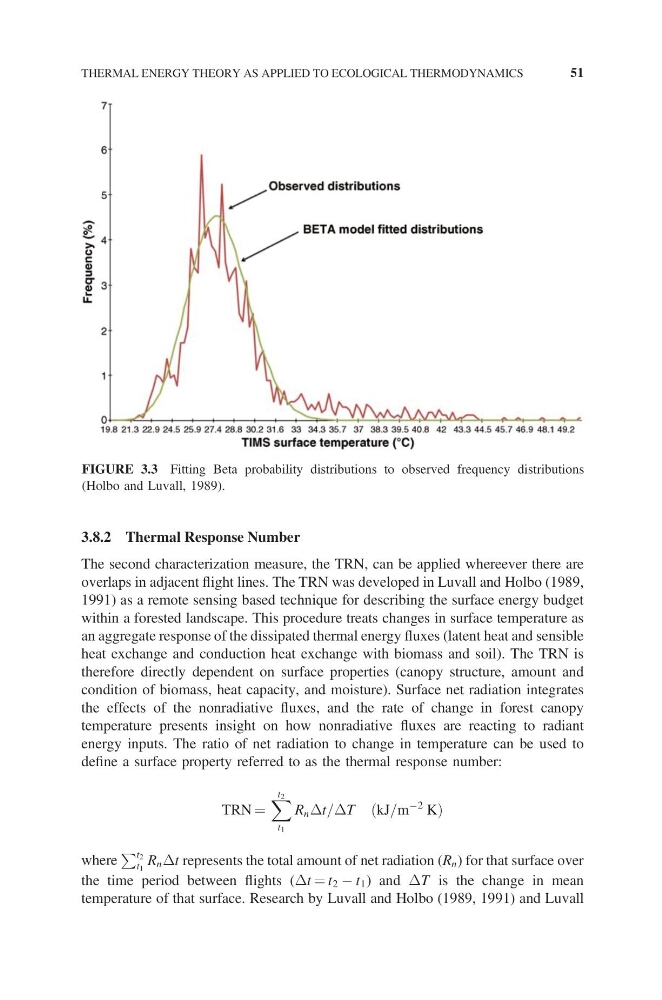
FIGURE 3.3 Fitting Beta probability distributions to observed frequency distributions
(Holbo and Luvall, 1989).
THERMAL ENERGY THEORY AS APPLIED TO ECOLOGICAL THERMODYNAMICS
51
The second characterization measure, the TRN, can be applied whereever there are
overlaps in adjacent flight lines. The TRN was developed in Luvall and Holbo (1989,
1991) as a remote sensing based technique for describing the surface energy budget
within a forested landscape. This procedure treats changes in surface temperature as
an aggregate response of the dissipated thermal energy fluxes (latent heat and sensible
heat exchange and conduction heat exchange with biomass and soil). The TRN is
therefore directly dependent on surface properties (canopy structure, amount and
condition of biomass, heat capacity, and moisture). Surface net radiation integrates
the effects of the nonradiative fluxes, and the rate of change in forest canopy
temperature presents insight on how nonradiative fluxes are reacting to radiant
energy inputs. The ratio of net radiation to change in temperature can be used to
define a surface property referred to as the thermal response number:
TRN =
X t 2
t1
R n Dt=DT kJ=m −2 K
where
P t 2
t 1
R n Dt represents the total amount of net radiation (R n ) for that surface over
the time period between flights (Dt = t 2 − t 1 ) and DT is the change in mean
temperature of that surface. Research by Luvall and Holbo (1989, 1991) and Luvall
FIGURE 3.3 Fitting Beta probability distributions to observed frequency distributions
(Holbo and Luvall, 1989).
THERMAL ENERGY THEORY AS APPLIED TO ECOLOGICAL THERMODYNAMICS
51