

84
Basic biogeography: estimating biodiversity and mapping nature
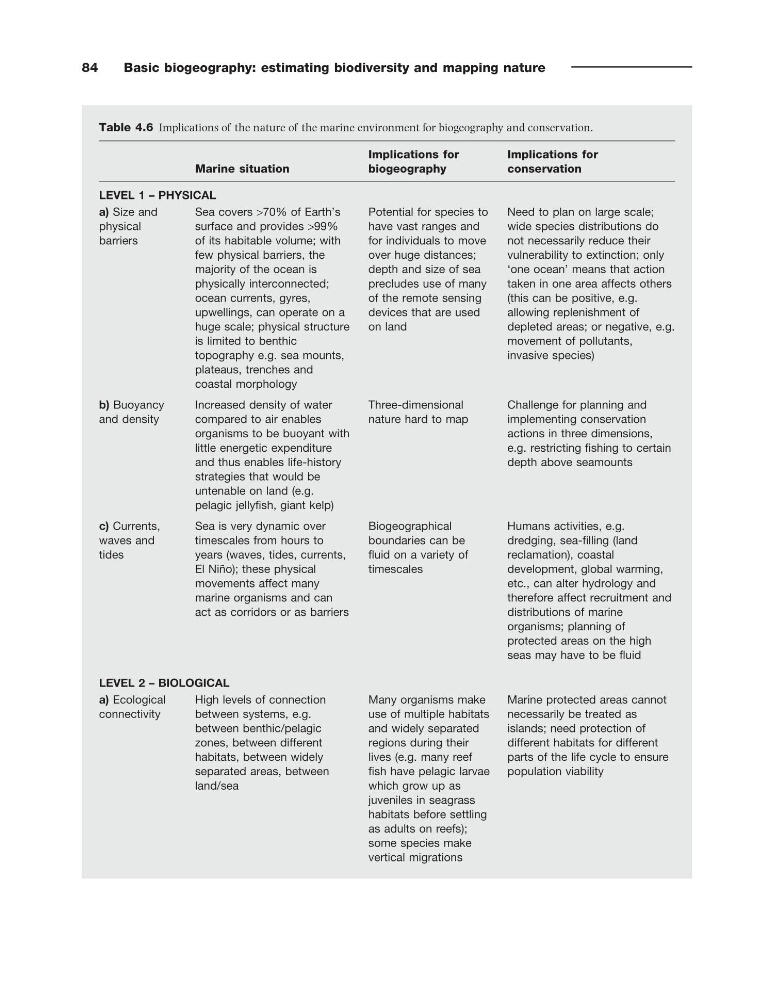
Table 4.6 Implications of the nature of the marine environment for biogeography and conservation.
Marine situation
Implications for
biogeography
Implications for
conservation
LEVEL 1 – PHYSICAL
a) Size and
physical
barriers
Sea covers > 70% of Earth ’ s
surface and provides > 99%
of its habitable volume; with
few physical barriers, the
majority of the ocean is
physically interconnected;
ocean currents, gyres,
upwellings, can operate on a
huge scale; physical structure
is limited to benthic
topography e.g. sea mounts,
plateaus, trenches and
coastal morphology
Potential for species to
have vast ranges and
for individuals to move
over huge distances;
depth and size of sea
precludes use of many
of the remote sensing
devices that are used
on land
Need to plan on large scale;
wide species distributions do
not necessarily reduce their
vulnerability to extinction; only
‘ one ocean ’ means that action
taken in one area affects others
(this can be positive, e.g.
allowing replenishment of
depleted areas; or negative, e.g.
movement of pollutants,
invasive species)
b) Buoyancy
and density
Increased density of water
compared to air enables
organisms to be buoyant with
little energetic expenditure
and thus enables life - history
strategies that would be
untenable on land (e.g.
pelagic jellyfi sh, giant kelp)
Three - dimensional
nature hard to map
Challenge for planning and
implementing conservation
actions in three dimensions,
e.g. restricting fi shing to certain
depth above seamounts
c) Currents,
waves and
tides
Sea is very dynamic over
timescales from hours to
years (waves, tides, currents,
El Ni ñ o); these physical
movements affect many
marine organisms and can
act as corridors or as barriers
Biogeographical
boundaries can be
fl uid on a variety of
timescales
Humans activities, e.g.
dredging, sea - fi lling (land
reclamation), coastal
development, global warming,
etc., can alter hydrology and
therefore affect recruitment and
distributions of marine
organisms; planning of
protected areas on the high
seas may have to be fl uid
LEVEL 2 – BIOLOGICAL
a) Ecological
connectivity
High levels of connection
between systems, e.g.
between benthic/pelagic
zones, between different
habitats, between widely
separated areas, between
land/sea
Many organisms make
use of multiple habitats
and widely separated
regions during their
lives (e.g. many reef
fi sh have pelagic larvae
which grow up as
juveniles in seagrass
habitats before settling
as adults on reefs);
some species make
vertical migrations
Marine protected areas cannot
necessarily be treated as
islands; need protection of
different habitats for different
parts of the life cycle to ensure
population viability
Basic biogeography: estimating biodiversity and mapping nature
Table 4.6 Implications of the nature of the marine environment for biogeography and conservation.
Marine situation
Implications for
biogeography
Implications for
conservation
LEVEL 1 – PHYSICAL
a) Size and
physical
barriers
Sea covers > 70% of Earth ’ s
surface and provides > 99%
of its habitable volume; with
few physical barriers, the
majority of the ocean is
physically interconnected;
ocean currents, gyres,
upwellings, can operate on a
huge scale; physical structure
is limited to benthic
topography e.g. sea mounts,
plateaus, trenches and
coastal morphology
Potential for species to
have vast ranges and
for individuals to move
over huge distances;
depth and size of sea
precludes use of many
of the remote sensing
devices that are used
on land
Need to plan on large scale;
wide species distributions do
not necessarily reduce their
vulnerability to extinction; only
‘ one ocean ’ means that action
taken in one area affects others
(this can be positive, e.g.
allowing replenishment of
depleted areas; or negative, e.g.
movement of pollutants,
invasive species)
b) Buoyancy
and density
Increased density of water
compared to air enables
organisms to be buoyant with
little energetic expenditure
and thus enables life - history
strategies that would be
untenable on land (e.g.
pelagic jellyfi sh, giant kelp)
Three - dimensional
nature hard to map
Challenge for planning and
implementing conservation
actions in three dimensions,
e.g. restricting fi shing to certain
depth above seamounts
c) Currents,
waves and
tides
Sea is very dynamic over
timescales from hours to
years (waves, tides, currents,
El Ni ñ o); these physical
movements affect many
marine organisms and can
act as corridors or as barriers
Biogeographical
boundaries can be
fl uid on a variety of
timescales
Humans activities, e.g.
dredging, sea - fi lling (land
reclamation), coastal
development, global warming,
etc., can alter hydrology and
therefore affect recruitment and
distributions of marine
organisms; planning of
protected areas on the high
seas may have to be fl uid
LEVEL 2 – BIOLOGICAL
a) Ecological
connectivity
High levels of connection
between systems, e.g.
between benthic/pelagic
zones, between different
habitats, between widely
separated areas, between
land/sea
Many organisms make
use of multiple habitats
and widely separated
regions during their
lives (e.g. many reef
fi sh have pelagic larvae
which grow up as
juveniles in seagrass
habitats before settling
as adults on reefs);
some species make
vertical migrations
Marine protected areas cannot
necessarily be treated as
islands; need protection of
different habitats for different
parts of the life cycle to ensure
population viability