

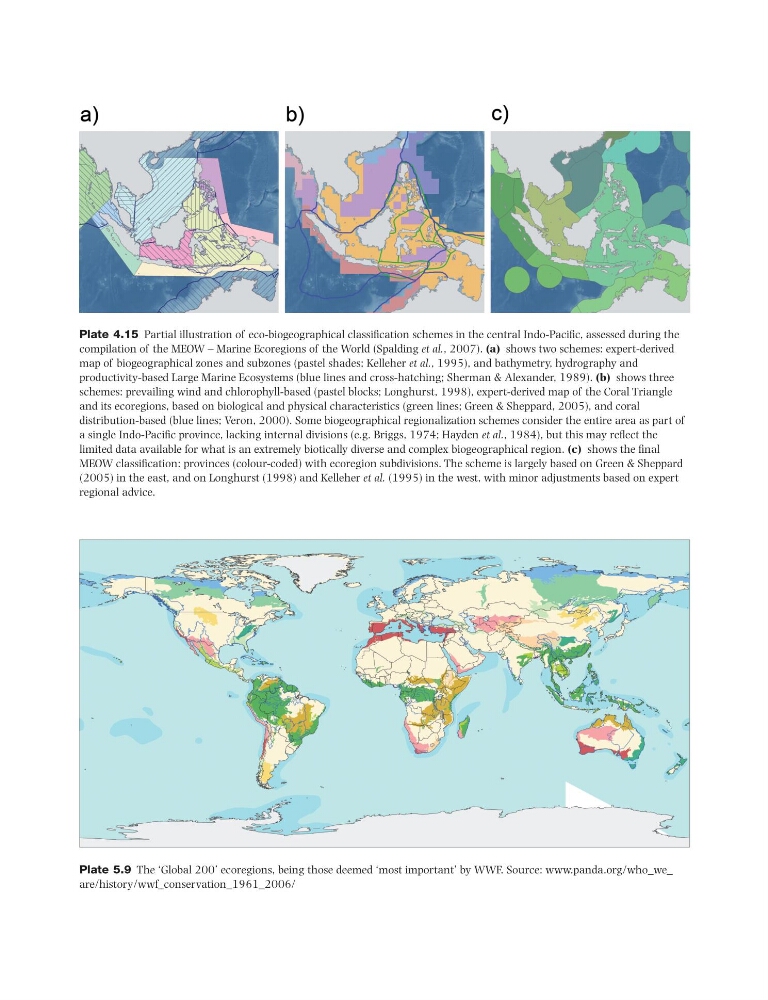
Plate 4.15 Partial illustration of eco-biogeographical classifi cation schemes in the central Indo-Pacifi c, assessed during the
compilation of the MEOW – Marine Ecoregions of the World (Spalding et al., 2007). (a) shows two schemes: expert-derived
map of biogeographical zones and subzones (pastel shades; Kelleher et al., 1995), and bathymetry, hydrography and
productivity-based Large Marine Ecosystems (blue lines and cross-hatching; Sherman & Alexander, 1989). (b) shows three
schemes: prevailing wind and chlorophyll-based (pastel blocks; Longhurst, 1998), expert-derived map of the Coral Triangle
and its ecoregions, based on biological and physical characteristics (green lines; Green & Sheppard, 2005), and coral
distribution-based (blue lines; Veron, 2000). Some biogeographical regionalization schemes consider the entire area as part of
a single Indo-Pacifi c province, lacking internal divisions (e.g. Briggs, 1974; Hayden et al., 1984), but this may refl ect the
limited data available for what is an extremely biotically diverse and complex biogeographical region. (c) shows the fi nal
MEOW classifi cation: provinces (colour-coded) with ecoregion subdivisions. The scheme is largely based on Green & Sheppard
(2005) in the east, and on Longhurst (1998) and Kelleher et al. (1995) in the west, with minor adjustments based on expert
regional advice.
Plate 5.9 The ‘Global 200’ ecoregions, being those deemed ‘most important’ by WWF. Source: www.panda.org/who_we_
are/history/wwf_conservation_1961_2006/
compilation of the MEOW – Marine Ecoregions of the World (Spalding et al., 2007). (a) shows two schemes: expert-derived
map of biogeographical zones and subzones (pastel shades; Kelleher et al., 1995), and bathymetry, hydrography and
productivity-based Large Marine Ecosystems (blue lines and cross-hatching; Sherman & Alexander, 1989). (b) shows three
schemes: prevailing wind and chlorophyll-based (pastel blocks; Longhurst, 1998), expert-derived map of the Coral Triangle
and its ecoregions, based on biological and physical characteristics (green lines; Green & Sheppard, 2005), and coral
distribution-based (blue lines; Veron, 2000). Some biogeographical regionalization schemes consider the entire area as part of
a single Indo-Pacifi c province, lacking internal divisions (e.g. Briggs, 1974; Hayden et al., 1984), but this may refl ect the
limited data available for what is an extremely biotically diverse and complex biogeographical region. (c) shows the fi nal
MEOW classifi cation: provinces (colour-coded) with ecoregion subdivisions. The scheme is largely based on Green & Sheppard
(2005) in the east, and on Longhurst (1998) and Kelleher et al. (1995) in the west, with minor adjustments based on expert
regional advice.
Plate 5.9 The ‘Global 200’ ecoregions, being those deemed ‘most important’ by WWF. Source: www.panda.org/who_we_
are/history/wwf_conservation_1961_2006/