

Conservation planning in a changing world
239
suggest that human settlement may directly increase
the likelihood of intentional or accidental non - native
species introductions, and disturbance associated with
physical infrastructure and land - use change may
promote the establishment of these species by disrupting environmental conditions.
Wetland degradation has also led to the homogenization of aquatic and invertebrate communities in
Michigan, USA (Lougheed et al. , 2008 ). Specifi cally,
habitat homogenization at both the local and landscape scales were found to shift community structure
from a species - rich and spatially heterogeneous community dominated by fl oating - leaved plants in undeveloped wetlands, to nutrient - rich wetlands dominated
by ubiquitous duckweed (Lemnaceae).
Urban/rural gradient studies have provided important insights into associations between urbanization
and bird and plant homogenization. Blair (2004) found
that temporal changes in bird community composition
varied in a similar fashion along an urban/rural gradient in the oak woodlands of northern California
and the eastern broadleaf forests of Ohio, USA. The
degree of taxonomic overlap in the bird communities
increased from approximately 5 per cent in the least
developed sites to approximately 20 per cent in the
humans are playing a central role in promoting the
homogenization process by introducing new species
and favouring the persistence of non - native species
over native species.
For freshwater ecosystems, Scott and Helfman
(2001) reported that cosmopolitan species ’ richness
increased and endemic species ’ richness decreased in
response to increased watershed deforestation and
density of buildings and roads in Tennessee, USA. At a
larger spatial scale, Marchetti et al . (2001) observed
that measures of human occupancy and aquatic
habitat alteration, including the density of dams and
aqueducts in the watershed, were associated with
increased similarity of zoogeographical provinces in
fi sh communities in California, USA. However, at a
fi ner spatial scale, Marchetti et al . (2006) found a negative relationship between change in community similarity and the proportion of the watershed in
development (including commercial, industrial, urban
and suburban) – or, in other words, more developed
watersheds showed greater biotic differentiation. Olden
et al . (2008) found that geographical patterns of
homogenization in Australia were highly concordant
with levels of disturbance associated with human
settlement, infrastructure and land use. These results
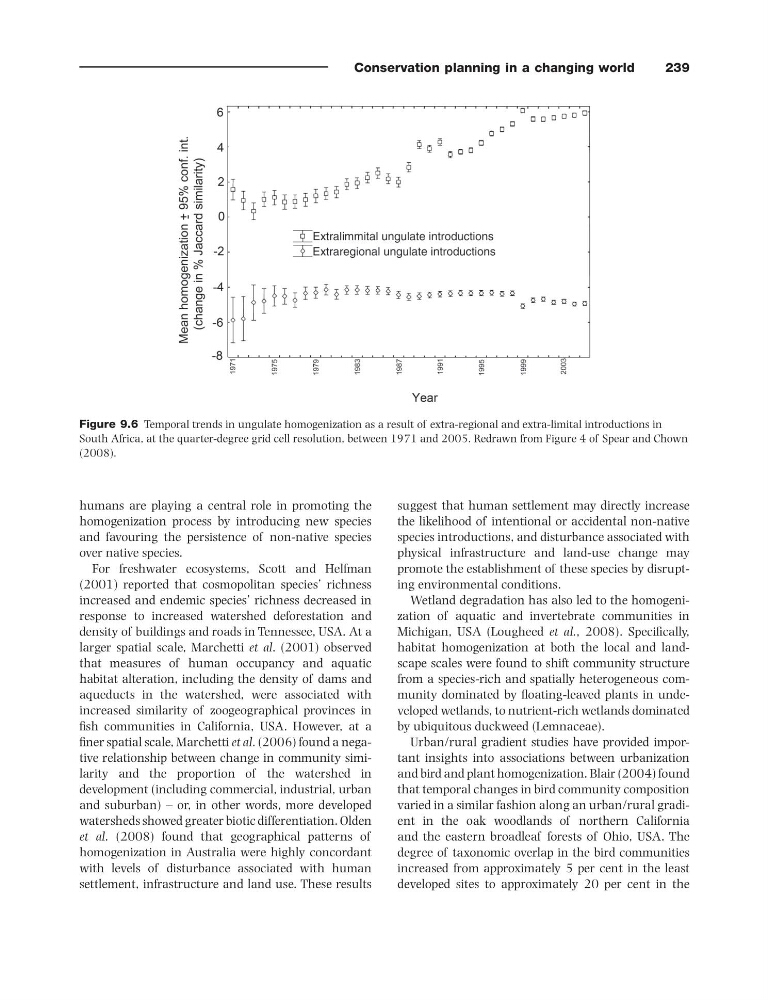
Figure 9.6 Temporal trends in ungulate homogenization as a result of extra - regional and extra - limital introductions in
South Africa, at the quarter - degree grid cell resolution, between 1971 and 2005. Redrawn from Figure 4 of Spear and Chown
(2008) .
239
suggest that human settlement may directly increase
the likelihood of intentional or accidental non - native
species introductions, and disturbance associated with
physical infrastructure and land - use change may
promote the establishment of these species by disrupting environmental conditions.
Wetland degradation has also led to the homogenization of aquatic and invertebrate communities in
Michigan, USA (Lougheed et al. , 2008 ). Specifi cally,
habitat homogenization at both the local and landscape scales were found to shift community structure
from a species - rich and spatially heterogeneous community dominated by fl oating - leaved plants in undeveloped wetlands, to nutrient - rich wetlands dominated
by ubiquitous duckweed (Lemnaceae).
Urban/rural gradient studies have provided important insights into associations between urbanization
and bird and plant homogenization. Blair (2004) found
that temporal changes in bird community composition
varied in a similar fashion along an urban/rural gradient in the oak woodlands of northern California
and the eastern broadleaf forests of Ohio, USA. The
degree of taxonomic overlap in the bird communities
increased from approximately 5 per cent in the least
developed sites to approximately 20 per cent in the
humans are playing a central role in promoting the
homogenization process by introducing new species
and favouring the persistence of non - native species
over native species.
For freshwater ecosystems, Scott and Helfman
(2001) reported that cosmopolitan species ’ richness
increased and endemic species ’ richness decreased in
response to increased watershed deforestation and
density of buildings and roads in Tennessee, USA. At a
larger spatial scale, Marchetti et al . (2001) observed
that measures of human occupancy and aquatic
habitat alteration, including the density of dams and
aqueducts in the watershed, were associated with
increased similarity of zoogeographical provinces in
fi sh communities in California, USA. However, at a
fi ner spatial scale, Marchetti et al . (2006) found a negative relationship between change in community similarity and the proportion of the watershed in
development (including commercial, industrial, urban
and suburban) – or, in other words, more developed
watersheds showed greater biotic differentiation. Olden
et al . (2008) found that geographical patterns of
homogenization in Australia were highly concordant
with levels of disturbance associated with human
settlement, infrastructure and land use. These results
Figure 9.6 Temporal trends in ungulate homogenization as a result of extra - regional and extra - limital introductions in
South Africa, at the quarter - degree grid cell resolution, between 1971 and 2005. Redrawn from Figure 4 of Spear and Chown
(2008) .