

108
The shaping of the global protected area estate
However, while this is a repeatable methodology,
decisions taken regarding several key criteria (e.g. size
of range, number of endemics, and degree of range
overlap), and the user decisions required in dealing
with complex areas, as with all such schemes inevitably has a bearing on precisely which areas are selected.
Moreover, possession of a minimum of two endemic
species, each of range of < 50,000 km
2
, is a fairly crude
indicator of the degree to which the target species, and
indeed other aspects of biodiversity, may actually be
threatened and in need of protection. For instance,
EBAs identifi ed in western Indonesia are all in mountainous regions that are relatively intact and secure,
whereas EBAs were not located within the critically
threatened lowland ever - wet forests, despite their being
home to some 164 bird species that are endemic to the
region.
The reliance upon, and focus of, EBAs on a single
popular group of organisms provided both the strength
(public support, quality of data), and the limitations of
the EBA approach, the latter including the generally
untested assumption that EBAs identifi ed areas requiring conservation action. Despite such shortcomings,
the EBA approach provided valuable new impetus to
efforts to establish protected area networks and it
increased the prominence of endemic species in conservation discourse.
As with the Dasmann – Udvardy framework, national
level application required the development of sub -
divisions to guide the selection of reserves or to provide
a new and compelling justifi cation for earlier proposals. In conjunction with the Indonesian governmental
organization, PHPA, the Indonesian offi ce of BirdLife
International produced a policy report that subdivided
EBAs by area and by habitat type. The report included
maps and off - the - shelf cases for designation that could
be reproduced by district and provincial forestry
departments responsible for proposing key areas for
designation.
This strategy met with some success in that, between
1995 and 1999, two new national parks were designated on Sumba, four new key reserves were designated on Timor, and a major GEF - fi nanced project was
prepared to establish fi ve new reserves in Maluku. The
latter project was later cancelled because of political
and social instability.
The EBA approach has the merit of an explicit
purpose and a transparent and repeatable methodology. The method could potentially be developed to identify centres of endemism at different taxonomic levels
or (with greater effort) using a different range size
threshold. This allows conservation recommendations
derived from EBAs to be independently assessed, revised
or refi ned.
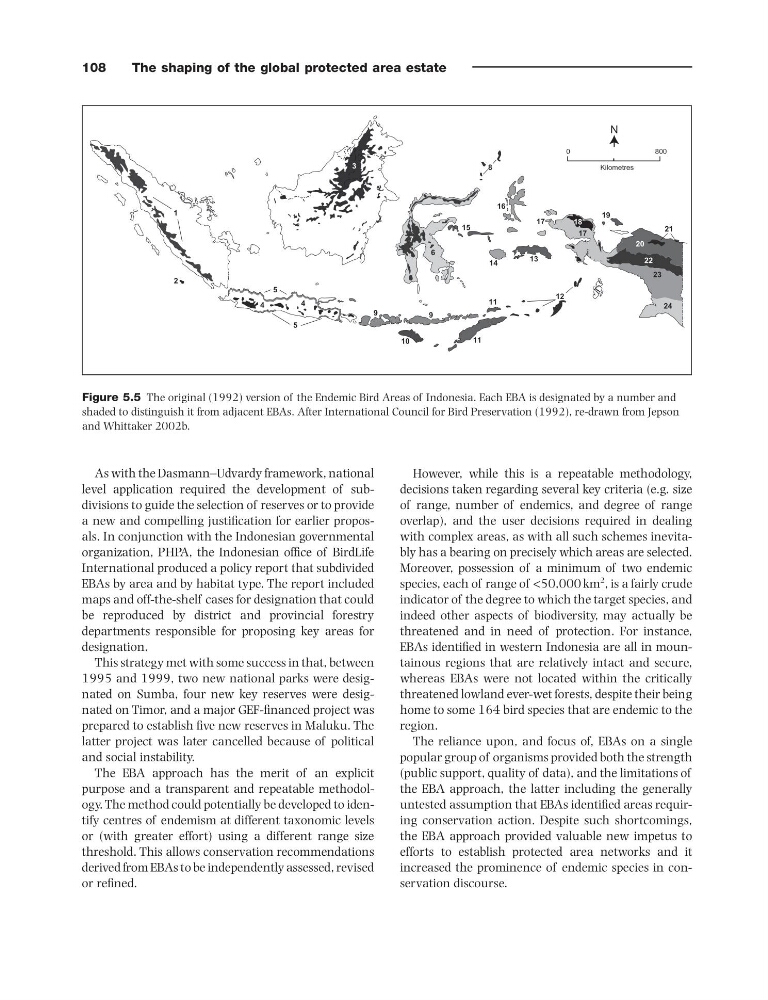
Figure 5.5 The original (1992) version of the Endemic Bird Areas of Indonesia. Each EBA is designated by a number and
shaded to distinguish it from adjacent EBAs. After International Council for Bird Preservation (1992), re - drawn from Jepson
and Whittaker 2002b .
1
2
3
4
4
5
5
6
7
8
9
9
10
11
11
12
13
14
15
19
20
21
22
23
24
16
17
17
18
Kilometres
0
800
N
The shaping of the global protected area estate
However, while this is a repeatable methodology,
decisions taken regarding several key criteria (e.g. size
of range, number of endemics, and degree of range
overlap), and the user decisions required in dealing
with complex areas, as with all such schemes inevitably has a bearing on precisely which areas are selected.
Moreover, possession of a minimum of two endemic
species, each of range of < 50,000 km
2
, is a fairly crude
indicator of the degree to which the target species, and
indeed other aspects of biodiversity, may actually be
threatened and in need of protection. For instance,
EBAs identifi ed in western Indonesia are all in mountainous regions that are relatively intact and secure,
whereas EBAs were not located within the critically
threatened lowland ever - wet forests, despite their being
home to some 164 bird species that are endemic to the
region.
The reliance upon, and focus of, EBAs on a single
popular group of organisms provided both the strength
(public support, quality of data), and the limitations of
the EBA approach, the latter including the generally
untested assumption that EBAs identifi ed areas requiring conservation action. Despite such shortcomings,
the EBA approach provided valuable new impetus to
efforts to establish protected area networks and it
increased the prominence of endemic species in conservation discourse.
As with the Dasmann – Udvardy framework, national
level application required the development of sub -
divisions to guide the selection of reserves or to provide
a new and compelling justifi cation for earlier proposals. In conjunction with the Indonesian governmental
organization, PHPA, the Indonesian offi ce of BirdLife
International produced a policy report that subdivided
EBAs by area and by habitat type. The report included
maps and off - the - shelf cases for designation that could
be reproduced by district and provincial forestry
departments responsible for proposing key areas for
designation.
This strategy met with some success in that, between
1995 and 1999, two new national parks were designated on Sumba, four new key reserves were designated on Timor, and a major GEF - fi nanced project was
prepared to establish fi ve new reserves in Maluku. The
latter project was later cancelled because of political
and social instability.
The EBA approach has the merit of an explicit
purpose and a transparent and repeatable methodology. The method could potentially be developed to identify centres of endemism at different taxonomic levels
or (with greater effort) using a different range size
threshold. This allows conservation recommendations
derived from EBAs to be independently assessed, revised
or refi ned.
Figure 5.5 The original (1992) version of the Endemic Bird Areas of Indonesia. Each EBA is designated by a number and
shaded to distinguish it from adjacent EBAs. After International Council for Bird Preservation (1992), re - drawn from Jepson
and Whittaker 2002b .
1
2
3
4
4
5
5
6
7
8
9
9
10
11
11
12
13
14
15
19
20
21
22
23
24
16
17
17
18
Kilometres
0
800
N