

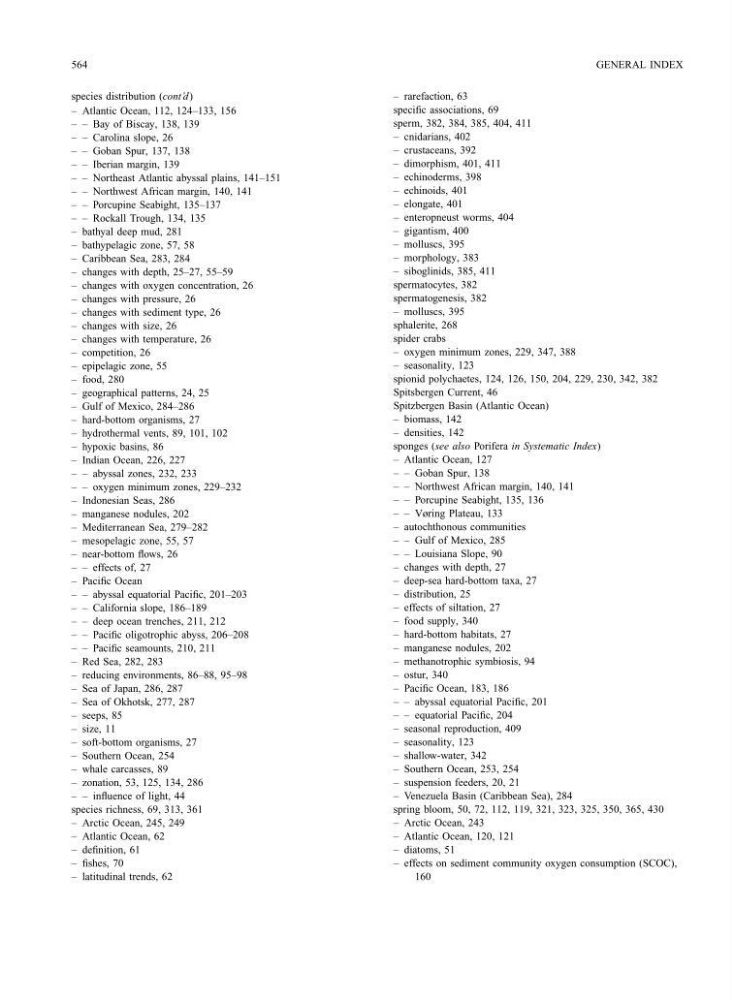
564
GENERAL INDEX
species distribution (cont’d)
– Atlantic Ocean, 112, 124–133, 156
– – Bay of Biscay, 138, 139
– – Carolina slope, 26
– – Goban Spur, 137, 138
– – Iberian margin, 139
– – Northeast Atlantic abyssal plains, 141–151
– – Northwest African margin, 140, 141
– – Porcupine Seabight, 135–137
– – Rockall Trough, 134, 135
– bathyal deep mud, 281
– bathypelagic zone, 57, 58
– Caribbean Sea, 283, 284
– changes with depth, 25–27, 55–59
– changes with oxygen concentration, 26
– changes with pressure, 26
– changes with sediment type, 26
– changes with size, 26
– changes with temperature, 26
– competition, 26
– epipelagic zone, 55
– food, 280
– geographical patterns, 24, 25
– Gulf of Mexico, 284–286
– hard-bottom organisms, 27
– hydrothermal vents, 89, 101, 102
– hypoxic basins, 86
– Indian Ocean, 226, 227
– – abyssal zones, 232, 233
– – oxygen minimum zones, 229–232
– Indonesian Seas, 286
– manganese nodules, 202
– Mediterranean Sea, 279–282
– mesopelagic zone, 55, 57
– near-bottom flows, 26
– – effects of, 27
– Pacific Ocean
– – abyssal equatorial Pacific, 201–203
– – California slope, 186–189
– – deep ocean trenches, 211, 212
– – Pacific oligotrophic abyss, 206–208
– – Pacific seamounts, 210, 211
– Red Sea, 282, 283
– reducing environments, 86–88, 95–98
– Sea of Japan, 286, 287
– Sea of Okhotsk, 277, 287
– seeps, 85
– size, 11
– soft-bottom organisms, 27
– Southern Ocean, 254
– whale carcasses, 89
– zonation, 53, 125, 134, 286
– – influence of light, 44
species richness, 69, 313, 361
– Arctic Ocean, 245, 249
– Atlantic Ocean, 62
– definition, 61
– fishes, 70
– latitudinal trends, 62
– rarefaction, 63
specific associations, 69
sperm, 382, 384, 385, 404, 411
– cnidarians, 402
– crustaceans, 392
– dimorphism, 401, 411
– echinoderms, 398
– echinoids, 401
– elongate, 401
– enteropneust worms, 404
– gigantism, 400
– molluscs, 395
– morphology, 383
– siboglinids, 385, 411
spermatocytes, 382
spermatogenesis, 382
– molluscs, 395
sphalerite, 268
spider crabs
– oxygen minimum zones, 229, 347, 388
– seasonality, 123
spionid polychaetes, 124, 126, 150, 204, 229, 230, 342, 382
Spitsbergen Current, 46
Spitzbergen Basin (Atlantic Ocean)
– biomass, 142
– densities, 142
sponges (see also Porifera in Systematic Index)
– Atlantic Ocean, 127
– – Goban Spur, 138
– – Northwest African margin, 140, 141
– – Porcupine Seabight, 135, 136
– – Vøring Plateau, 133
– autochthonous communities
– – Gulf of Mexico, 285
– – Louisiana Slope, 90
– changes with depth, 27
– deep-sea hard-bottom taxa, 27
– distribution, 25
– effects of siltation, 27
– food supply, 340
– hard-bottom habitats, 27
– manganese nodules, 202
– methanotrophic symbiosis, 94
– ostur, 340
– Pacific Ocean, 183, 186
– – abyssal equatorial Pacific, 201
– – equatorial Pacific, 204
– seasonal reproduction, 409
– seasonality, 123
– shallow-water, 342
– Southern Ocean, 253, 254
– suspension feeders, 20, 21
– Venezuela Basin (Caribbean Sea), 284
spring bloom, 50, 72, 112, 119, 321, 323, 325, 350, 365, 430
– Arctic Ocean, 243
– Atlantic Ocean, 120, 121
– diatoms, 51
– effects on sediment community oxygen consumption (SCOC),
160
GENERAL INDEX
species distribution (cont’d)
– Atlantic Ocean, 112, 124–133, 156
– – Bay of Biscay, 138, 139
– – Carolina slope, 26
– – Goban Spur, 137, 138
– – Iberian margin, 139
– – Northeast Atlantic abyssal plains, 141–151
– – Northwest African margin, 140, 141
– – Porcupine Seabight, 135–137
– – Rockall Trough, 134, 135
– bathyal deep mud, 281
– bathypelagic zone, 57, 58
– Caribbean Sea, 283, 284
– changes with depth, 25–27, 55–59
– changes with oxygen concentration, 26
– changes with pressure, 26
– changes with sediment type, 26
– changes with size, 26
– changes with temperature, 26
– competition, 26
– epipelagic zone, 55
– food, 280
– geographical patterns, 24, 25
– Gulf of Mexico, 284–286
– hard-bottom organisms, 27
– hydrothermal vents, 89, 101, 102
– hypoxic basins, 86
– Indian Ocean, 226, 227
– – abyssal zones, 232, 233
– – oxygen minimum zones, 229–232
– Indonesian Seas, 286
– manganese nodules, 202
– Mediterranean Sea, 279–282
– mesopelagic zone, 55, 57
– near-bottom flows, 26
– – effects of, 27
– Pacific Ocean
– – abyssal equatorial Pacific, 201–203
– – California slope, 186–189
– – deep ocean trenches, 211, 212
– – Pacific oligotrophic abyss, 206–208
– – Pacific seamounts, 210, 211
– Red Sea, 282, 283
– reducing environments, 86–88, 95–98
– Sea of Japan, 286, 287
– Sea of Okhotsk, 277, 287
– seeps, 85
– size, 11
– soft-bottom organisms, 27
– Southern Ocean, 254
– whale carcasses, 89
– zonation, 53, 125, 134, 286
– – influence of light, 44
species richness, 69, 313, 361
– Arctic Ocean, 245, 249
– Atlantic Ocean, 62
– definition, 61
– fishes, 70
– latitudinal trends, 62
– rarefaction, 63
specific associations, 69
sperm, 382, 384, 385, 404, 411
– cnidarians, 402
– crustaceans, 392
– dimorphism, 401, 411
– echinoderms, 398
– echinoids, 401
– elongate, 401
– enteropneust worms, 404
– gigantism, 400
– molluscs, 395
– morphology, 383
– siboglinids, 385, 411
spermatocytes, 382
spermatogenesis, 382
– molluscs, 395
sphalerite, 268
spider crabs
– oxygen minimum zones, 229, 347, 388
– seasonality, 123
spionid polychaetes, 124, 126, 150, 204, 229, 230, 342, 382
Spitsbergen Current, 46
Spitzbergen Basin (Atlantic Ocean)
– biomass, 142
– densities, 142
sponges (see also Porifera in Systematic Index)
– Atlantic Ocean, 127
– – Goban Spur, 138
– – Northwest African margin, 140, 141
– – Porcupine Seabight, 135, 136
– – Vøring Plateau, 133
– autochthonous communities
– – Gulf of Mexico, 285
– – Louisiana Slope, 90
– changes with depth, 27
– deep-sea hard-bottom taxa, 27
– distribution, 25
– effects of siltation, 27
– food supply, 340
– hard-bottom habitats, 27
– manganese nodules, 202
– methanotrophic symbiosis, 94
– ostur, 340
– Pacific Ocean, 183, 186
– – abyssal equatorial Pacific, 201
– – equatorial Pacific, 204
– seasonal reproduction, 409
– seasonality, 123
– shallow-water, 342
– Southern Ocean, 253, 254
– suspension feeders, 20, 21
– Venezuela Basin (Caribbean Sea), 284
spring bloom, 50, 72, 112, 119, 321, 323, 325, 350, 365, 430
– Arctic Ocean, 243
– Atlantic Ocean, 120, 121
– diatoms, 51
– effects on sediment community oxygen consumption (SCOC),
160