

ANTHROPOGENIC IMPACTS ON THE DEEP SEA
437
Fig. 13.2. (a) An iron drum about 1 m in length and (b) a concrete
container of the same size with radioactive wastes on the seafloor at a
depth of 4730 m in the Northeast Atlantic Ocean. Biogenic sediment
structures around the upper left corner of the concrete container
indicate biological activity close to the waste (Courtesy Dr. Myriam
Sibuet, IFREMER, France).
seafloor. Radioactivity was calculated to be low, even if
the drums broke open upon their arrival at the seafloor.
Except for some seal failure, it was thought that drums
would disintegrate as a result of corrosion, and their
lifetimes were estimated to range from 15 to 150 years,
though concrete caps may last only three years. Waste
blocks embedded in concrete or bitumen were assumed
to last for 1000 years (Holliday, 1984; Nuclear Energy
Agency, 1985).
Between 1949 and 1970 a total of 50 201 metric
tonnes (t), equivalent probably to 100 000 drums,
were dumped in various deep-sea regions of the
Northeast Atlantic (Table 13.1; Fig. 13.1). Between
1971 and 1982, gross mass ranged from 2265 t to
11 693 t per year, in total 64 525 t, and the number
of drums amounted to 122 732 (Table 13.1). They
were distributed over an area of about 5000 square
kilometres in the outer Bay of Biscay, on average
24.5 per square kilometre, although clustering of
the barrels can be assumed. No dumping occurred
after 1982.
The United States disposed of 34 282 drums into the
western Atlantic between 1949 and 1967, most of them
in deep water, and between 1946 and 1970 another
56 261 containers were dumped in various places of the
Pacific Ocean, mostly into the deep sea of the northeastern part (Johnson et al., 1984; International Atomic
Energy Agency, 1991). The Pacific Ocean received a
further 3185 drums between 1954 and 1976 from the
countries Japan, South Korea and New Zealand, all
close to the countries of origin (International Atomic
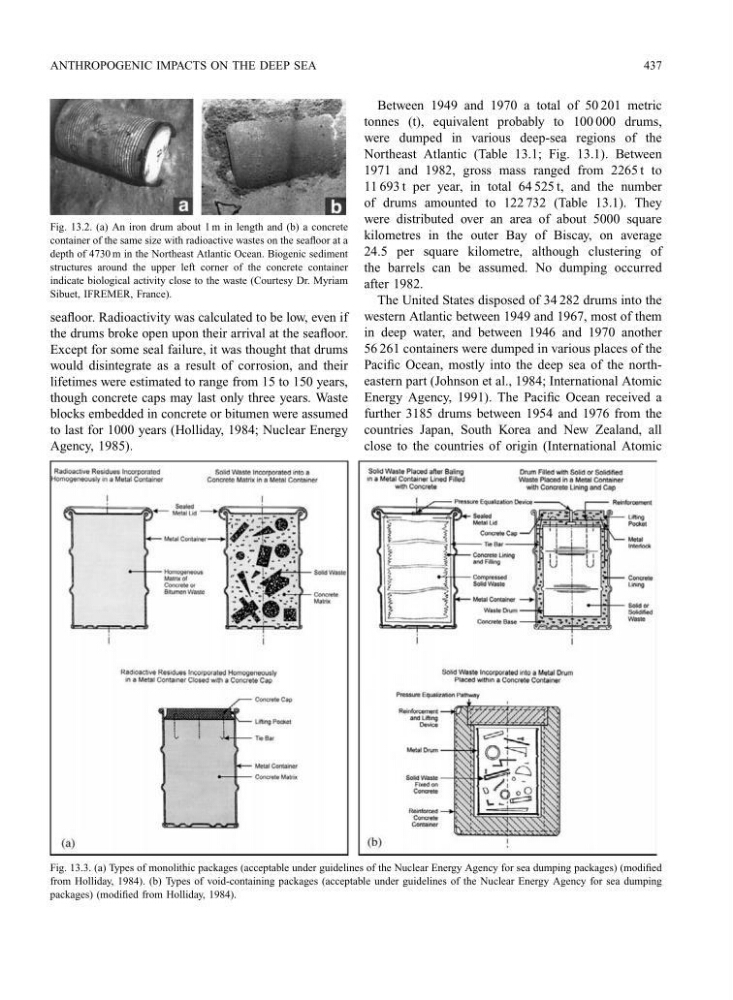
Fig. 13.3. (a) Types of monolithic packages (acceptable under guidelines of the Nuclear Energy Agency for sea dumping packages) (modified
from Holliday, 1984). (b) Types of void-containing packages (acceptable under guidelines of the Nuclear Energy Agency for sea dumping
packages) (modified from Holliday, 1984).
437
Fig. 13.2. (a) An iron drum about 1 m in length and (b) a concrete
container of the same size with radioactive wastes on the seafloor at a
depth of 4730 m in the Northeast Atlantic Ocean. Biogenic sediment
structures around the upper left corner of the concrete container
indicate biological activity close to the waste (Courtesy Dr. Myriam
Sibuet, IFREMER, France).
seafloor. Radioactivity was calculated to be low, even if
the drums broke open upon their arrival at the seafloor.
Except for some seal failure, it was thought that drums
would disintegrate as a result of corrosion, and their
lifetimes were estimated to range from 15 to 150 years,
though concrete caps may last only three years. Waste
blocks embedded in concrete or bitumen were assumed
to last for 1000 years (Holliday, 1984; Nuclear Energy
Agency, 1985).
Between 1949 and 1970 a total of 50 201 metric
tonnes (t), equivalent probably to 100 000 drums,
were dumped in various deep-sea regions of the
Northeast Atlantic (Table 13.1; Fig. 13.1). Between
1971 and 1982, gross mass ranged from 2265 t to
11 693 t per year, in total 64 525 t, and the number
of drums amounted to 122 732 (Table 13.1). They
were distributed over an area of about 5000 square
kilometres in the outer Bay of Biscay, on average
24.5 per square kilometre, although clustering of
the barrels can be assumed. No dumping occurred
after 1982.
The United States disposed of 34 282 drums into the
western Atlantic between 1949 and 1967, most of them
in deep water, and between 1946 and 1970 another
56 261 containers were dumped in various places of the
Pacific Ocean, mostly into the deep sea of the northeastern part (Johnson et al., 1984; International Atomic
Energy Agency, 1991). The Pacific Ocean received a
further 3185 drums between 1954 and 1976 from the
countries Japan, South Korea and New Zealand, all
close to the countries of origin (International Atomic
Fig. 13.3. (a) Types of monolithic packages (acceptable under guidelines of the Nuclear Energy Agency for sea dumping packages) (modified
from Holliday, 1984). (b) Types of void-containing packages (acceptable under guidelines of the Nuclear Energy Agency for sea dumping
packages) (modified from Holliday, 1984).