

REPRODUCTION, DEVELOPMENT AND LIFE-HISTORY TRAITS
401
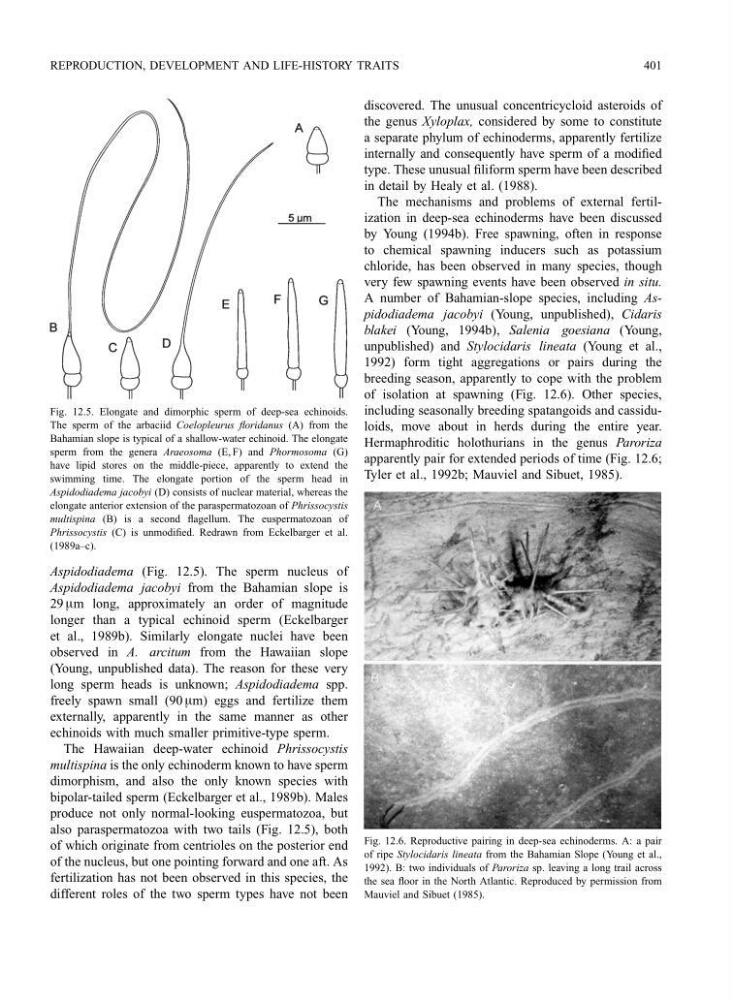
Fig. 12.5. Elongate and dimorphic sperm of deep-sea echinoids.
The sperm of the arbaciid Coelopleurus floridanus (A) from the
Bahamian slope is typical of a shallow-water echinoid. The elongate
sperm from the genera Araeosoma (E, F) and Phormosoma (G)
have lipid stores on the middle-piece, apparently to extend the
swimming time. The elongate portion of the sperm head in
Aspidodiadema jacobyi (D) consists of nuclear material, whereas the
elongate anterior extension of the paraspermatozoan of Phrissocystis
multispina (B) is a second flagellum. The euspermatozoan of
Phrissocystis (C) is unmodified. Redrawn from Eckelbarger et al.
(1989a–c).
Aspidodiadema (Fig. 12.5). The sperm nucleus of
Aspidodiadema jacobyi from the Bahamian slope is
29 mm long, approximately an order of magnitude
longer than a typical echinoid sperm (Eckelbarger
et al., 1989b). Similarly elongate nuclei have been
observed in A. arcitum from the Hawaiian slope
(Young, unpublished data). The reason for these very
long sperm heads is unknown; Aspidodiadema spp.
freely spawn small (90 mm) eggs and fertilize them
externally, apparently in the same manner as other
echinoids with much smaller primitive-type sperm.
The Hawaiian deep-water echinoid Phrissocystis
multispina is the only echinoderm known to have sperm
dimorphism, and also the only known species with
bipolar-tailed sperm (Eckelbarger et al., 1989b). Males
produce not only normal-looking euspermatozoa, but
also paraspermatozoa with two tails (Fig. 12.5), both
of which originate from centrioles on the posterior end
of the nucleus, but one pointing forward and one aft. As
fertilization has not been observed in this species, the
different roles of the two sperm types have not been
discovered. The unusual concentricycloid asteroids of
the genus Xyloplax, considered by some to constitute
a separate phylum of echinoderms, apparently fertilize
internally and consequently have sperm of a modified
type. These unusual filiform sperm have been described
in detail by Healy et al. (1988).
The mechanisms and problems of external fertilization in deep-sea echinoderms have been discussed
by Young (1994b). Free spawning, often in response
to chemical spawning inducers such as potassium
chloride, has been observed in many species, though
very few spawning events have been observed in situ.
A number of Bahamian-slope species, including Aspidodiadema jacobyi (Young, unpublished), Cidaris
blakei (Young, 1994b), Salenia goesiana (Young,
unpublished) and Stylocidaris lineata (Young et al.,
1992) form tight aggregations or pairs during the
breeding season, apparently to cope with the problem
of isolation at spawning (Fig. 12.6). Other species,
including seasonally breeding spatangoids and cassiduloids, move about in herds during the entire year.
Hermaphroditic holothurians in the genus Paroriza
apparently pair for extended periods of time (Fig. 12.6;
Tyler et al., 1992b; Mauviel and Sibuet, 1985).
Fig. 12.6. Reproductive pairing in deep-sea echinoderms. A: a pair
of ripe Stylocidaris lineata from the Bahamian Slope (Young et al.,
1992). B: two individuals of Paroriza sp. leaving a long trail across
the sea floor in the North Atlantic. Reproduced by permission from
Mauviel and Sibuet (1985).
401
Fig. 12.5. Elongate and dimorphic sperm of deep-sea echinoids.
The sperm of the arbaciid Coelopleurus floridanus (A) from the
Bahamian slope is typical of a shallow-water echinoid. The elongate
sperm from the genera Araeosoma (E, F) and Phormosoma (G)
have lipid stores on the middle-piece, apparently to extend the
swimming time. The elongate portion of the sperm head in
Aspidodiadema jacobyi (D) consists of nuclear material, whereas the
elongate anterior extension of the paraspermatozoan of Phrissocystis
multispina (B) is a second flagellum. The euspermatozoan of
Phrissocystis (C) is unmodified. Redrawn from Eckelbarger et al.
(1989a–c).
Aspidodiadema (Fig. 12.5). The sperm nucleus of
Aspidodiadema jacobyi from the Bahamian slope is
29 mm long, approximately an order of magnitude
longer than a typical echinoid sperm (Eckelbarger
et al., 1989b). Similarly elongate nuclei have been
observed in A. arcitum from the Hawaiian slope
(Young, unpublished data). The reason for these very
long sperm heads is unknown; Aspidodiadema spp.
freely spawn small (90 mm) eggs and fertilize them
externally, apparently in the same manner as other
echinoids with much smaller primitive-type sperm.
The Hawaiian deep-water echinoid Phrissocystis
multispina is the only echinoderm known to have sperm
dimorphism, and also the only known species with
bipolar-tailed sperm (Eckelbarger et al., 1989b). Males
produce not only normal-looking euspermatozoa, but
also paraspermatozoa with two tails (Fig. 12.5), both
of which originate from centrioles on the posterior end
of the nucleus, but one pointing forward and one aft. As
fertilization has not been observed in this species, the
different roles of the two sperm types have not been
discovered. The unusual concentricycloid asteroids of
the genus Xyloplax, considered by some to constitute
a separate phylum of echinoderms, apparently fertilize
internally and consequently have sperm of a modified
type. These unusual filiform sperm have been described
in detail by Healy et al. (1988).
The mechanisms and problems of external fertilization in deep-sea echinoderms have been discussed
by Young (1994b). Free spawning, often in response
to chemical spawning inducers such as potassium
chloride, has been observed in many species, though
very few spawning events have been observed in situ.
A number of Bahamian-slope species, including Aspidodiadema jacobyi (Young, unpublished), Cidaris
blakei (Young, 1994b), Salenia goesiana (Young,
unpublished) and Stylocidaris lineata (Young et al.,
1992) form tight aggregations or pairs during the
breeding season, apparently to cope with the problem
of isolation at spawning (Fig. 12.6). Other species,
including seasonally breeding spatangoids and cassiduloids, move about in herds during the entire year.
Hermaphroditic holothurians in the genus Paroriza
apparently pair for extended periods of time (Fig. 12.6;
Tyler et al., 1992b; Mauviel and Sibuet, 1985).
Fig. 12.6. Reproductive pairing in deep-sea echinoderms. A: a pair
of ripe Stylocidaris lineata from the Bahamian Slope (Young et al.,
1992). B: two individuals of Paroriza sp. leaving a long trail across
the sea floor in the North Atlantic. Reproduced by permission from
Mauviel and Sibuet (1985).