

388
Craig M. YOUNG
A
B
C
D
E
F
oostegites (marsupium)
ova
appendix masculina
penes
embryos
embryos
embryos
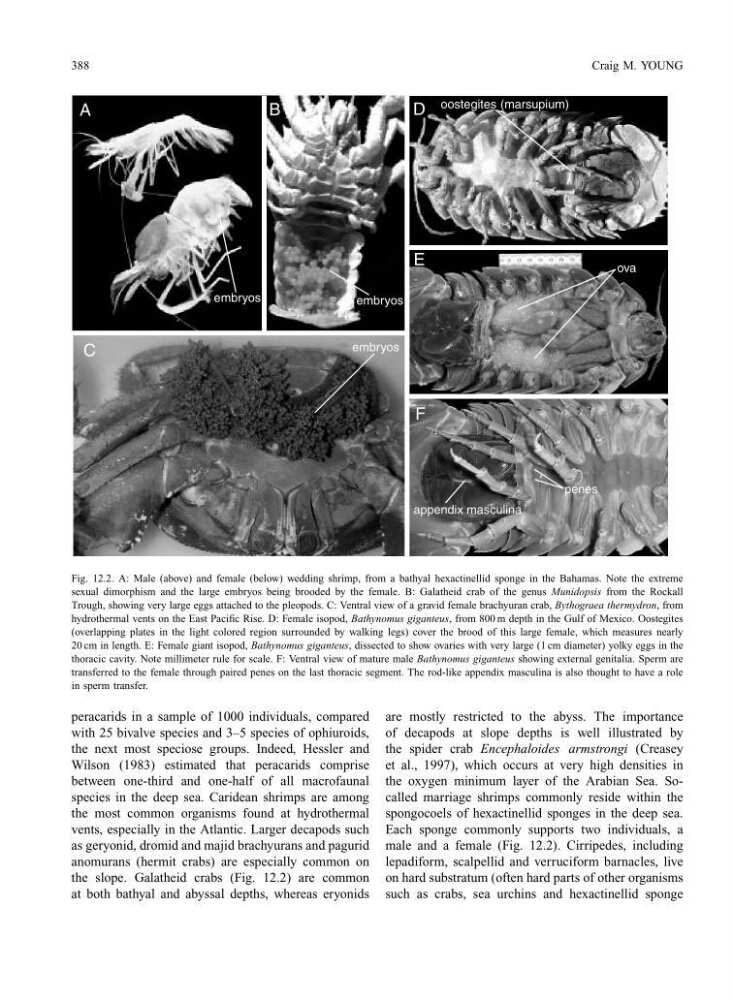
Fig. 12.2. A: Male (above) and female (below) wedding shrimp, from a bathyal hexactinellid sponge in the Bahamas. Note the extreme
sexual dimorphism and the large embryos being brooded by the female. B: Galatheid crab of the genus Munidopsis from the Rockall
Trough, showing very large eggs attached to the pleopods. C: Ventral view of a gravid female brachyuran crab, Bythograea thermydron, from
hydrothermal vents on the East Pacific Rise. D: Female isopod, Bathynomus giganteus, from 800 m depth in the Gulf of Mexico. Oostegites
(overlapping plates in the light colored region surrounded by walking legs) cover the brood of this large female, which measures nearly
20 cm in length. E: Female giant isopod, Bathynomus giganteus, dissected to show ovaries with very large (1 cm diameter) yolky eggs in the
thoracic cavity. Note millimeter rule for scale. F: Ventral view of mature male Bathynomus giganteus showing external genitalia. Sperm are
transferred to the female through paired penes on the last thoracic segment. The rod-like appendix masculina is also thought to have a role
in sperm transfer.
peracarids in a sample of 1000 individuals, compared
with 25 bivalve species and 3–5 species of ophiuroids,
the next most speciose groups. Indeed, Hessler and
Wilson (1983) estimated that peracarids comprise
between one-third and one-half of all macrofaunal
species in the deep sea. Caridean shrimps are among
the most common organisms found at hydrothermal
vents, especially in the Atlantic. Larger decapods such
as geryonid, dromid and majid brachyurans and pagurid
anomurans (hermit crabs) are especially common on
the slope. Galatheid crabs (Fig. 12.2) are common
at both bathyal and abyssal depths, whereas eryonids
are mostly restricted to the abyss. The importance
of decapods at slope depths is well illustrated by
the spider crab Encephaloides armstrongi (Creasey
et al., 1997), which occurs at very high densities in
the oxygen minimum layer of the Arabian Sea. Socalled marriage shrimps commonly reside within the
spongocoels of hexactinellid sponges in the deep sea.
Each sponge commonly supports two individuals, a
male and a female (Fig. 12.2). Cirripedes, including
lepadiform, scalpellid and verruciform barnacles, live
on hard substratum (often hard parts of other organisms
such as crabs, sea urchins and hexactinellid sponge
Craig M. YOUNG
A
B
C
D
E
F
oostegites (marsupium)
ova
appendix masculina
penes
embryos
embryos
embryos
Fig. 12.2. A: Male (above) and female (below) wedding shrimp, from a bathyal hexactinellid sponge in the Bahamas. Note the extreme
sexual dimorphism and the large embryos being brooded by the female. B: Galatheid crab of the genus Munidopsis from the Rockall
Trough, showing very large eggs attached to the pleopods. C: Ventral view of a gravid female brachyuran crab, Bythograea thermydron, from
hydrothermal vents on the East Pacific Rise. D: Female isopod, Bathynomus giganteus, from 800 m depth in the Gulf of Mexico. Oostegites
(overlapping plates in the light colored region surrounded by walking legs) cover the brood of this large female, which measures nearly
20 cm in length. E: Female giant isopod, Bathynomus giganteus, dissected to show ovaries with very large (1 cm diameter) yolky eggs in the
thoracic cavity. Note millimeter rule for scale. F: Ventral view of mature male Bathynomus giganteus showing external genitalia. Sperm are
transferred to the female through paired penes on the last thoracic segment. The rod-like appendix masculina is also thought to have a role
in sperm transfer.
peracarids in a sample of 1000 individuals, compared
with 25 bivalve species and 3–5 species of ophiuroids,
the next most speciose groups. Indeed, Hessler and
Wilson (1983) estimated that peracarids comprise
between one-third and one-half of all macrofaunal
species in the deep sea. Caridean shrimps are among
the most common organisms found at hydrothermal
vents, especially in the Atlantic. Larger decapods such
as geryonid, dromid and majid brachyurans and pagurid
anomurans (hermit crabs) are especially common on
the slope. Galatheid crabs (Fig. 12.2) are common
at both bathyal and abyssal depths, whereas eryonids
are mostly restricted to the abyss. The importance
of decapods at slope depths is well illustrated by
the spider crab Encephaloides armstrongi (Creasey
et al., 1997), which occurs at very high densities in
the oxygen minimum layer of the Arabian Sea. Socalled marriage shrimps commonly reside within the
spongocoels of hexactinellid sponges in the deep sea.
Each sponge commonly supports two individuals, a
male and a female (Fig. 12.2). Cirripedes, including
lepadiform, scalpellid and verruciform barnacles, live
on hard substratum (often hard parts of other organisms
such as crabs, sea urchins and hexactinellid sponge