

298
Carol T. STUART et al.
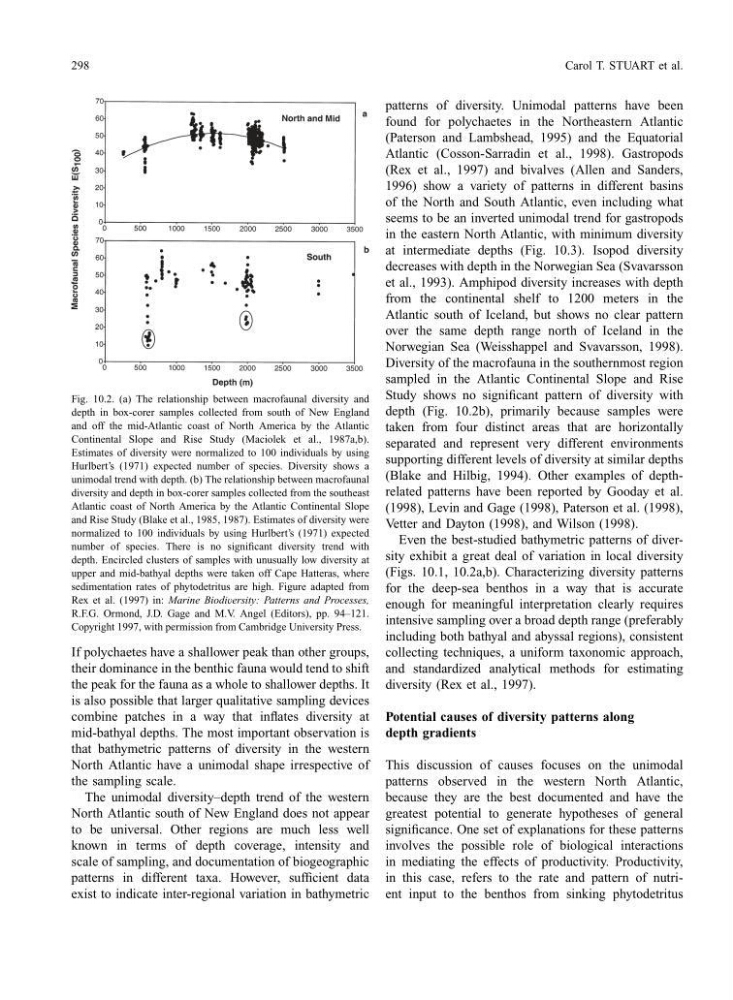
Fig. 10.2. (a) The relationship between macrofaunal diversity and
depth in box-corer samples collected from south of New England
and off the mid-Atlantic coast of North America by the Atlantic
Continental Slope and Rise Study (Maciolek et al., 1987a,b).
Estimates of diversity were normalized to 100 individuals by using
Hurlbert’s (1971) expected number of species. Diversity shows a
unimodal trend with depth. (b) The relationship between macrofaunal
diversity and depth in box-corer samples collected from the southeast
Atlantic coast of North America by the Atlantic Continental Slope
and Rise Study (Blake et al., 1985, 1987). Estimates of diversity were
normalized to 100 individuals by using Hurlbert’s (1971) expected
number of species. There is no significant diversity trend with
depth. Encircled clusters of samples with unusually low diversity at
upper and mid-bathyal depths were taken off Cape Hatteras, where
sedimentation rates of phytodetritus are high. Figure adapted from
Rex et al. (1997) in: Marine Biodiversity: Patterns and Processes,
R.F.G. Ormond, J.D. Gage and M.V. Angel (Editors), pp. 94–121.
Copyright 1997, with permission from Cambridge University Press.
If polychaetes have a shallower peak than other groups,
their dominance in the benthic fauna would tend to shift
the peak for the fauna as a whole to shallower depths. It
is also possible that larger qualitative sampling devices
combine patches in a way that inflates diversity at
mid-bathyal depths. The most important observation is
that bathymetric patterns of diversity in the western
North Atlantic have a unimodal shape irrespective of
the sampling scale.
The unimodal diversity–depth trend of the western
North Atlantic south of New England does not appear
to be universal. Other regions are much less well
known in terms of depth coverage, intensity and
scale of sampling, and documentation of biogeographic
patterns in different taxa. However, sufficient data
exist to indicate inter-regional variation in bathymetric
patterns of diversity. Unimodal patterns have been
found for polychaetes in the Northeastern Atlantic
(Paterson and Lambshead, 1995) and the Equatorial
Atlantic (Cosson-Sarradin et al., 1998). Gastropods
(Rex et al., 1997) and bivalves (Allen and Sanders,
1996) show a variety of patterns in different basins
of the North and South Atlantic, even including what
seems to be an inverted unimodal trend for gastropods
in the eastern North Atlantic, with minimum diversity
at intermediate depths (Fig. 10.3). Isopod diversity
decreases with depth in the Norwegian Sea (Svavarsson
et al., 1993). Amphipod diversity increases with depth
from the continental shelf to 1200 meters in the
Atlantic south of Iceland, but shows no clear pattern
over the same depth range north of Iceland in the
Norwegian Sea (Weisshappel and Svavarsson, 1998).
Diversity of the macrofauna in the southernmost region
sampled in the Atlantic Continental Slope and Rise
Study shows no significant pattern of diversity with
depth (Fig. 10.2b), primarily because samples were
taken from four distinct areas that are horizontally
separated and represent very different environments
supporting different levels of diversity at similar depths
(Blake and Hilbig, 1994). Other examples of depthrelated patterns have been reported by Gooday et al.
(1998), Levin and Gage (1998), Paterson et al. (1998),
Vetter and Dayton (1998), and Wilson (1998).
Even the best-studied bathymetric patterns of diversity exhibit a great deal of variation in local diversity
(Figs. 10.1, 10.2a,b). Characterizing diversity patterns
for the deep-sea benthos in a way that is accurate
enough for meaningful interpretation clearly requires
intensive sampling over a broad depth range (preferably
including both bathyal and abyssal regions), consistent
collecting techniques, a uniform taxonomic approach,
and standardized analytical methods for estimating
diversity (Rex et al., 1997).
Potential causes of diversity patterns along
depth gradients
This discussion of causes focuses on the unimodal
patterns observed in the western North Atlantic,
because they are the best documented and have the
greatest potential to generate hypotheses of general
significance. One set of explanations for these patterns
involves the possible role of biological interactions
in mediating the effects of productivity. Productivity,
in this case, refers to the rate and pattern of nutrient input to the benthos from sinking phytodetritus
Carol T. STUART et al.
Fig. 10.2. (a) The relationship between macrofaunal diversity and
depth in box-corer samples collected from south of New England
and off the mid-Atlantic coast of North America by the Atlantic
Continental Slope and Rise Study (Maciolek et al., 1987a,b).
Estimates of diversity were normalized to 100 individuals by using
Hurlbert’s (1971) expected number of species. Diversity shows a
unimodal trend with depth. (b) The relationship between macrofaunal
diversity and depth in box-corer samples collected from the southeast
Atlantic coast of North America by the Atlantic Continental Slope
and Rise Study (Blake et al., 1985, 1987). Estimates of diversity were
normalized to 100 individuals by using Hurlbert’s (1971) expected
number of species. There is no significant diversity trend with
depth. Encircled clusters of samples with unusually low diversity at
upper and mid-bathyal depths were taken off Cape Hatteras, where
sedimentation rates of phytodetritus are high. Figure adapted from
Rex et al. (1997) in: Marine Biodiversity: Patterns and Processes,
R.F.G. Ormond, J.D. Gage and M.V. Angel (Editors), pp. 94–121.
Copyright 1997, with permission from Cambridge University Press.
If polychaetes have a shallower peak than other groups,
their dominance in the benthic fauna would tend to shift
the peak for the fauna as a whole to shallower depths. It
is also possible that larger qualitative sampling devices
combine patches in a way that inflates diversity at
mid-bathyal depths. The most important observation is
that bathymetric patterns of diversity in the western
North Atlantic have a unimodal shape irrespective of
the sampling scale.
The unimodal diversity–depth trend of the western
North Atlantic south of New England does not appear
to be universal. Other regions are much less well
known in terms of depth coverage, intensity and
scale of sampling, and documentation of biogeographic
patterns in different taxa. However, sufficient data
exist to indicate inter-regional variation in bathymetric
patterns of diversity. Unimodal patterns have been
found for polychaetes in the Northeastern Atlantic
(Paterson and Lambshead, 1995) and the Equatorial
Atlantic (Cosson-Sarradin et al., 1998). Gastropods
(Rex et al., 1997) and bivalves (Allen and Sanders,
1996) show a variety of patterns in different basins
of the North and South Atlantic, even including what
seems to be an inverted unimodal trend for gastropods
in the eastern North Atlantic, with minimum diversity
at intermediate depths (Fig. 10.3). Isopod diversity
decreases with depth in the Norwegian Sea (Svavarsson
et al., 1993). Amphipod diversity increases with depth
from the continental shelf to 1200 meters in the
Atlantic south of Iceland, but shows no clear pattern
over the same depth range north of Iceland in the
Norwegian Sea (Weisshappel and Svavarsson, 1998).
Diversity of the macrofauna in the southernmost region
sampled in the Atlantic Continental Slope and Rise
Study shows no significant pattern of diversity with
depth (Fig. 10.2b), primarily because samples were
taken from four distinct areas that are horizontally
separated and represent very different environments
supporting different levels of diversity at similar depths
(Blake and Hilbig, 1994). Other examples of depthrelated patterns have been reported by Gooday et al.
(1998), Levin and Gage (1998), Paterson et al. (1998),
Vetter and Dayton (1998), and Wilson (1998).
Even the best-studied bathymetric patterns of diversity exhibit a great deal of variation in local diversity
(Figs. 10.1, 10.2a,b). Characterizing diversity patterns
for the deep-sea benthos in a way that is accurate
enough for meaningful interpretation clearly requires
intensive sampling over a broad depth range (preferably
including both bathyal and abyssal regions), consistent
collecting techniques, a uniform taxonomic approach,
and standardized analytical methods for estimating
diversity (Rex et al., 1997).
Potential causes of diversity patterns along
depth gradients
This discussion of causes focuses on the unimodal
patterns observed in the western North Atlantic,
because they are the best documented and have the
greatest potential to generate hypotheses of general
significance. One set of explanations for these patterns
involves the possible role of biological interactions
in mediating the effects of productivity. Productivity,
in this case, refers to the rate and pattern of nutrient input to the benthos from sinking phytodetritus