

THE DEEP PACIFIC OCEAN FLOOR
189
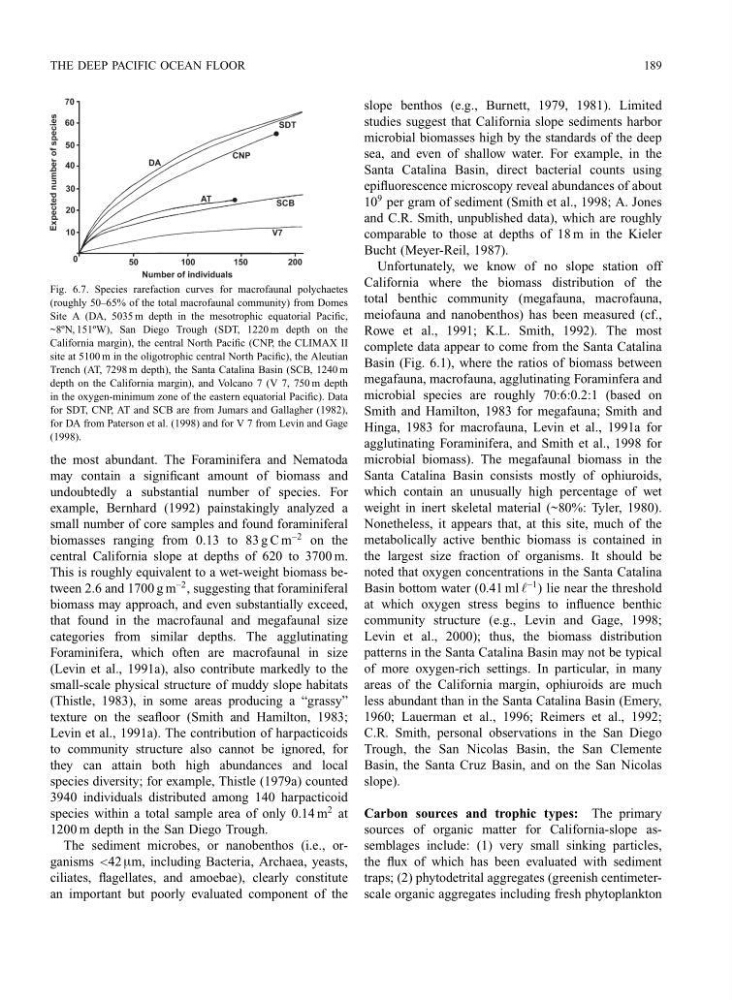
Fig. 6.7. Species rarefaction curves for macrofaunal polychaetes
(roughly 50–65% of the total macrofaunal community) from Domes
Site A (DA, 5035 m depth in the mesotrophic equatorial Pacific,
~8ºN, 151ºW), San Diego Trough (SDT, 1220 m depth on the
California margin), the central North Pacific (CNP, the CLIMAX II
site at 5100 m in the oligotrophic central North Pacific), the Aleutian
Trench (AT, 7298 m depth), the Santa Catalina Basin (SCB, 1240 m
depth on the California margin), and Volcano 7 (V 7, 750 m depth
in the oxygen-minimum zone of the eastern equatorial Pacific). Data
for SDT, CNP, AT and SCB are from Jumars and Gallagher (1982),
for DA from Paterson et al. (1998) and for V 7 from Levin and Gage
(1998).
the most abundant. The Foraminifera and Nematoda
may contain a significant amount of biomass and
undoubtedly a substantial number of species. For
example, Bernhard (1992) painstakingly analyzed a
small number of core samples and found foraminiferal
biomasses ranging from 0.13 to 83 g C m
−2 on the
central California slope at depths of 620 to 3700 m.
This is roughly equivalent to a wet-weight biomass between 2.6 and 1700 g m
−2 , suggesting that foraminiferal
biomass may approach, and even substantially exceed,
that found in the macrofaunal and megafaunal size
categories from similar depths. The agglutinating
Foraminifera, which often are macrofaunal in size
(Levin et al., 1991a), also contribute markedly to the
small-scale physical structure of muddy slope habitats
(Thistle, 1983), in some areas producing a “grassy”
texture on the seafloor (Smith and Hamilton, 1983;
Levin et al., 1991a). The contribution of harpacticoids
to community structure also cannot be ignored, for
they can attain both high abundances and local
species diversity; for example, Thistle (1979a) counted
3940 individuals distributed among 140 harpacticoid
species within a total sample area of only 0.14 m
2 at
1200 m depth in the San Diego Trough.
The sediment microbes, or nanobenthos (i.e., organisms <42 mm, including Bacteria, Archaea, yeasts,
ciliates, flagellates, and amoebae), clearly constitute
an important but poorly evaluated component of the
slope benthos (e.g., Burnett, 1979, 1981). Limited
studies suggest that California slope sediments harbor
microbial biomasses high by the standards of the deep
sea, and even of shallow water. For example, in the
Santa Catalina Basin, direct bacterial counts using
epifluorescence microscopy reveal abundances of about
10
9 per gram of sediment (Smith et al., 1998; A. Jones
and C.R. Smith, unpublished data), which are roughly
comparable to those at depths of 18 m in the Kieler
Bucht (Meyer-Reil, 1987).
Unfortunately, we know of no slope station off
California where the biomass distribution of the
total benthic community (megafauna, macrofauna,
meiofauna and nanobenthos) has been measured (cf.,
Rowe et al., 1991; K.L. Smith, 1992). The most
complete data appear to come from the Santa Catalina
Basin (Fig. 6.1), where the ratios of biomass between
megafauna, macrofauna, agglutinating Foraminfera and
microbial species are roughly 70:6:0.2:1 (based on
Smith and Hamilton, 1983 for megafauna; Smith and
Hinga, 1983 for macrofauna, Levin et al., 1991a for
agglutinating Foraminifera, and Smith et al., 1998 for
microbial biomass). The megafaunal biomass in the
Santa Catalina Basin consists mostly of ophiuroids,
which contain an unusually high percentage of wet
weight in inert skeletal material (~80%: Tyler, 1980).
Nonetheless, it appears that, at this site, much of the
metabolically active benthic biomass is contained in
the largest size fraction of organisms. It should be
noted that oxygen concentrations in the Santa Catalina
Basin bottom water (0.41 ml °
−1 ) lie near the threshold
at which oxygen stress begins to influence benthic
community structure (e.g., Levin and Gage, 1998;
Levin et al., 2000); thus, the biomass distribution
patterns in the Santa Catalina Basin may not be typical
of more oxygen-rich settings. In particular, in many
areas of the California margin, ophiuroids are much
less abundant than in the Santa Catalina Basin (Emery,
1960; Lauerman et al., 1996; Reimers et al., 1992;
C.R. Smith, personal observations in the San Diego
Trough, the San Nicolas Basin, the San Clemente
Basin, the Santa Cruz Basin, and on the San Nicolas
slope).
Carbon sources and trophic types: The primary
sources of organic matter for California-slope assemblages include: (1) very small sinking particles,
the flux of which has been evaluated with sediment
traps; (2) phytodetrital aggregates (greenish centimeterscale organic aggregates including fresh phytoplankton
189
Fig. 6.7. Species rarefaction curves for macrofaunal polychaetes
(roughly 50–65% of the total macrofaunal community) from Domes
Site A (DA, 5035 m depth in the mesotrophic equatorial Pacific,
~8ºN, 151ºW), San Diego Trough (SDT, 1220 m depth on the
California margin), the central North Pacific (CNP, the CLIMAX II
site at 5100 m in the oligotrophic central North Pacific), the Aleutian
Trench (AT, 7298 m depth), the Santa Catalina Basin (SCB, 1240 m
depth on the California margin), and Volcano 7 (V 7, 750 m depth
in the oxygen-minimum zone of the eastern equatorial Pacific). Data
for SDT, CNP, AT and SCB are from Jumars and Gallagher (1982),
for DA from Paterson et al. (1998) and for V 7 from Levin and Gage
(1998).
the most abundant. The Foraminifera and Nematoda
may contain a significant amount of biomass and
undoubtedly a substantial number of species. For
example, Bernhard (1992) painstakingly analyzed a
small number of core samples and found foraminiferal
biomasses ranging from 0.13 to 83 g C m
−2 on the
central California slope at depths of 620 to 3700 m.
This is roughly equivalent to a wet-weight biomass between 2.6 and 1700 g m
−2 , suggesting that foraminiferal
biomass may approach, and even substantially exceed,
that found in the macrofaunal and megafaunal size
categories from similar depths. The agglutinating
Foraminifera, which often are macrofaunal in size
(Levin et al., 1991a), also contribute markedly to the
small-scale physical structure of muddy slope habitats
(Thistle, 1983), in some areas producing a “grassy”
texture on the seafloor (Smith and Hamilton, 1983;
Levin et al., 1991a). The contribution of harpacticoids
to community structure also cannot be ignored, for
they can attain both high abundances and local
species diversity; for example, Thistle (1979a) counted
3940 individuals distributed among 140 harpacticoid
species within a total sample area of only 0.14 m
2 at
1200 m depth in the San Diego Trough.
The sediment microbes, or nanobenthos (i.e., organisms <42 mm, including Bacteria, Archaea, yeasts,
ciliates, flagellates, and amoebae), clearly constitute
an important but poorly evaluated component of the
slope benthos (e.g., Burnett, 1979, 1981). Limited
studies suggest that California slope sediments harbor
microbial biomasses high by the standards of the deep
sea, and even of shallow water. For example, in the
Santa Catalina Basin, direct bacterial counts using
epifluorescence microscopy reveal abundances of about
10
9 per gram of sediment (Smith et al., 1998; A. Jones
and C.R. Smith, unpublished data), which are roughly
comparable to those at depths of 18 m in the Kieler
Bucht (Meyer-Reil, 1987).
Unfortunately, we know of no slope station off
California where the biomass distribution of the
total benthic community (megafauna, macrofauna,
meiofauna and nanobenthos) has been measured (cf.,
Rowe et al., 1991; K.L. Smith, 1992). The most
complete data appear to come from the Santa Catalina
Basin (Fig. 6.1), where the ratios of biomass between
megafauna, macrofauna, agglutinating Foraminfera and
microbial species are roughly 70:6:0.2:1 (based on
Smith and Hamilton, 1983 for megafauna; Smith and
Hinga, 1983 for macrofauna, Levin et al., 1991a for
agglutinating Foraminifera, and Smith et al., 1998 for
microbial biomass). The megafaunal biomass in the
Santa Catalina Basin consists mostly of ophiuroids,
which contain an unusually high percentage of wet
weight in inert skeletal material (~80%: Tyler, 1980).
Nonetheless, it appears that, at this site, much of the
metabolically active benthic biomass is contained in
the largest size fraction of organisms. It should be
noted that oxygen concentrations in the Santa Catalina
Basin bottom water (0.41 ml °
−1 ) lie near the threshold
at which oxygen stress begins to influence benthic
community structure (e.g., Levin and Gage, 1998;
Levin et al., 2000); thus, the biomass distribution
patterns in the Santa Catalina Basin may not be typical
of more oxygen-rich settings. In particular, in many
areas of the California margin, ophiuroids are much
less abundant than in the Santa Catalina Basin (Emery,
1960; Lauerman et al., 1996; Reimers et al., 1992;
C.R. Smith, personal observations in the San Diego
Trough, the San Nicolas Basin, the San Clemente
Basin, the Santa Cruz Basin, and on the San Nicolas
slope).
Carbon sources and trophic types: The primary
sources of organic matter for California-slope assemblages include: (1) very small sinking particles,
the flux of which has been evaluated with sediment
traps; (2) phytodetrital aggregates (greenish centimeterscale organic aggregates including fresh phytoplankton