

Climate change in arid and tropical humid regions
655
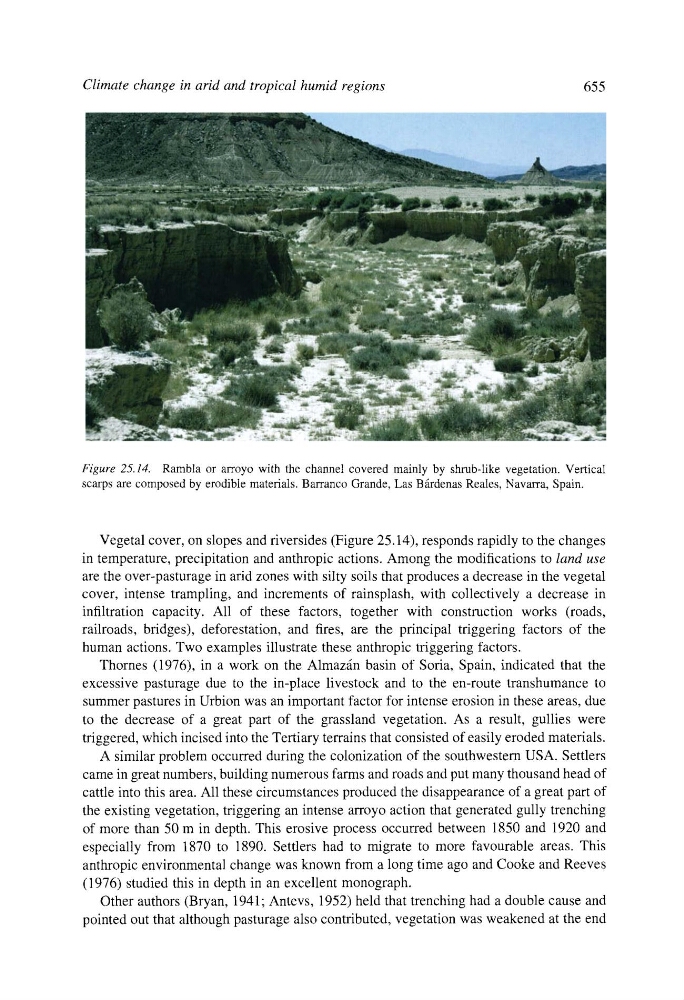
Figure 25.14. Rambla or arroyo with the channel covered mainly by shrub-like vegetation. Vertical
scarps are composed by erodible materials. Barranco Grande, Las B~irdenas Reales, Navarra, Spain.
Vegetal cover, on slopes and riversides (Figure 25.14), responds rapidly to the changes
in temperature, precipitation and anthropic actions. Among the modifications to land use
are the over-pasturage in arid zones with silty soils that produces a decrease in the vegetal
cover, intense trampling, and increments of rainsplash, with collectively a decrease in
infiltration capacity. All of these factors, together with construction works (roads,
railroads, bridges), deforestation, and fires, are the principal triggering factors of the
human actions. Two examples illustrate these anthropic triggering factors.
Thornes (1976), in a work on the Almaz~in basin of Soria, Spain, indicated that the
excessive pasturage due to the in-place livestock and to the en-route transhumance to
summer pastures in Urbion was an important factor for intense erosion in these areas, due
to the decrease of a great part of the grassland vegetation. As a result, gullies were
triggered, which incised into the Tertiary terrains that consisted of easily eroded materials.
A similar problem occurred during the colonization of the southwestern USA. Settlers
came in great numbers, building numerous farms and roads and put many thousand head of
cattle into this area. All these circumstances produced the disappearance of a great part of
the existing vegetation, triggering an intense arroyo action that generated gully trenching
of more than 50 m in depth. This erosive process occurred between 1850 and 1920 and
especially from 1870 to 1890. Settlers had to migrate to more favourable areas. This
anthropic environmental change was known from a long time ago and Cooke and Reeves
(1976) studied this in depth in an excellent monograph.
Other authors (Bryan, 1941; Antevs, 1952) held that trenching had a double cause and
pointed out that although pasturage also contributed, vegetation was weakened at the end