

Climate change in arid and tropical humid regions
651
Colder
and wetter
Warmer
and drier
Iron Age
Little Ice Age
Secondary Optimu i
3.000
2.000
1.000
0 BP
accumulation
incision
Post-Bronze
Post-Medieval
B.C. 1.500 1.000 500
0
500
1.000 1.500 2.000 A.D.
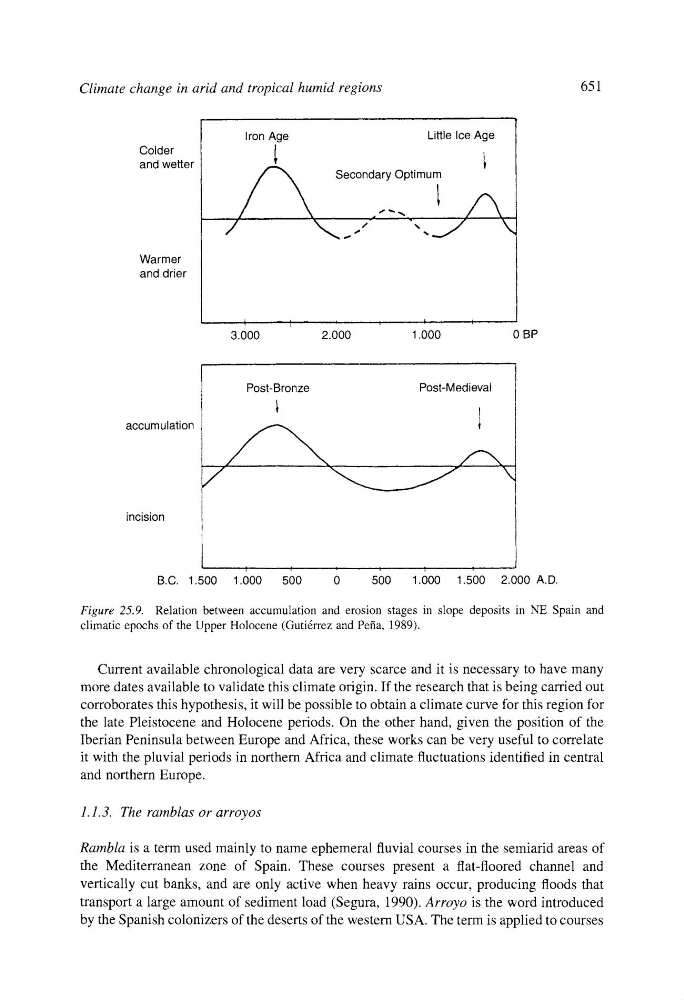
Figure 25.9. Relation between accumulation and erosion stages in slope deposits in NE Spain and
climatic epochs of the Upper Holocene (Guti~rrez and Pefia, 1989).
Current available chronological data are very scarce and it is necessary to have many
more dates available to validate this climate origin. If the research that is being carried out
corroborates this hypothesis, it will be possible to obtain a climate curve for this region for
the late Pleistocene and Holocene periods. On the other hand, given the position of the
Iberian Peninsula between Europe and Africa, these works can be very useful to correlate
it with the pluvial periods in northern Africa and climate fluctuations identified in central
and northern Europe.
1.1.3. The ramblas or arroyos
Rambla is a term used mainly to name ephemeral fluvial courses in the semiarid areas of
the Mediterranean zone of Spain. These courses present a flat-floored channel and
vertically cut banks, and are only active when heavy rains occur, producing floods that
transport a large amount of sediment load (Segura, 1990). Arroyo is the word introduced
by the Spanish colonizers of the deserts of the western USA. The term is applied to courses