

Climate change in glacial and periglacial regions
617
E
v
i
FCL
W
0
500
1000
1500
-36-34 (%,)
_
10
AGE (103 yr)
~-11
-
-12
1 _-14
-16
"-18
-20
25
30
35
40
50
60
70
80
IS No.
2
8
9
I?
13
.14
18
-100
i~ii i saE:~
-45
-40
-35
~180 (%0)
1 Belling
Denekamp
2 Hengelo
Glinde
Oerel
19
20
-21 Odderade
22
23 Brerup
24
1500
2000
E
v
i
FCL
W
0
2500
b).~3000
-30
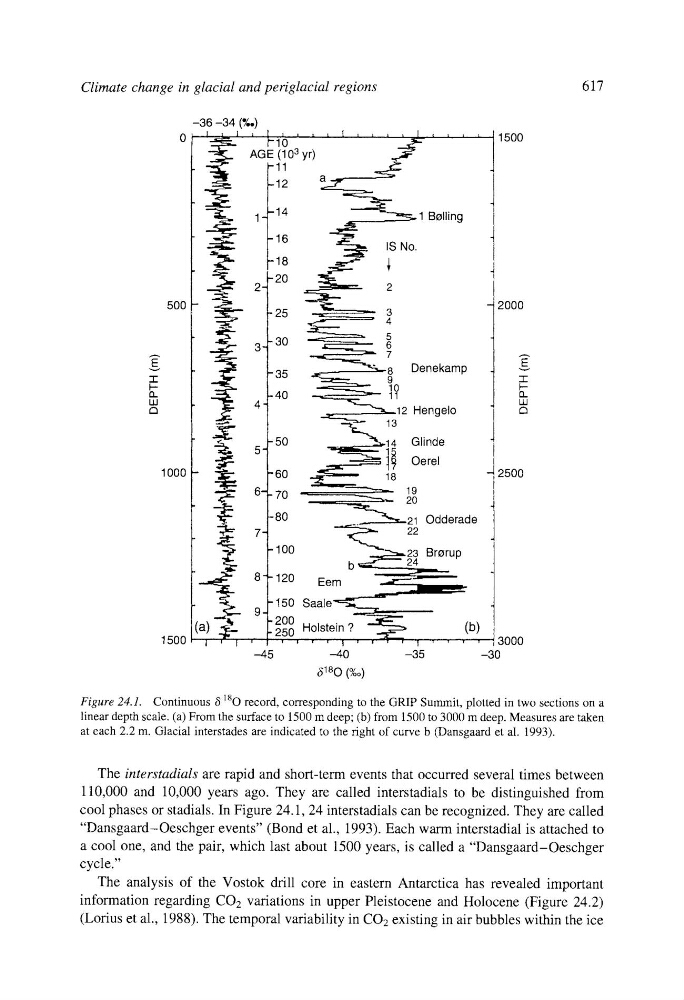
Figure 24.1. Continuous 6180 record, corresponding to the GRIP Summit, plotted in two sections on a
linear depth scale. (a) From the surface to 1500 m deep; (b) from 1500 to 3000 m deep. Measures are taken
at each 2.2 m. Glacial interstades are indicated to the fight of curve b (Dansgaard et al. 1993).
The interstadials are rapid and short-term events that occurred several times between
110,000 and 10,000 years ago. They are called interstadials to be distinguished from
cool phases or stadials. In Figure 24.1, 24 interstadials can be recognized. They are called
"Dansgaard-Oeschger events" (Bond et al., 1993). Each warm interstadial is attached to
a cool one, and the pair, which last about 1500 years, is called a "Dansgaard-Oeschger
cycle."
The analysis of the Vostok drill core in eastern Antarctica has revealed important
information regarding CO2 variations in upper Pleistocene and Holocene (Figure 24.2)
(Lorius et al., 1988). The temporal variability in CO2 existing in air bubbles within the ice