

Tropical landforms
581
active
high-level
abandoned river caves
river
alluvium
with gravels and guano
cliff foot
cave
I
r
\
.,~"
"
I
I
,~
/
". __.,'-"
cave
river
river
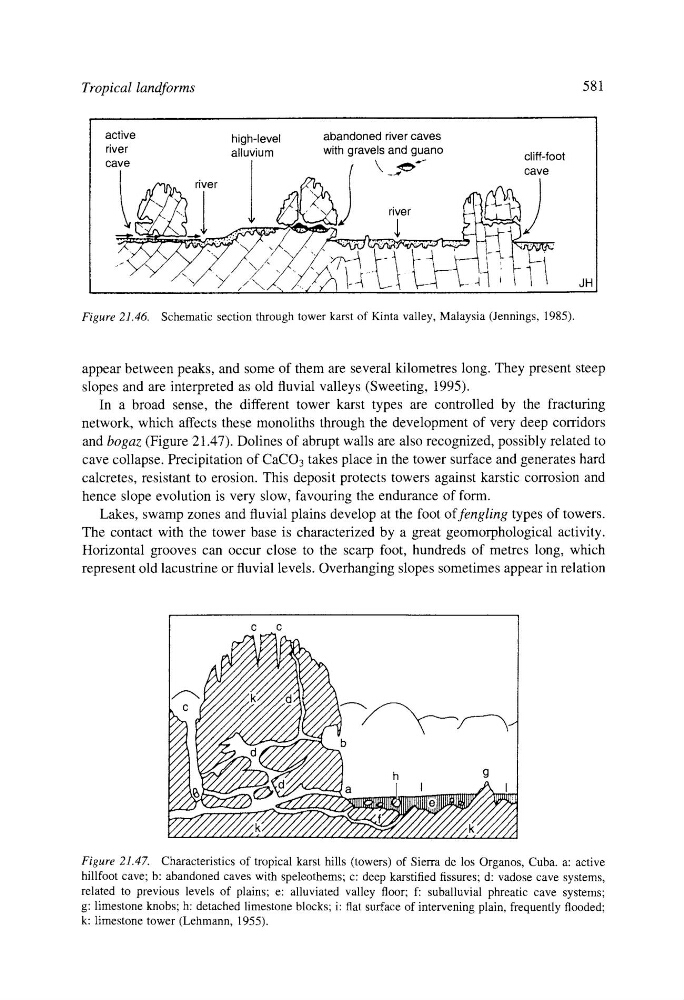
Figure 21.46. Schematic section through tower karst of Kinta valley, Malaysia (Jennings, 1985).
appear between peaks, and some of them are several kilometres long. They present steep
slopes and are interpreted as old fluvial valleys (Sweeting, 1995).
In a broad sense, the different tower karst types are controlled by the fracturing
network, which affects these monoliths through the development of very deep corridors
and bogaz (Figure 21.47). Dolines of abrupt walls are also recognized, possibly related to
cave collapse. Precipitation of CaCO3 takes place in the tower surface and generates hard
calcretes, resistant to erosion. This deposit protects towers against karstic corrosion and
hence slope evolution is very slow, favouring the endurance of form.
Lakes, swamp zones and fluvial plains develop at the foot offengling types of towers.
The contact with the tower base is characterized by a great geomorphological activity.
Horizontal grooves can occur close to the scarp foot, hundreds of metres long, which
represent old lacustrine or fluvial levels. Overhanging slopes sometimes appear in relation
C
C
Figure 21.47. Characteristics of tropical karst hills (towers) of Sierra de los Organos, Cuba. a: active
hillfoot cave; b: abandoned caves with speleothems; c: deep karstified fissures; d: vadose cave systems,
related to previous levels of plains; e: alluviated valley floor; f: suballuvial phreatic cave systems;
g: limestone knobs; h: detached limestone blocks; i: flat surface of intervening plain, frequently flooded;
k: limestone tower (Lehmann, 1955).