

The humid tropics: weathering and laterites
527
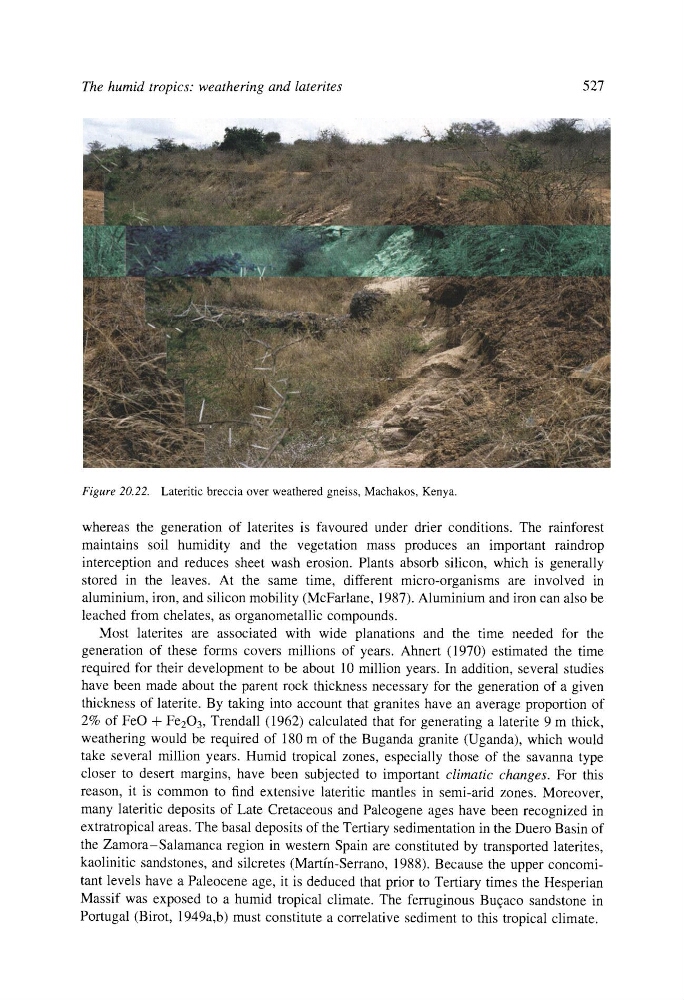
Figure 20.22. Lateritic breccia over weathered gneiss, Machakos, Kenya.
whereas the generation of laterites is favoured under drier conditions. The rainforest
maintains soil humidity and the vegetation mass produces an important raindrop
interception and reduces sheet wash erosion. Plants absorb silicon, which is generally
stored in the leaves. At the same time, different micro-organisms are involved in
aluminium, iron, and silicon mobility (McFarlane, 1987). Aluminium and iron can also be
leached from chelates, as organometallic compounds.
Most laterites are associated with wide planations and the time needed for the
generation of these forms covers millions of years. Ahnert (1970) estimated the time
required for their development to be about 10 million years. In addition, several studies
have been made about the parent rock thickness necessary for the generation of a given
thickness of laterite. By taking into account that granites have an average proportion of
2% of FeO + Fe203, Trendall (1962) calculated that for generating a laterite 9 m thick,
weathering would be required of 180 m of the Buganda granite (Uganda), which would
take several million years. Humid tropical zones, especially those of the savanna type
closer to desert margins, have been subjected to important climatic changes. For this
reason, it is common to find extensive lateritic mantles in semi-arid zones. Moreover,
many lateritic deposits of Late Cretaceous and Paleogene ages have been recognized in
extratropical areas. The basal deposits of the Tertiary sedimentation in the Duero Basin of
the Zamora-Salamanca region in western Spain are constituted by transported laterites,
kaolinitic sandstones, and silcretes (Martfn-Serrano, 1988). Because the upper concomitant levels have a Paleocene age, it is deduced that prior to Tertiary times the Hesperian
Massif was exposed to a humid tropical climate. The ferruginous Bu~aco sandstone in
Portugal (Birot, 1949a,b) must constitute a correlative sediment to this tropical climate.
527
Figure 20.22. Lateritic breccia over weathered gneiss, Machakos, Kenya.
whereas the generation of laterites is favoured under drier conditions. The rainforest
maintains soil humidity and the vegetation mass produces an important raindrop
interception and reduces sheet wash erosion. Plants absorb silicon, which is generally
stored in the leaves. At the same time, different micro-organisms are involved in
aluminium, iron, and silicon mobility (McFarlane, 1987). Aluminium and iron can also be
leached from chelates, as organometallic compounds.
Most laterites are associated with wide planations and the time needed for the
generation of these forms covers millions of years. Ahnert (1970) estimated the time
required for their development to be about 10 million years. In addition, several studies
have been made about the parent rock thickness necessary for the generation of a given
thickness of laterite. By taking into account that granites have an average proportion of
2% of FeO + Fe203, Trendall (1962) calculated that for generating a laterite 9 m thick,
weathering would be required of 180 m of the Buganda granite (Uganda), which would
take several million years. Humid tropical zones, especially those of the savanna type
closer to desert margins, have been subjected to important climatic changes. For this
reason, it is common to find extensive lateritic mantles in semi-arid zones. Moreover,
many lateritic deposits of Late Cretaceous and Paleogene ages have been recognized in
extratropical areas. The basal deposits of the Tertiary sedimentation in the Duero Basin of
the Zamora-Salamanca region in western Spain are constituted by transported laterites,
kaolinitic sandstones, and silcretes (Martfn-Serrano, 1988). Because the upper concomitant levels have a Paleocene age, it is deduced that prior to Tertiary times the Hesperian
Massif was exposed to a humid tropical climate. The ferruginous Bu~aco sandstone in
Portugal (Birot, 1949a,b) must constitute a correlative sediment to this tropical climate.