

526
Climatic Geomorphology
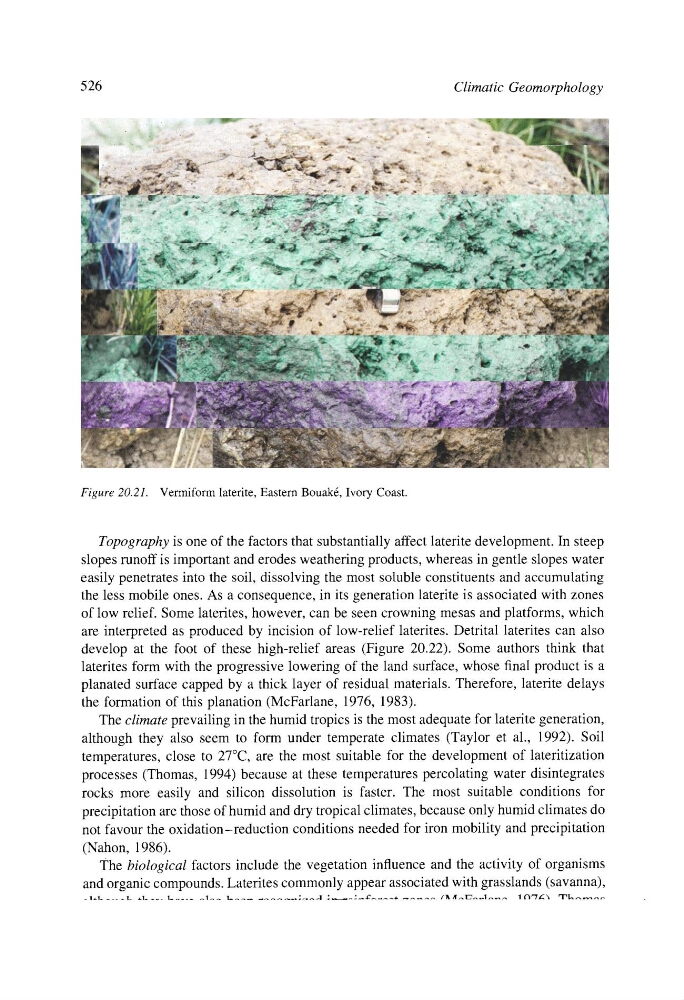
Figure 20.21. Vermiform laterite, Eastern Bouak6, Ivory Coast.
Topography is one of the factors that substantially affect laterite development. In steep
slopes runoff is important and erodes weathering products, whereas in gentle slopes water
easily penetrates into the soil, dissolving the most soluble constituents and accumulating
the less mobile ones. As a consequence, in its generation laterite is associated with zones
of low relief. Some laterites, however, can be seen crowning mesas and platforms, which
are interpreted as produced by incision of low-relief laterites. Detrital laterites can also
develop at the foot of these high-relief areas (Figure 20.22). Some authors think that
laterites form with the progressive lowering of the land surface, whose final product is a
planated surface capped by a thick layer of residual materials. Therefore, laterite delays
the formation of this planation (McFarlane, 1976, 1983).
The climate prevailing in the humid tropics is the most adequate for laterite generation,
although they also seem to form under temperate climates (Taylor et al., 1992). Soil
temperatures, close to 27~ are the most suitable for the development of lateritization
processes (Thomas, 1994) because at these temperatures percolating water disintegrates
rocks more easily and silicon dissolution is faster. The most suitable conditions for
precipitation are those of humid and dry tropical climates, because only humid climates do
not favour the oxidation-reduction conditions needed for iron mobility and precipitation
(Nahon, 1986).
The biological factors include the vegetation influence and the activity of organisms
and organic compounds. Laterites commonly appear associated with grasslands (savanna),
although they have also been recognized in rainforest zones (McFarlane, 1976). Thomas
(1994) indicated that bauxites are related to humid conditions of rainforest vegetation,
Climatic Geomorphology
Figure 20.21. Vermiform laterite, Eastern Bouak6, Ivory Coast.
Topography is one of the factors that substantially affect laterite development. In steep
slopes runoff is important and erodes weathering products, whereas in gentle slopes water
easily penetrates into the soil, dissolving the most soluble constituents and accumulating
the less mobile ones. As a consequence, in its generation laterite is associated with zones
of low relief. Some laterites, however, can be seen crowning mesas and platforms, which
are interpreted as produced by incision of low-relief laterites. Detrital laterites can also
develop at the foot of these high-relief areas (Figure 20.22). Some authors think that
laterites form with the progressive lowering of the land surface, whose final product is a
planated surface capped by a thick layer of residual materials. Therefore, laterite delays
the formation of this planation (McFarlane, 1976, 1983).
The climate prevailing in the humid tropics is the most adequate for laterite generation,
although they also seem to form under temperate climates (Taylor et al., 1992). Soil
temperatures, close to 27~ are the most suitable for the development of lateritization
processes (Thomas, 1994) because at these temperatures percolating water disintegrates
rocks more easily and silicon dissolution is faster. The most suitable conditions for
precipitation are those of humid and dry tropical climates, because only humid climates do
not favour the oxidation-reduction conditions needed for iron mobility and precipitation
(Nahon, 1986).
The biological factors include the vegetation influence and the activity of organisms
and organic compounds. Laterites commonly appear associated with grasslands (savanna),
although they have also been recognized in rainforest zones (McFarlane, 1976). Thomas
(1994) indicated that bauxites are related to humid conditions of rainforest vegetation,